Configure Now
Articles dans le panier0
0Articles dans le panier
Commencez à construire votre packageAcheter maintenant
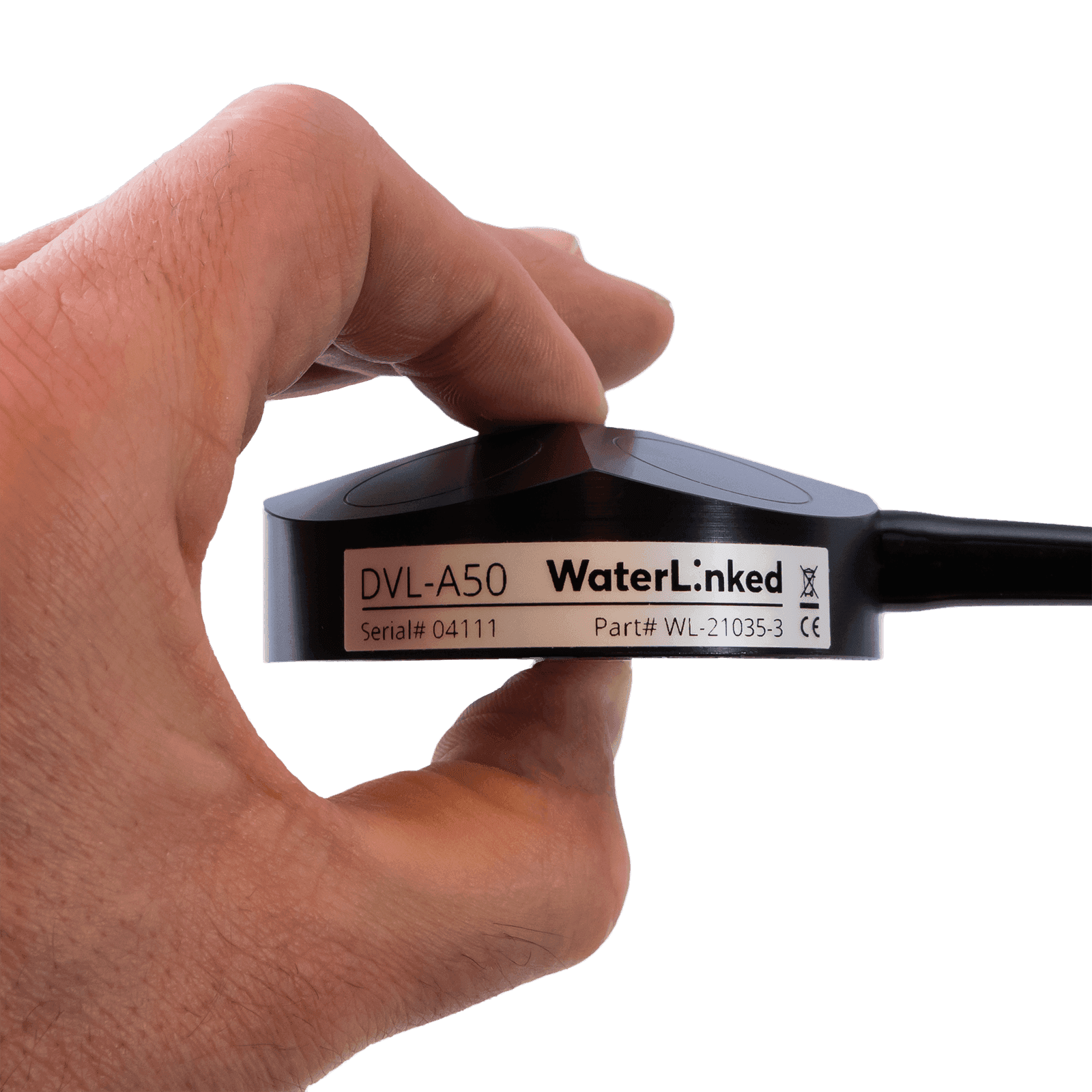
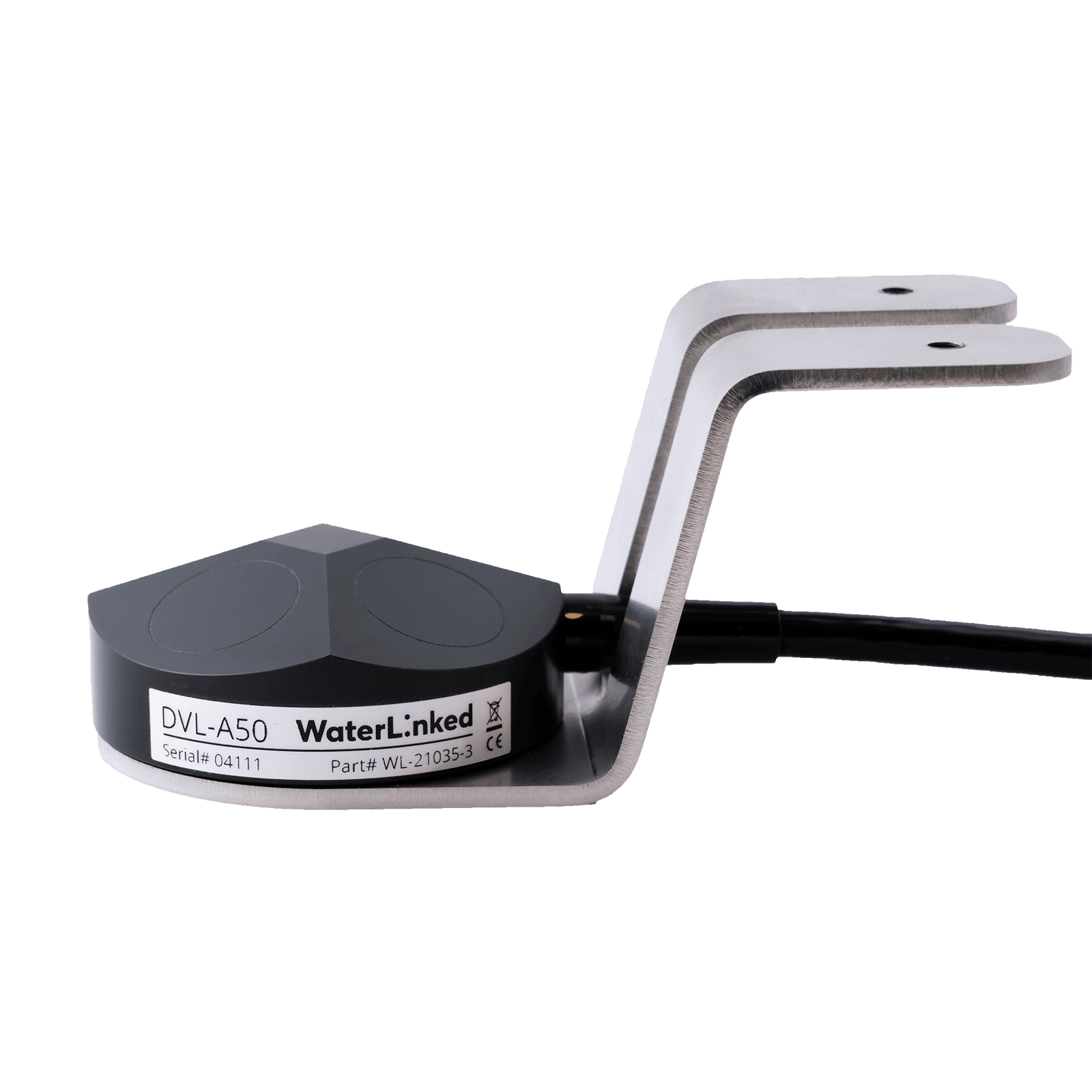
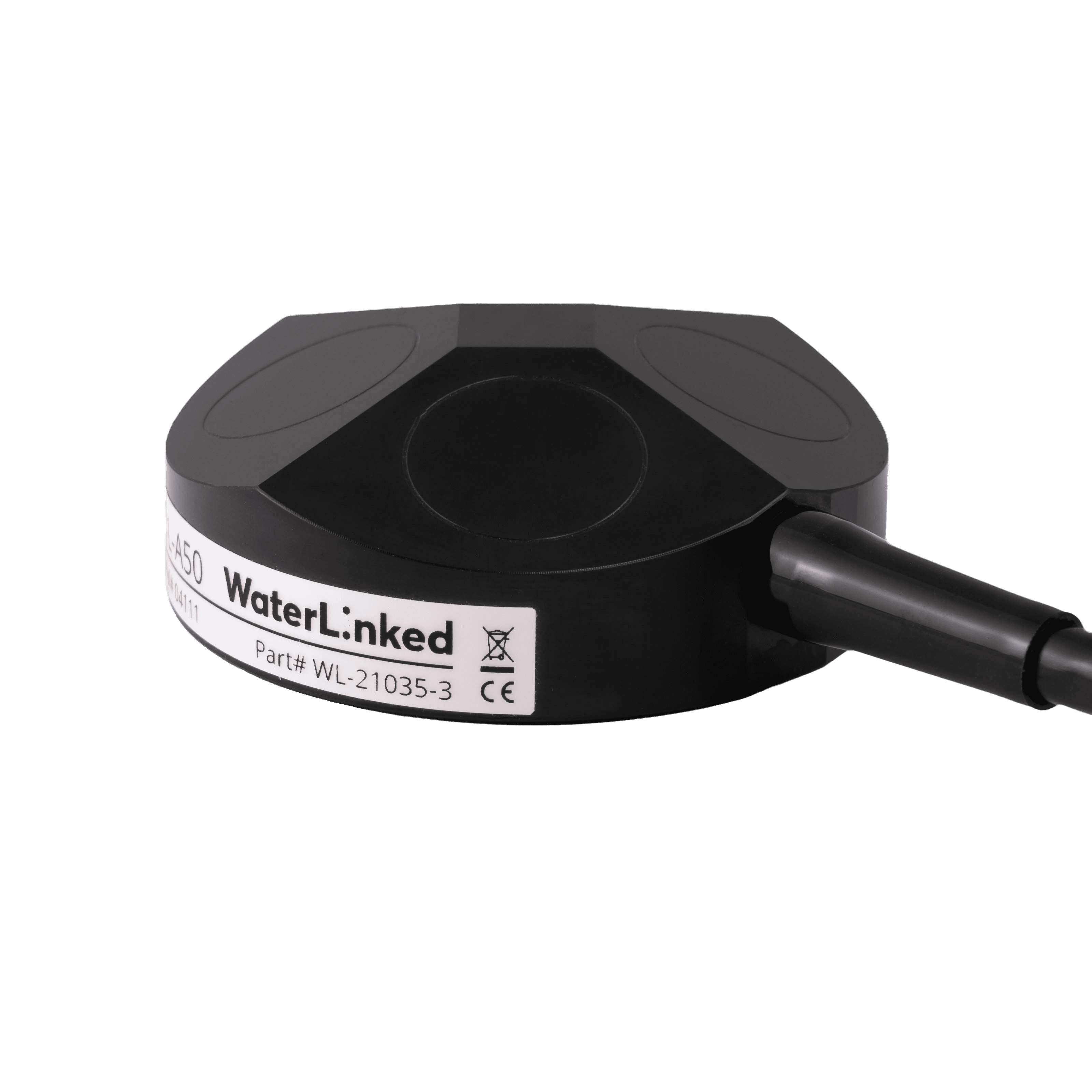
Water Linked A50 DVL provides estimated velocity relative to the seafloor using acoustic waves from four transducers. In combination with Deep Trekker BRIDGE sensor technology, greatly improve the ability to determine speed, heading as well as automated station holding.
Erreur lors de l'ajout de l'article au devis
Ajouté au devis
0.05 - 50m altitude
USBL
Station keeping
Better navigation in current
Auto altitude holding mode
Doppler velocity log ROV attachment for stabilization and autonomy
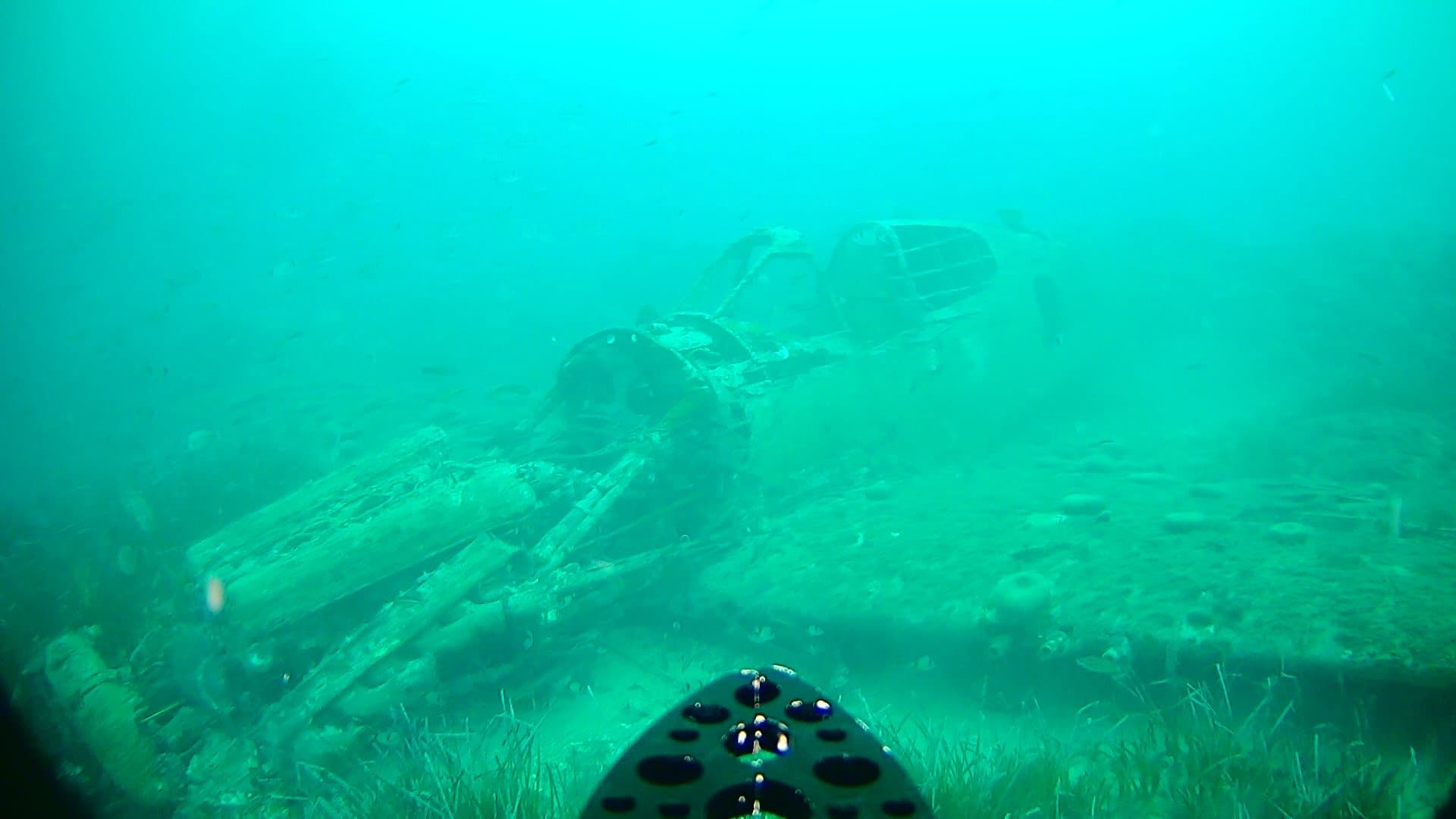
In search and recovery missions, the DVL plays a crucial role in maintaining an optimal altitude for the imaging sonar. For instance, it ensures the sonar remains at a precise depth, such as 15 meters, with the sonar oriented at a 15-degree angle downward. This configuration enhances the effectiveness of the sonar in capturing detailed images during underwater search operations.
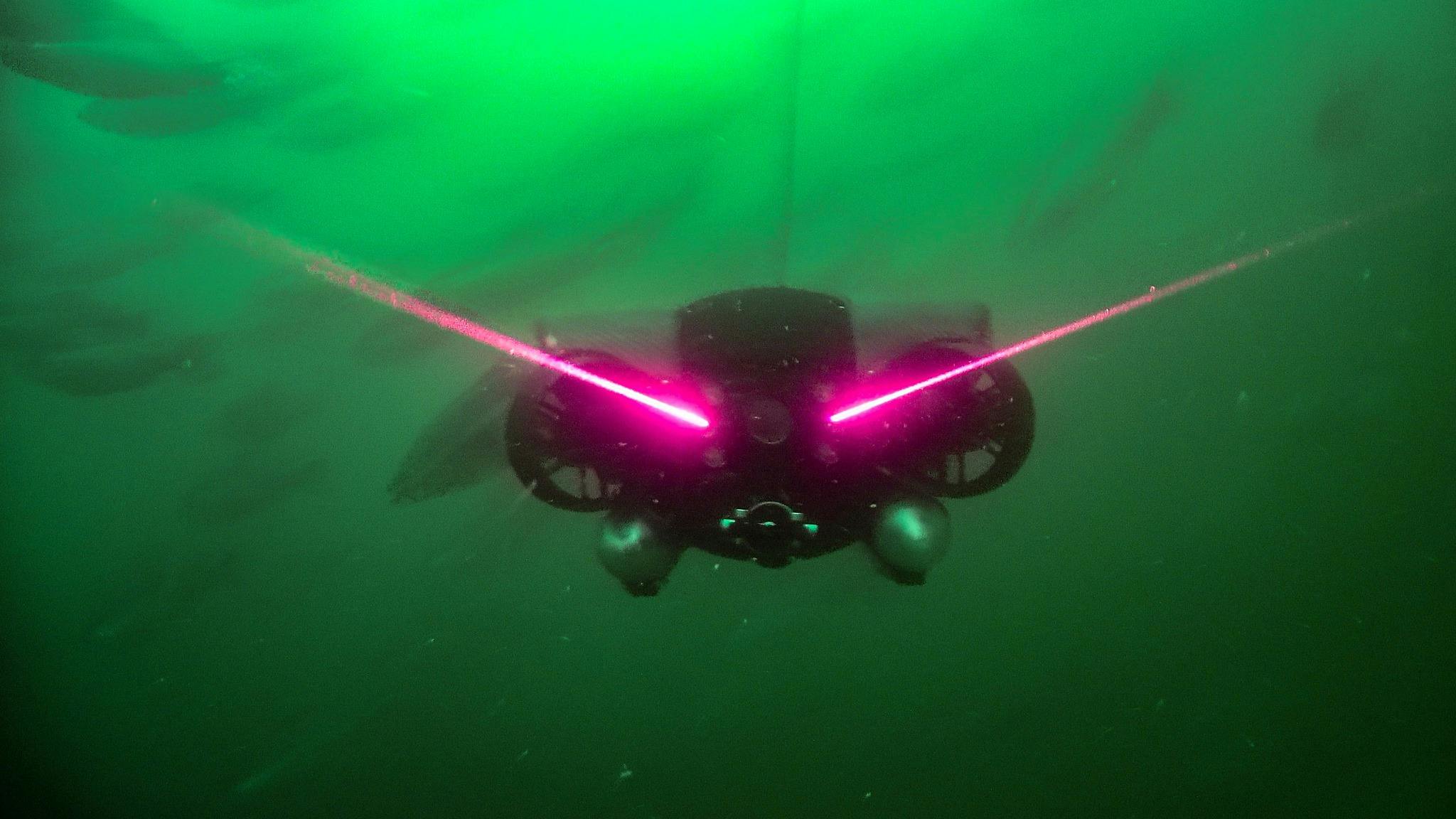
The DVL is instrumental in maintaining precise positions during various operations. Whether conducting inspections against a current, deploying a manipulator, or using a laser scanner, the DVL aids in achieving steady and controlled ROV positioning. This capability ensures optimal conditions for detailed inspections and intricate tasks, enhancing overall operational efficiency and accuracy.
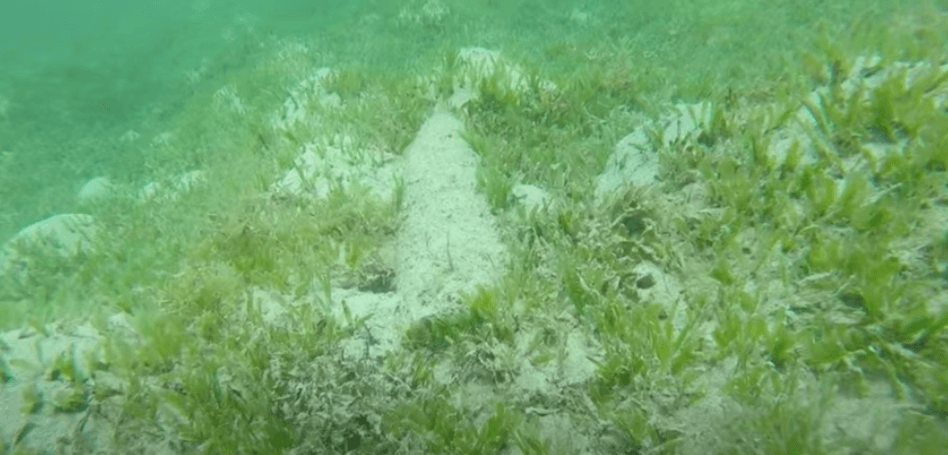
Employing a DVL on the ROV facilitates automatic altitude hold, ensuring course stability in currents and maintaining a consistent altitude above the seafloor. This feature is particularly crucial for benthic surveys, as it prevents collisions with the seafloor and minimizes sediment disturbance. The result is a clearer and more effective benthic survey, optimizing data collection and survey outcomes.
| Materials | Stainless steel 316 (housing), PEEK (transducer caps) |
|---|---|
| Depth rating | 1000 meters |
| Device height | 25 mm |
| Device diameter | 66 mm |
| Device weight (air) | 250 grams |
| Operating temperature | -5 to 60 °C |
| Device weight (submerged) | 185 grams |
| Ping rate | 4-26 Hz (adaptive to altitude) |
|---|---|
| Max altitude | 50 meters (Performance at altitudes > 35 meter is dependent on seabed conditions, salinity levels etc.) |
| Max velocity | 2.6 m/s |
| Min altitude | 5 cm |
| Sensor assist | Integrated AHRS/IMU (Yost Labs TSS-NANO) |
| Transducer setup | 4-beam convex Janus array |
| Long term accuracy | ±1.01 % (Standard version) ±0.1 % (Performance version) |
| Velocity resolution | 0.1 mm/s |
| Transducer frequency | 1 MHz |
| Transducer beam angle | 22.5 degrees |
Doppler velocity log ROV attachment for stabilization and autonomy
In search and recovery missions, the DVL plays a crucial role in maintaining an optimal altitude for the imaging sonar. For instance, it ensures the sonar remains at a precise depth, such as 15 meters, with the sonar oriented at a 15-degree angle downward. This configuration enhances the effectiveness of the sonar in capturing detailed images during underwater search operations.
The DVL is instrumental in maintaining precise positions during various operations. Whether conducting inspections against a current, deploying a manipulator, or using a laser scanner, the DVL aids in achieving steady and controlled ROV positioning. This capability ensures optimal conditions for detailed inspections and intricate tasks, enhancing overall operational efficiency and accuracy.
Employing a DVL on the ROV facilitates automatic altitude hold, ensuring course stability in currents and maintaining a consistent altitude above the seafloor. This feature is particularly crucial for benthic surveys, as it prevents collisions with the seafloor and minimizes sediment disturbance. The result is a clearer and more effective benthic survey, optimizing data collection and survey outcomes.
| Materials | Stainless steel 316 (housing), PEEK (transducer caps) |
|---|---|
| Depth rating | 1000 meters |
| Device height | 25 mm |
| Device diameter | 66 mm |
| Device weight (air) | 250 grams |
| Operating temperature | -5 to 60 °C |
| Device weight (submerged) | 185 grams |
| Ping rate | 4-26 Hz (adaptive to altitude) |
|---|---|
| Max altitude | 50 meters (Performance at altitudes > 35 meter is dependent on seabed conditions, salinity levels etc.) |
| Max velocity | 2.6 m/s |
| Min altitude | 5 cm |
| Sensor assist | Integrated AHRS/IMU (Yost Labs TSS-NANO) |
| Transducer setup | 4-beam convex Janus array |
| Long term accuracy | ±1.01 % (Standard version) ±0.1 % (Performance version) |
| Velocity resolution | 0.1 mm/s |
| Transducer frequency | 1 MHz |
| Transducer beam angle | 22.5 degrees |
Nous utilisons des cookies pour collecter des informations sur la façon dont vous interagissez avec notre site web afin d'améliorer et de personnaliser votre expérience. Pour en savoir plus sur les cookies que nous utilisons, consultez notre politique de confidentialité.