Configure Now
Items in Your Cart0
0Items in Your Cart
Start building your packageShop Now
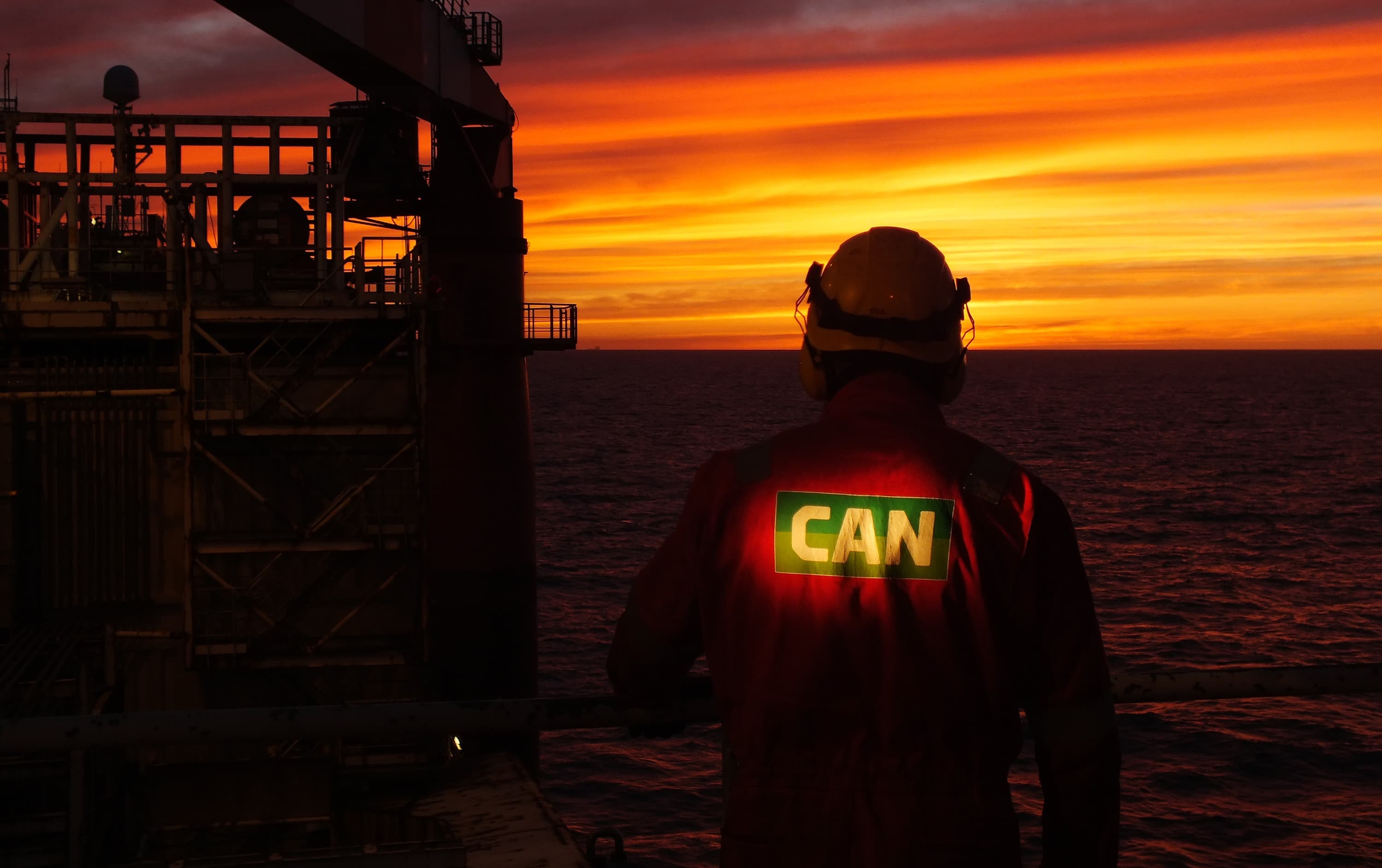
By replacing confined-space entry with the Deep Trekker PHOTON ROV, CAN Group cut FPSO water ballast tank inspection prep from days to minutes and reduced its core inspection crew–without draining a single tank.
CAN Group is a market-leading inspection and asset integrity management service provider supporting offshore and industrial operations across the UK, North America, West Africa, and other global regions. Within its remote inspection solutions delivery team, CAN deploys UAVs, ROVs, and other robotic systems to assess the condition of plant and equipment, structures and confined space environments, including FPSOs and marine assets.
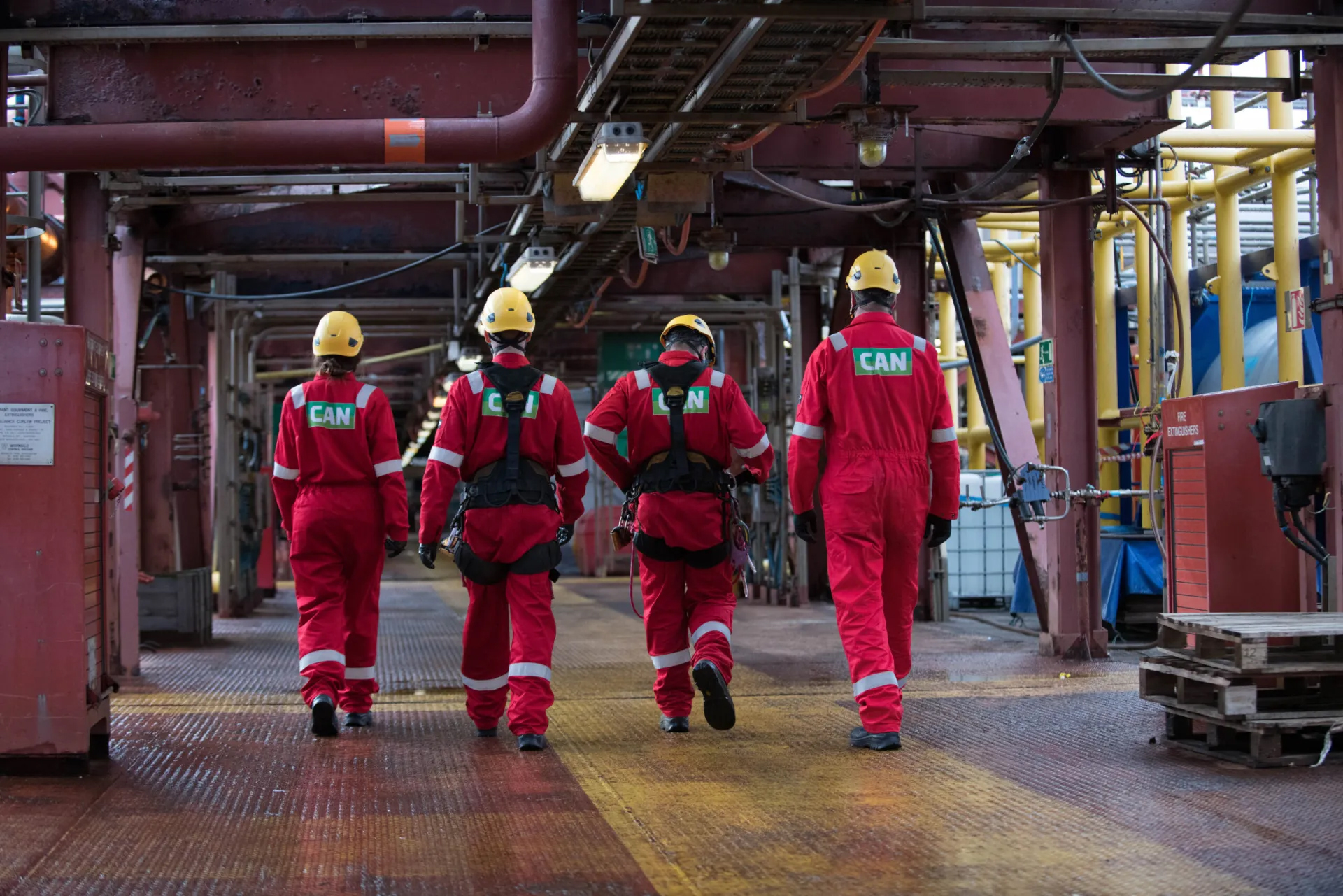
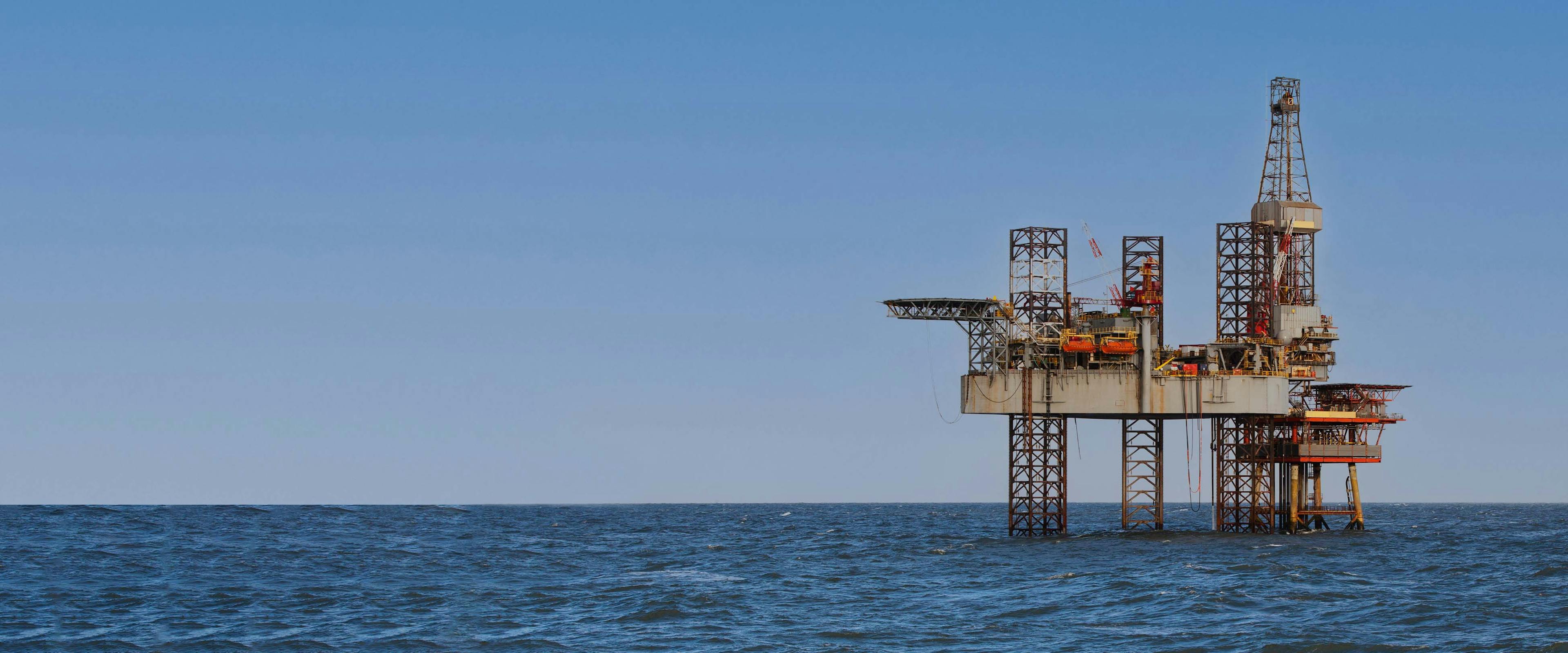
To support growing demand for marine class inspections, CAN adopted Deep Trekker PHOTON ROV systems for water ballast tank inspections on FPSOs and offshore structures. CAN acquired the systems through Spectis Robotics, Deep Trekker's reseller in Aberdeen, Scotland, who supported the training, custom integrations, and deployment throughout. The systems are used for “class approved inspections of water ballast tanks within FPSO structures” under Lloyd’s Register, ABS, and DNV-approved remote inspection techniques.
The shift didn't just trim a step or two from the workflow; it changed the economics of the inspection. Compact ROVs let CAN eliminate tank draining, scaffolding, lighting rigs, and rope-access spreads, reduce/minimise offshore headcount, and keep assets operational throughout.
“We can deploy the system without having to drain the tank, avoiding operational disruption on the assets,” said Leum Renney, Remote Inspection Services Lead at CAN.
Where conventional inspection methods typically take significant preparation and personnel resources to prep a tank for entry and inspect, CAN now mobilizes ROV technologies where appropriate via a two-person team, with the ability to deploy "quickly and at short notice”.
The bottom line: CAN cut ballast tank inspection prep from days to minutes, reduced its crew, and kept FPSO assets in operation throughout.
| Metric | Typical Traditional Inspection | With Deep Trekker PHOTON |
|---|---|---|
| Core inspection crew | Multiple technicians, plus scaffolding crews, rope-access technicians, and standby support | 2-person team (ROV pilot + inspector) |
| Tank preparation time | Several days (draining, cleaning, ventilation, scaffolding, lighting, rope access, permitting) | Minutes, no draining or prep required |
| Asset downtime | Ballast transfer and tank drainage required | Zero, tank stays operational |
| Confined-space entry | Required, with full rescue standby teams and specialised equipment | Eliminated for ROV deployment |
CAN Group provides inspection, advanced NDT, remote inspection solutions, trades and integrity-led fabric maintenance, and asset integrity management services for offshore and industrial operations across the UK and global energy markets, with a history of being at the forefront of innovation and adoption of new techniques, tools, and technologies.
Originally established in the UK offshore sector, the company recently marked its 40-year milestone and continues to support projects throughout the UK Continental Shelf, North America, West Africa, and other international regions.
Within CAN’s remote inspection solutions team, dedicated personnel support “UAV, ROV, and other remotely operated systems” used for internal tank inspections, marine class inspections, and asset integrity assessments.
CAN’s offshore inspection programs focus heavily on FPSO and marine class inspection work, including water ballast tank inspections completed under Lloyd’s Register, ABS, and DNV-approved remote inspection techniques.
Traditional FPSO water ballast tank inspections typically require draining and preparing tanks for confined space entry before inspections can begin. This process can include tank cleaning, ventilation, scaffolding installation, rope access setup, lighting installation, safety meetings, permitting, and standby rescue support.
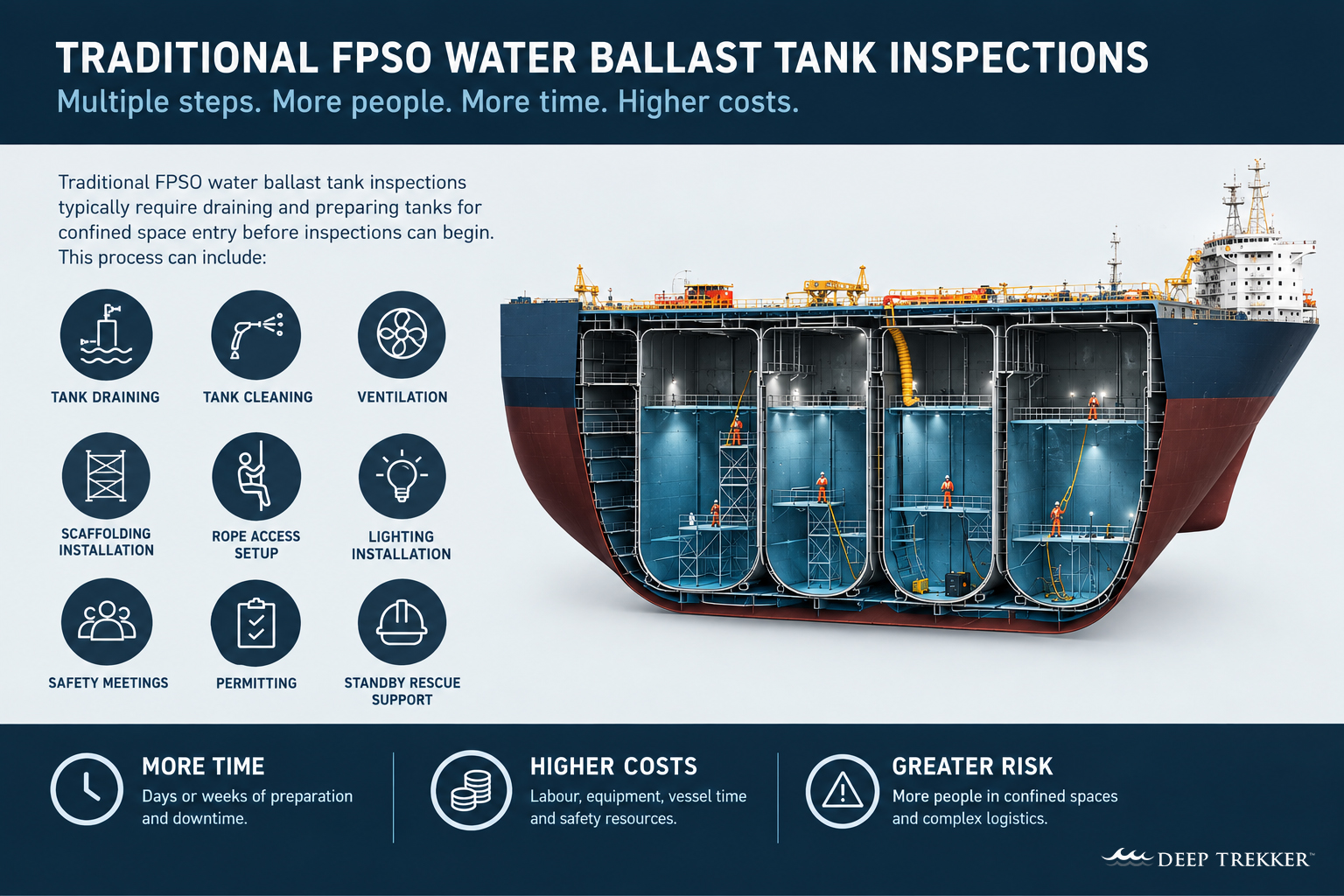
“There’s an extensive list of personnel and resources associated with a manned entry into these vessels,” said Renney.
Operationally, this workflow introduces constraints including extended asset downtime, disruption to ballast transfer operations, large multidisciplinary teams, and limited access to complex internal geometries within tanks and void spaces.
These conditions increase both logistical complexity and personnel exposure, particularly in confined space environments where risk controls and access management requirements are high. The team noted that reducing personnel exposure to danger is a key driver for adopting robotic inspection methods across its operations.
“Safety is our top priority and we’re always looking to implement smarter and safer ways of working to reduce the risk to personnel."
"If there is a robotic system that can help to complete the task more safely, such as reducing the need for entering confined spaces or working at height on elevated structures, we will assess the technology and where possible, add this to our suite of remote inspection solutions,” said Renney.
Deep Trekker Launches A New Class of High-Performance Inspection ROV
CAN Group had been deploying compact ROV systems for nearly a decade before adopting the Deep Trekker PHOTON platform for offshore inspection operations. The company had previously used a variety of legacy systems and remote camera deployment methods for ballast tank and confined-space inspections, but increasing demand for FPSO inspection work required greater maneuverability, portability, and deployment flexibility.
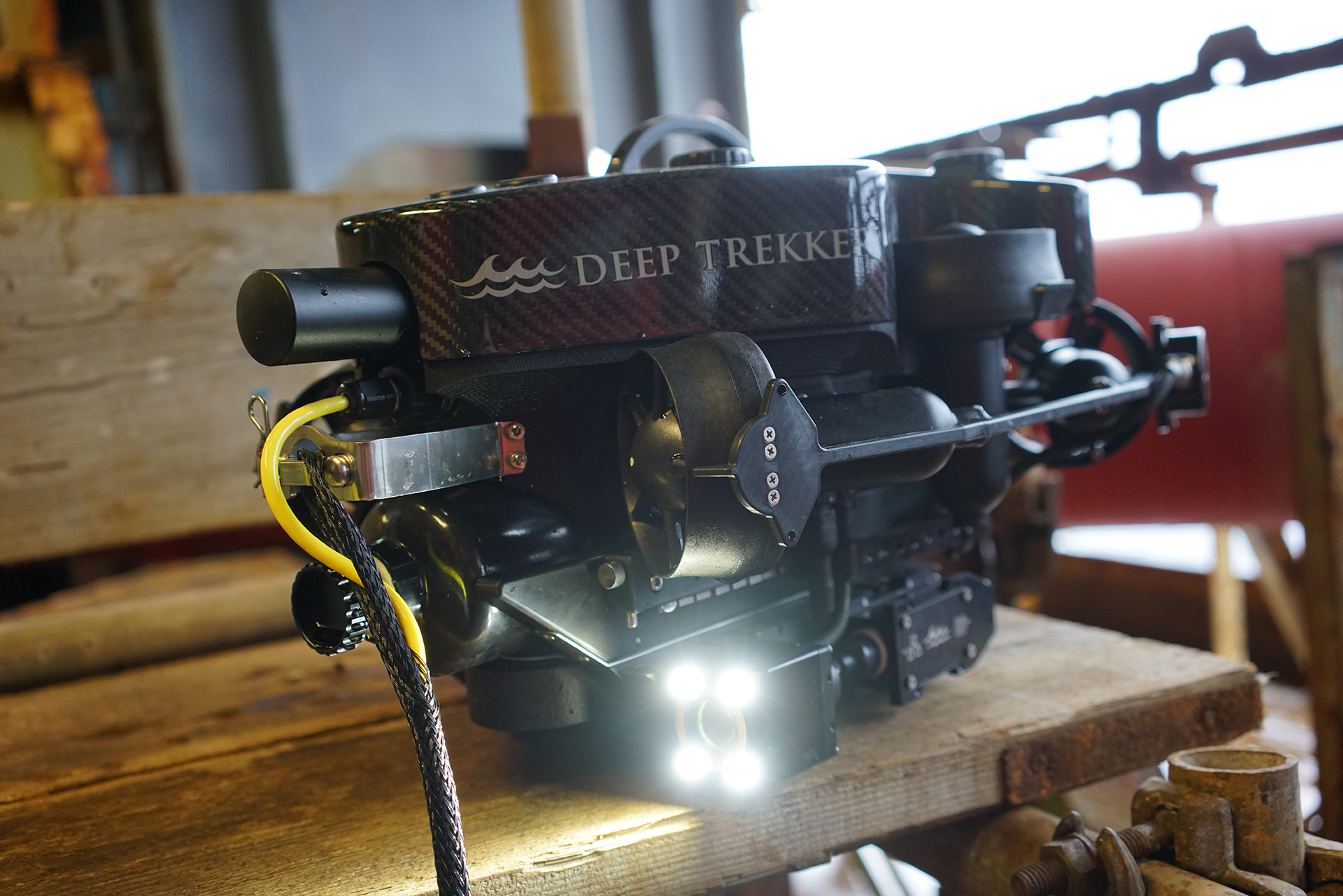
“We’ve been successfully using ROVs for close to 10 years,” said Renney. “About a year ago, we purchased our first Deep Trekker PHOTON system due to our expanding operational requirements.”
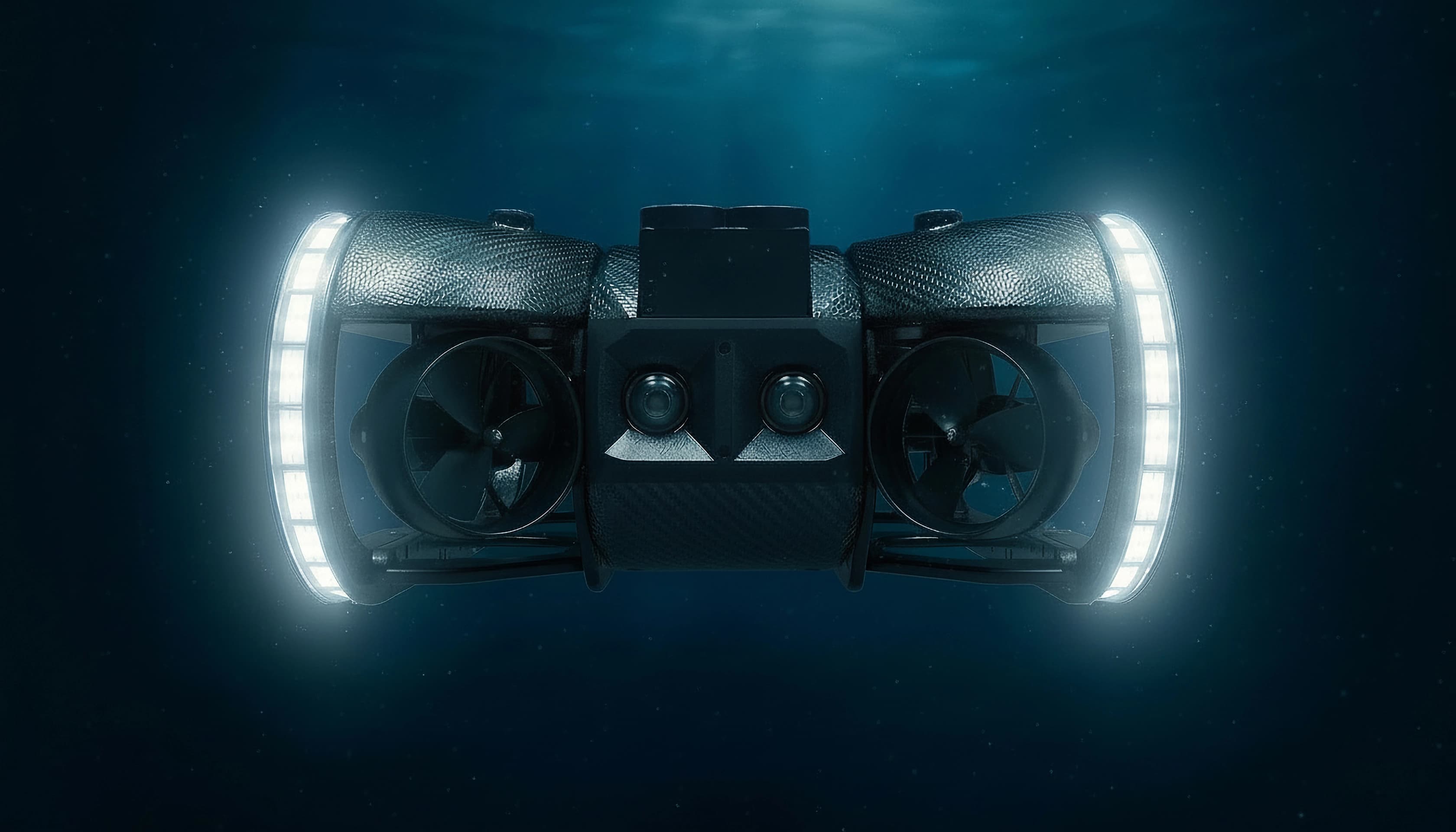
The PHOTON was selected primarily for its six-thruster vectored configuration, which improved stability and maneuverability during internal tank inspections.
“A key benefit over some of our previous systems is the maneuverability and portability. The additional thrusters and power allow us to overcome specific currents and higher tidal conditions more effectively. Having the additional thrusters is a huge benefit. We now have the capability of vectoring, allowing us to significantly increase the efficiency of carrying out the inspection,” noted David McDonald, CAN’s Advanced NDT Operations Manager.
He noted that lateral movement capability improved inspection coverage on steel walls, side shells, and internal tank structures while reducing excessive forward and reverse maneuvering commonly required with three thruster ROV configurations.
The additional thrust and stability also improved performance in higher current and tidal environments during offshore operations.
Another major factor was portability and deployment flexibility offshore. Previous systems relied on larger fixed consoles and continuous external power sources, while the PHOTON platform allowed CAN to deploy using more compact control systems and battery-powered operation.
“The Deep Trekker system gives us greater deployment options and portability,” said Renney.
The team noted how the smaller deployment footprint helped reduce setup complexity during offshore inspection campaigns and provided greater flexibility for confined-space and internal asset inspections.
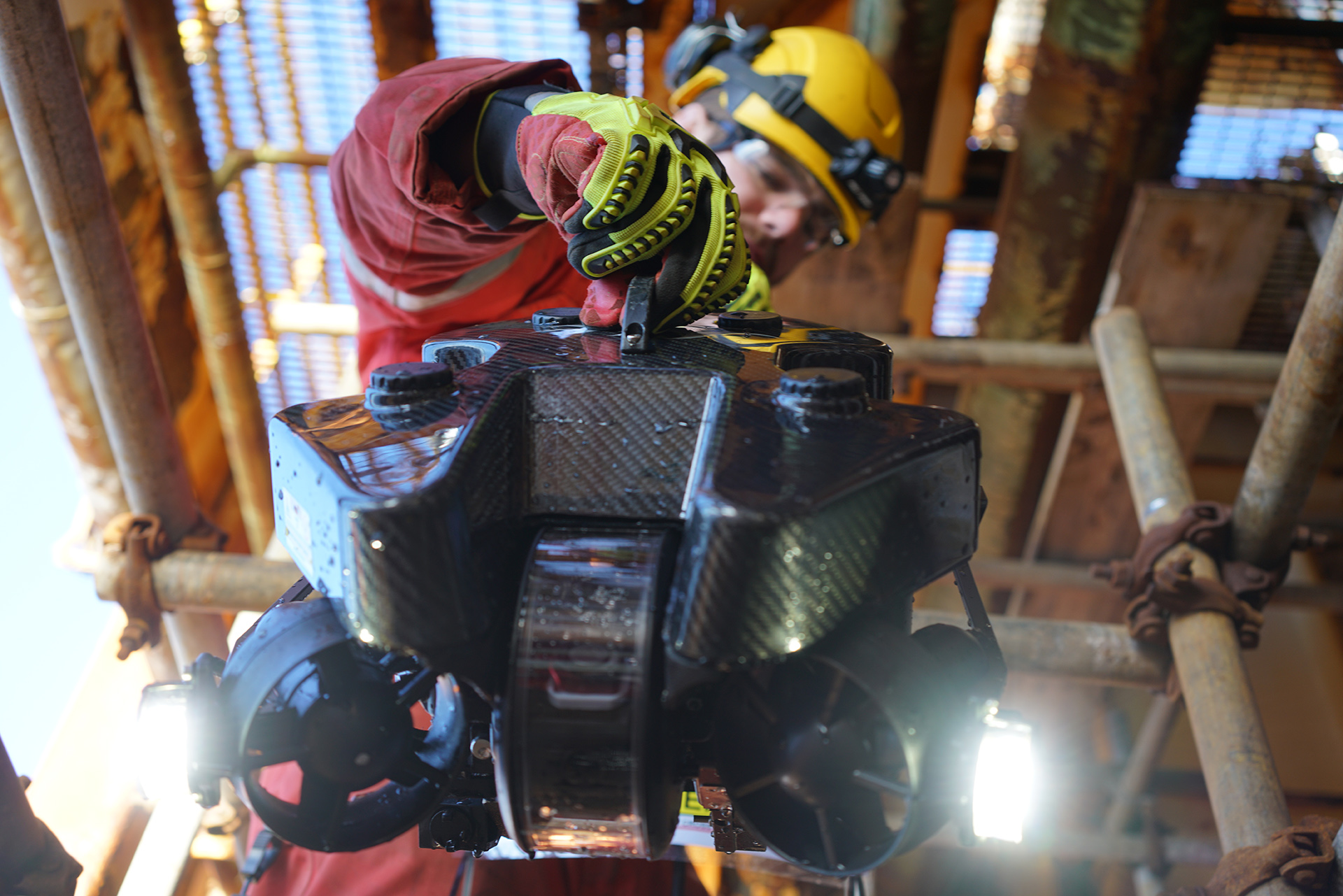
CAN deploys both battery-operated and direct-power inspection configurations depending on the inspection scope and offshore environment.
“Having the versatility of battery-operated deployments as well as direct power is a major advantage for us,” said Renney.
The company also highlighted compatibility across larger Deep Trekker systems, including shared controllers and console hardware, allowing equipment and operator training to remain consistent across multiple inspection applications, such as water ballast tanks, hull inspections, sea chests, propellers, or chain mooring linkages.
“It gives you a bit of flexibility,” said Renney. “You’ve got more compatibility and effectively a more modular operating model.”
Because the tank does not need to be drained or prepared for personnel entry, an ROV inspection can begin as soon as safety meetings and access preparations are complete. Rather than transferring ballast, installing scaffolding, or rigging rope access, CAN deploys the PHOTON directly into the flooded tank while the asset stays operational.
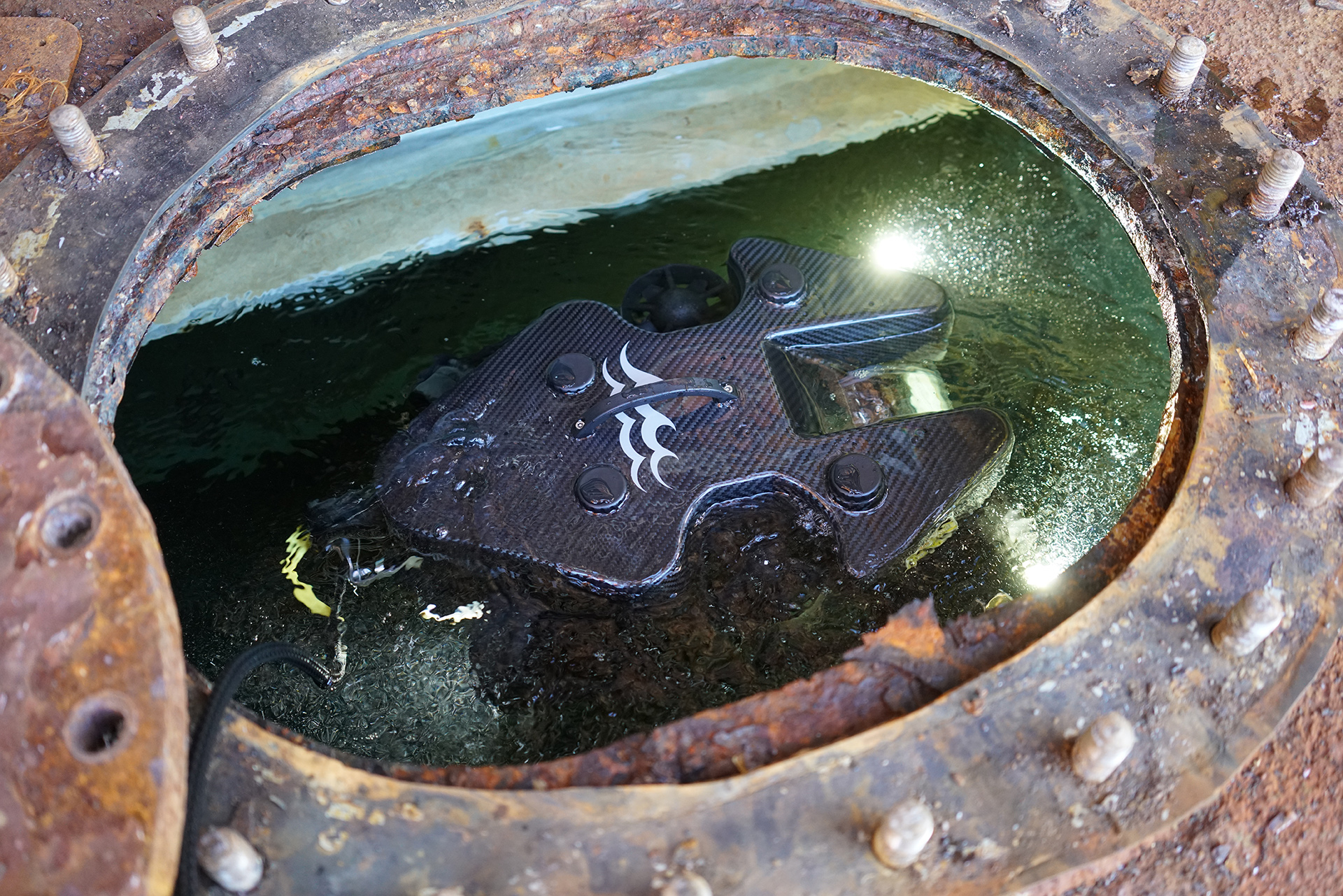
"We can deploy the system without having to drain the tank, without having to effectively disrupt any of the operation of the actual assets," said Renney.
From there, the six-thruster vectored configuration lets pilots move laterally across steel walls, side shells, and internal structures, capturing continuous video across the full inspection area. Where class requirements or targeted defect assessment call for it, the integrated Cygnus ultrasonic thickness gauge collects live thickness readings during the same deployment. Every pass is stored as a digital record for review and reporting, during or after the campaign.
The result is a workflow that compresses the entire job into roughly the time a traditional campaign spends on preparation alone.
"We're able to carry out an inspection typically of a water ballast tank within a matter of days," said Renney. "That's from start to finish. As opposed to more traditional campaigns that can take multiple days just to prep a tank for entry. That includes water ballast transfer, rigging it out with lighting, scaffolding, setting up rope access–these things all need to be taken into consideration, not including the safety-related preparations associated with personnel confined space entry."
Learn how Deep Trekker's ROV successfully completed riser inspections under challenging offshore conditions, enhancing safety, efficiency, and reliability.
ROV-based inspection methods are primarily deployed to reduce personnel exposure in hazardous offshore and confined-space environments. CAN highlighted that safety is a core driver behind adopting robotic inspection systems across its operations.
“Risk reduction is a primary reason for deploying these systems,” said Leum Renney.
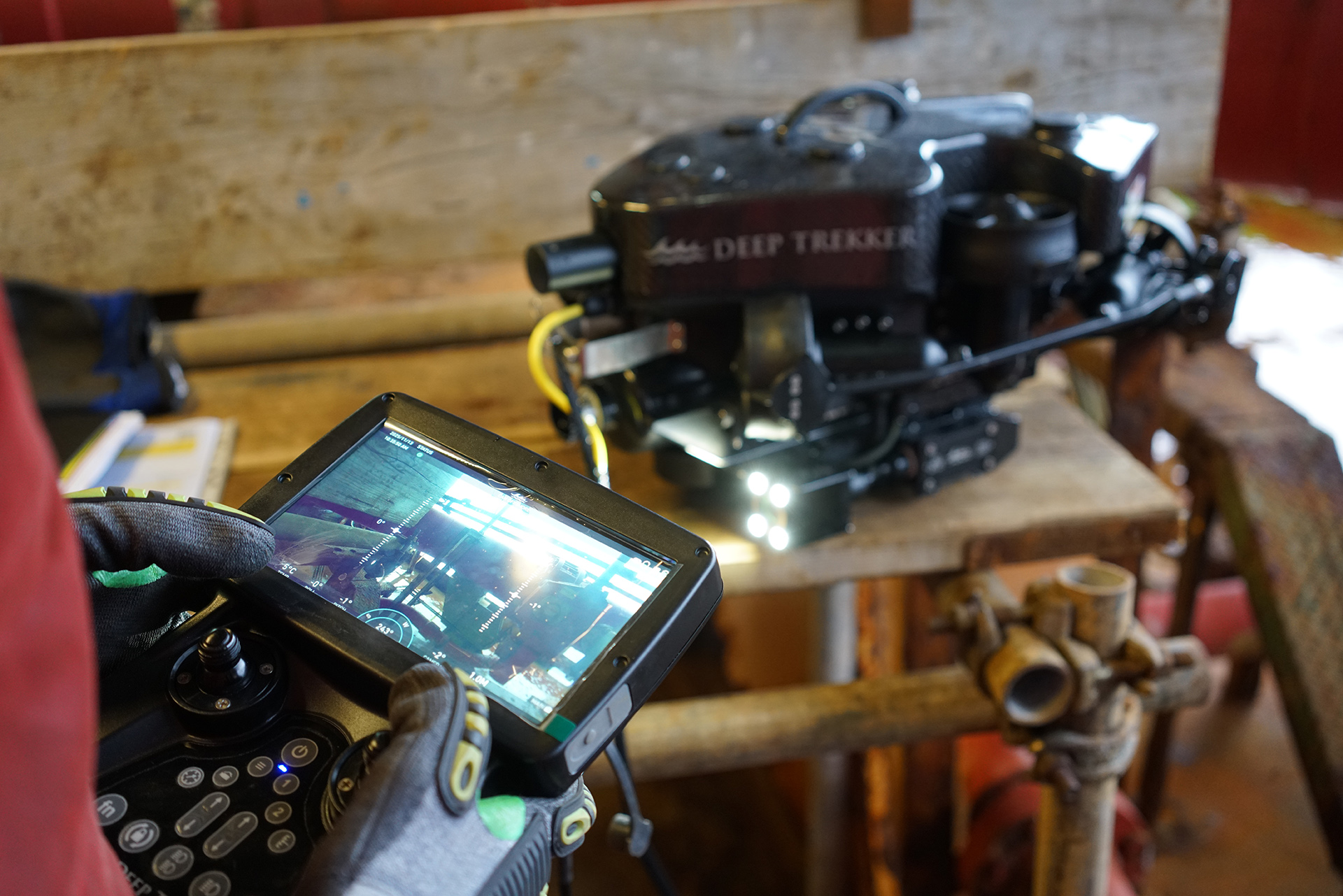
By replacing confined space entry with remotely operated systems, CAN reduces the need for personnel to enter ballast tanks and similar enclosed structures. This approach also reduces work at height, lowers offshore headcount requirements, and limits exposure time during inspection campaigns.
A key operational benefit is the reduction in supporting infrastructure typically required for traditional inspections, including scaffolding installation and full rope access setup. In parallel, robotic inspections reduce or eliminate personnel involvement in certain internal inspection scenarios where applicable.
“A typical team composition of two technicians with a small robotic system can carry out these work scopes far more safely, efficiently, and cost effectively,” said Renney.
Overall, the shift to ROV-based inspections supports reduced risk exposure while maintaining and improving inspection coverage and operational efficiency in offshore environments.
Underwater ROV inspections provide full digital recording of inspection activities, allowing operators to capture continuous visual data throughout confined-space and internal asset assessments. CAN uses these capabilities to improve traceability, verification, and reporting consistency across inspection campaigns.
“Through the advancements of ROV technology and digital solutions, we provide our clients with comprehensive data sets and inspection reporting, including full video capture, which can far exceed permanent records typically achieved via conventional inspection methods,” said Leum Renney.
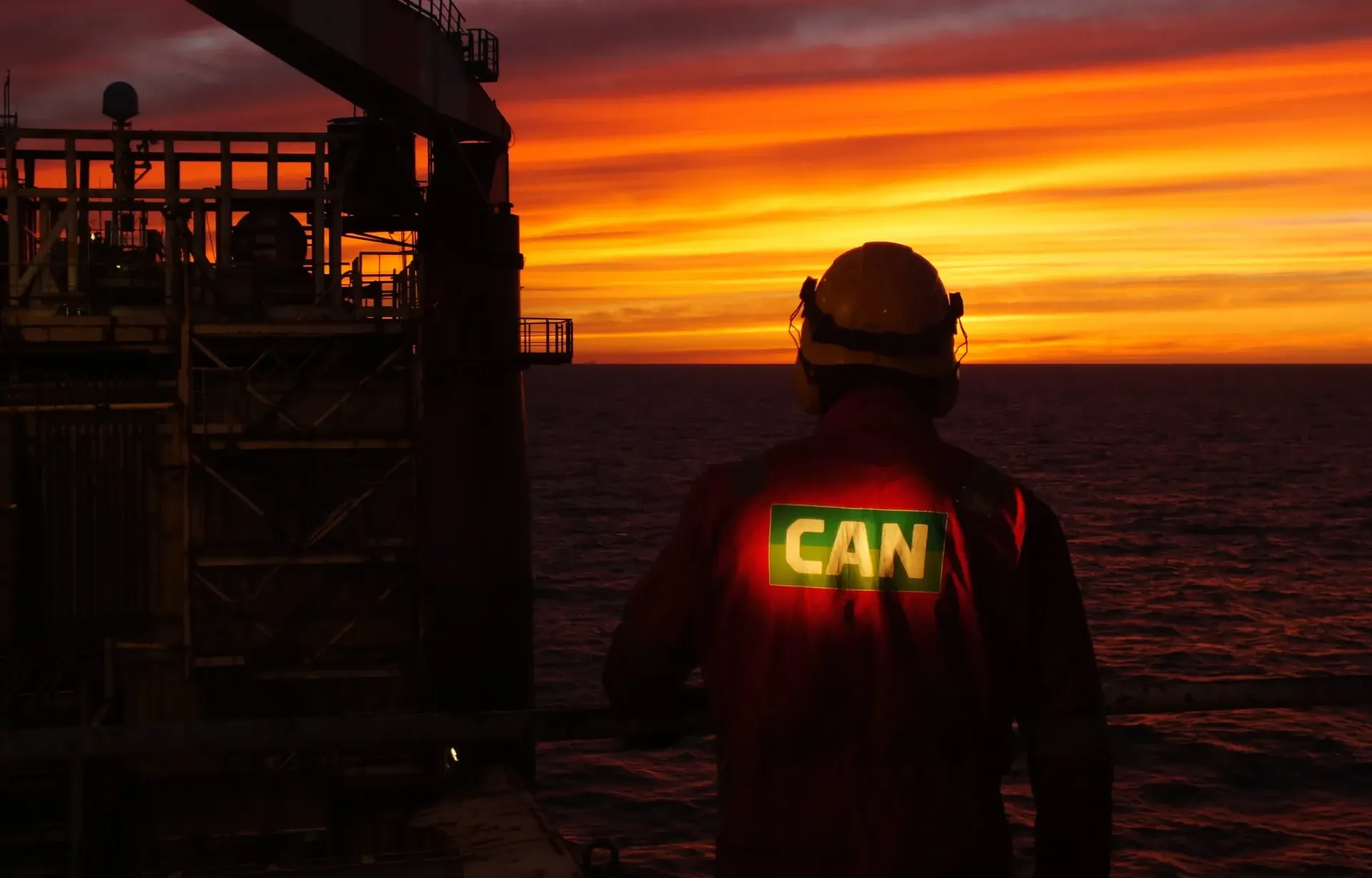
All inspection outputs are stored as digital records, including raw imagery and video data that can be reviewed during or after the inspection. This supports post-analysis and allows clients to perform additional examination of the inspection dataset if required. The records can also be shared for remote review and strengthen reporting by providing verifiable inspection evidence rather than limited point-in-time observations.
Compared to manual inspection methods, ROV systems improve repeatability by enabling consistent visual capture across multiple inspection cycles. This supports historical comparison of asset condition over time and improves coverage verification for complex internal structures such as ballast tanks.
CAN integrates ultrasonic thickness (UT) testing into its ROV inspections where class requirements or targeted defect assessment programs require NDT data alongside visual inspection.
“We actively utilize the Cygnus Ultrasonic Thickness Gauges," said Leum Renney. “Many of our inspections require UT capability as part of mandated class inspection schedules.”
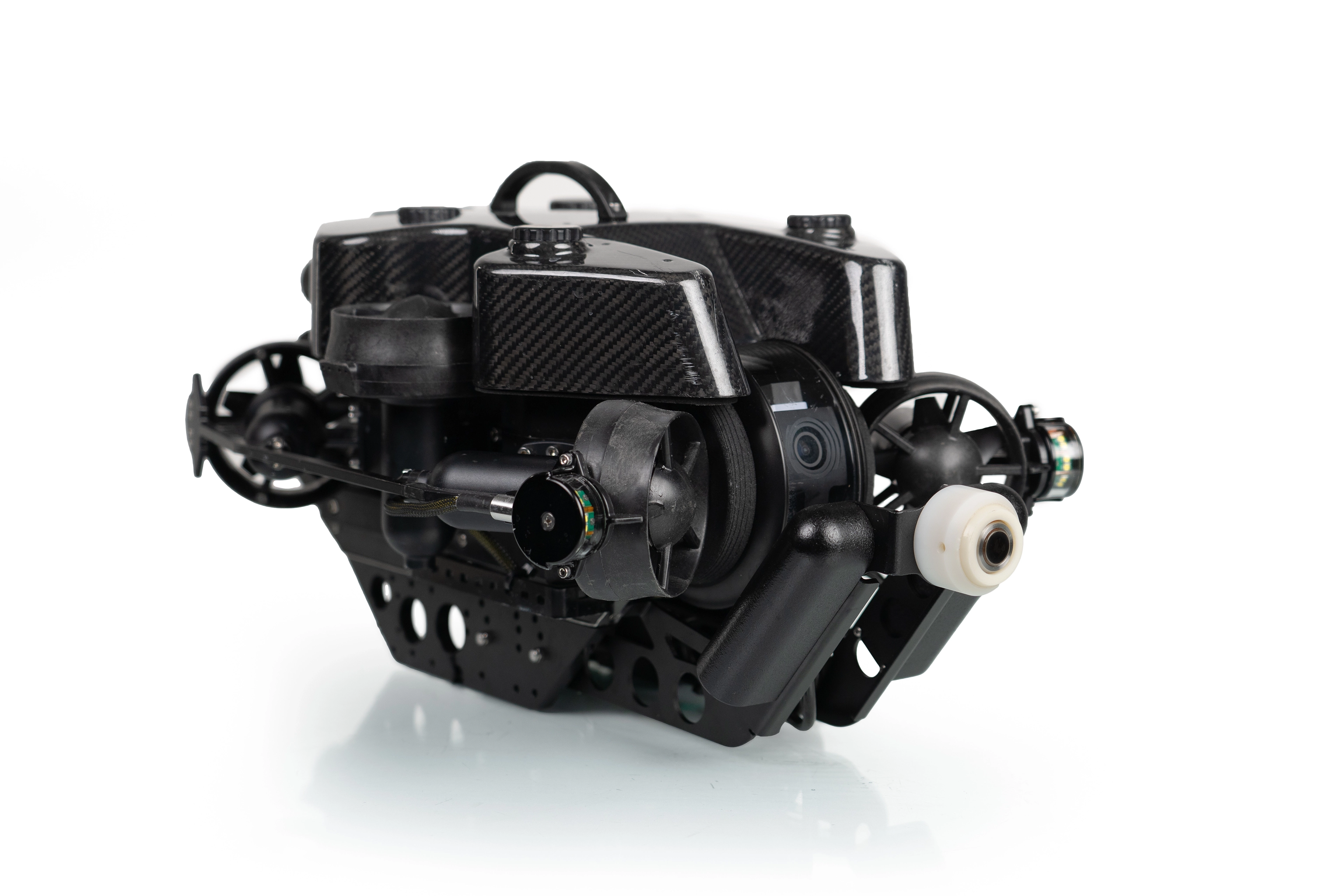
While UT integration was already available on larger Deep Trekker platforms such as the REVOLUTION and PIVOT, CAN required a compact PHOTON-based solution for confined-space ballast tank inspections. To support that requirement, CAN worked with Deep Trekker and Spectis Robotics to develop a bespoke integration package for the PHOTON platform.
“Spectis Robotics were instrumental in being that direct link between Deep Trekker and our team.”
The project involved development of a custom skid and integration package capable of mounting the Cygnus UT probe while maintaining vehicle stability and live telemetry capability.
“Deep Trekker developed a solution that was specifically tailored to a very bespoke requirement,” said Renney.
As part of the integration process, the system underwent proof-of-concept testing and in-water validation to ensure the added payload remained stable during inspection operations.
“Spectis Robotics conducted the initial trials, utilising our UT payload,” said Renney. “Once the stability challenges had been overcome and stability in the water was proven, Deep Trekker worked with Spectis Robotics to develop a more robust and workable solution to integrate UT capability to the PHOTON ROV system.”
Once validated, the integrated UT system enabled live thickness measurements to be collected during ballast tank inspection campaigns while transmitting inspection data directly through the ROV control system for review and reporting. This supports class inspection requirements where both visual inspection and quantitative material thickness data are required.
The ability to integrate NDT tooling into compact ROV platforms allows CAN to combine inspection disciplines within a single deployment, reducing the need for separate access methods while maintaining compliance with marine class inspection standards.
ROVs quickly detect corrosion, misalignment, and damage in subsea cables and pipelines — without costly downtime or diver risk.
One of the largest operational changes when utilizing ROVs is the reduction in inspection preparation requirements. Traditional tank inspection strategies can require several days of tank preparation before inspection work even begins, including draining, cleaning, scaffolding, lighting installation, rope access setup, and confined space permitting. Using the PHOTON system, CAN have the ability to mobilize significantly faster while keeping tanks operational in many cases.
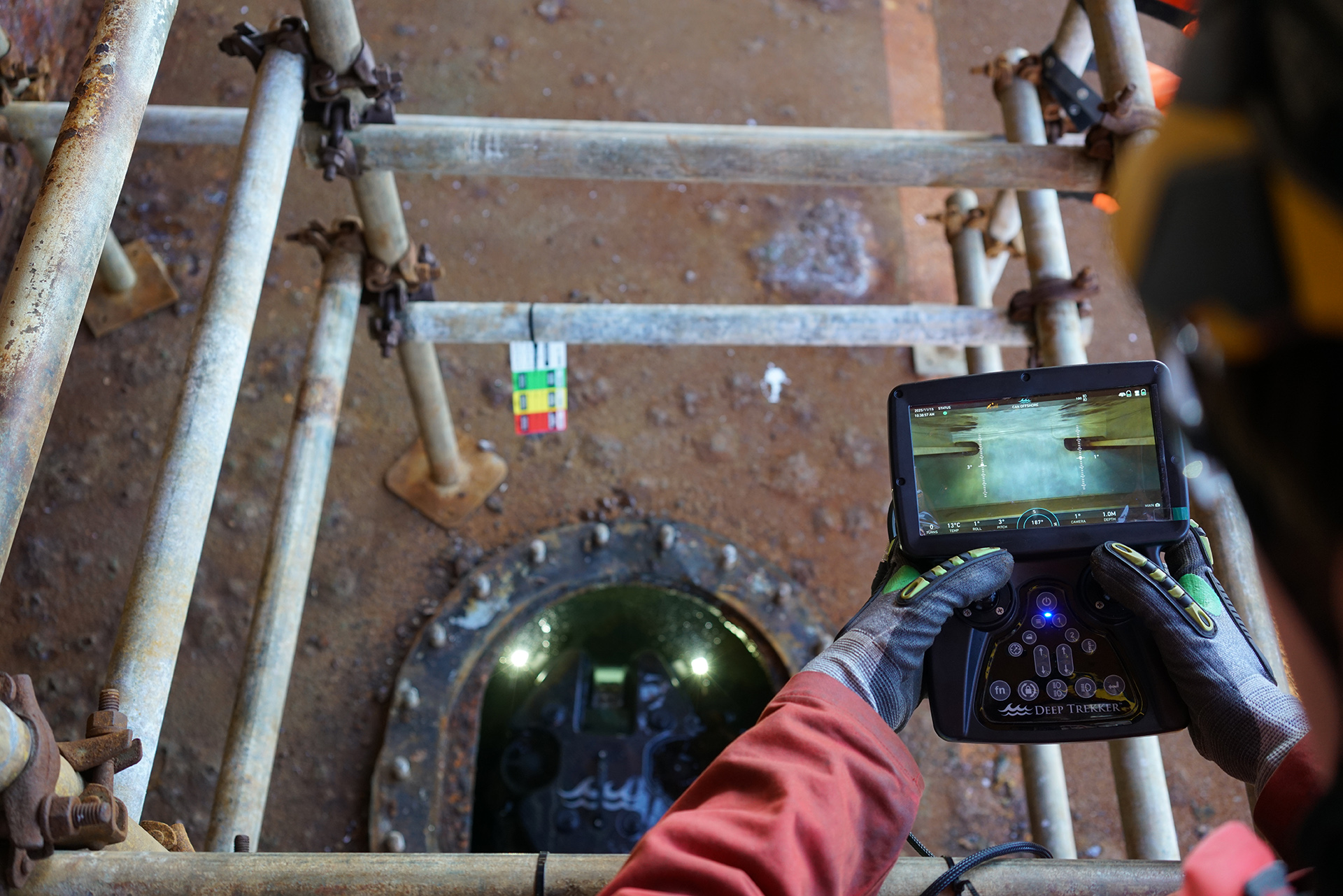
After implementing the Deep Trekker PHOTON system, CAN reported measurable improvements in inspection efficiency, deployment speed, and operational flexibility during offshore ballast tank inspections.
“We knew it was going to be a more intuitive and easier system to navigate and stabilize, but we didn’t quite foresee the time efficiency enhancements compared to the predecessor,” said Leum Renney.
CAN also identified maneuverability improvements as a major operational advantage. The PHOTON’s six-thruster vectored configuration allowed pilots to move laterally and maintain more stable positioning during inspections, improving inspection coverage and reducing time spent repositioning the vehicle.
“The vectoring capabilities have been instrumental in increasing the efficiency of carrying out inspections,” noted McDonald.
The compact system design and battery-powered deployment also reduced offshore logistics requirements and simplified mobilization compared to larger inspection spreads. CAN noted that the system’s portability, maneuverability, and reduced setup requirements have helped improve inspection execution while minimizing disruption to vessel operations and reducing overall personnel resourcing.
Offshore inspection campaigns are often reactive and schedule-sensitive, so equipment reliability and fast access to technical support directly affect whether a job stays on schedule. CAN manages this through a combination of backup equipment on hand and a direct support line to Deep Trekker as the OEM, alongside regional support from Spectis Robotics.
Because campaigns can be called on at short notice, CAN maintains backup equipment availability to avoid disruption during ongoing projects.
“The after-sales technical support from the UK distributor, Spectis Robotics, combined with direct access to Deep Trekker as the OEM, has been excellent. When purchasing an expensive system, have a client relying on it, and encounter an issue, you need fast resolution and the right people involved to come up with a robust solution–whether that’s a short-term fix to safely complete the job or a longer-term corrective action. That’s where both Spectis Robotics and Deep Trekker have been very good in supporting their customers.” said Renney.

The combination of backup system redundancy and direct OEM support helps clients maintain inspection schedules while minimizing interruption to offshore and remote operations.
CAN integrated the PHOTON system into its existing inspection and remote operations training programs by cross-training inspectors and remote inspection personnel to operate the compact ROV platform.
“The Deep Trekker system was a very easy platform to integrate into our current training programs,” said Leum Renney. “Upskilling the technicians to utilize the Deep Trekker platform was quite a swift and easy transition because they already had previous ROV experience, and this new system is very intuitive and responsive.”
According to CAN, the system’s controller layout and piloting characteristics simplified onboarding for personnel already familiar with remote inspection technologies and UAV-style controls. The customizable control configuration also allowed operators to adapt the system to different pilot preferences and inspection requirements.
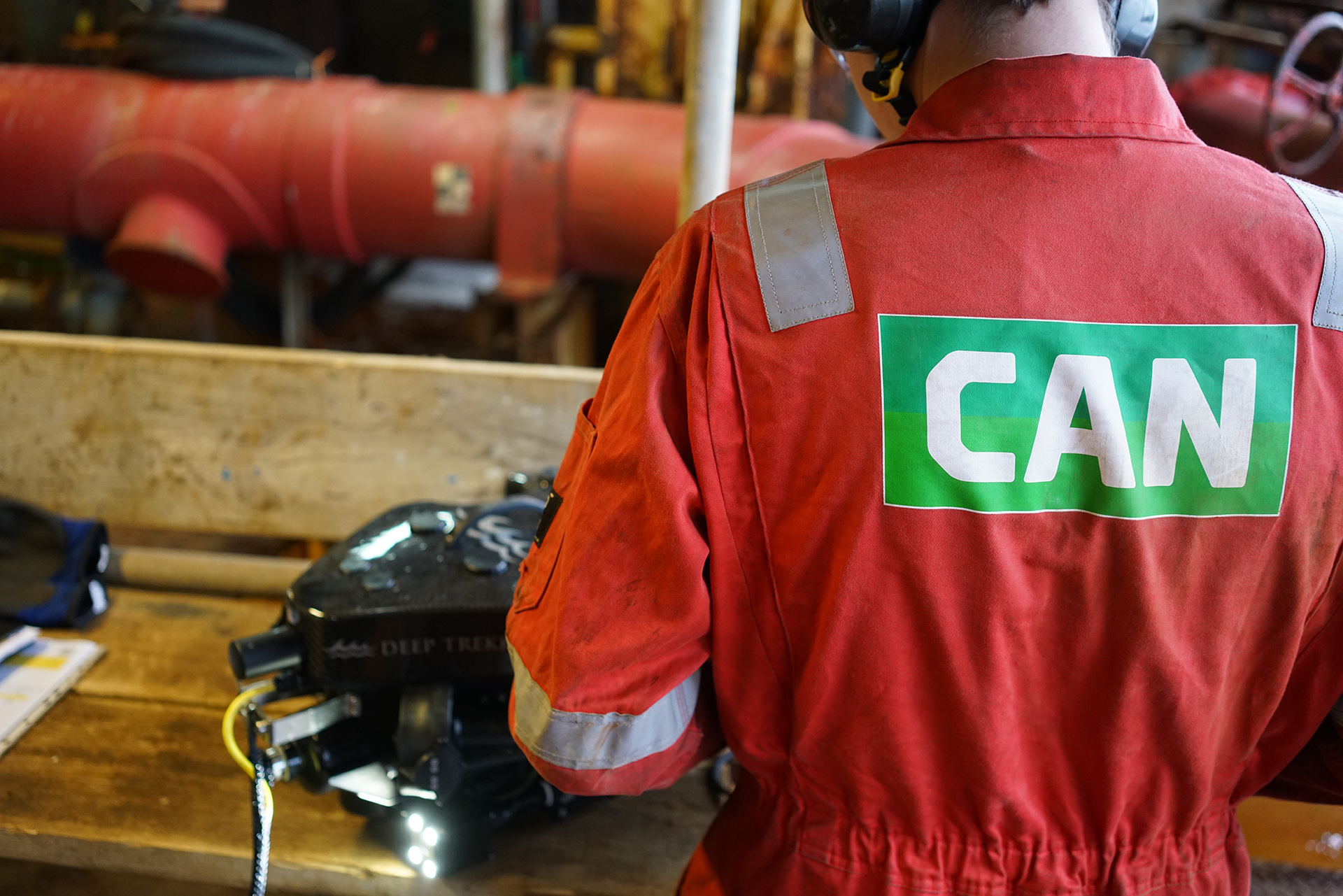
CAN also identified crossover between UAV and ROV operations as beneficial when training personnel for remote inspection work scopes. Existing inspectors could be upskilled to support both visual inspection and ROV piloting tasks while maintaining inspection competency requirements.
The compact deployment format and intuitive piloting characteristics reduced the learning curve for new operators while supporting ongoing competency development and operational standardization across remote inspection teams.
CAN’s adoption of compact ROV systems for FPSO ballast tank inspections has resulted in measurable changes to inspection execution, staffing requirements, and operational continuity.
Key Operational Improvements
Each operational gain maps directly to an eliminated cost line. Cutting tank prep from several days to minutes removes the largest hidden expense in a traditional campaign; the draining, cleaning, ventilation, scaffolding, lighting, and rope-access setup that all happen before inspection work even begins. Reducing the team composition lowers personnel-on-board (POB) costs, one of the heaviest variable expenses in any offshore operation, where every bed, meal, and transfer carries a premium. Keeping tanks operational eliminates the production losses tied to draining and ballast transfer. And eliminating personnel in confined-space entry removes not just the standby rescue spread, but the schedule risk and insurance exposure that come with sending people into enclosed structures.
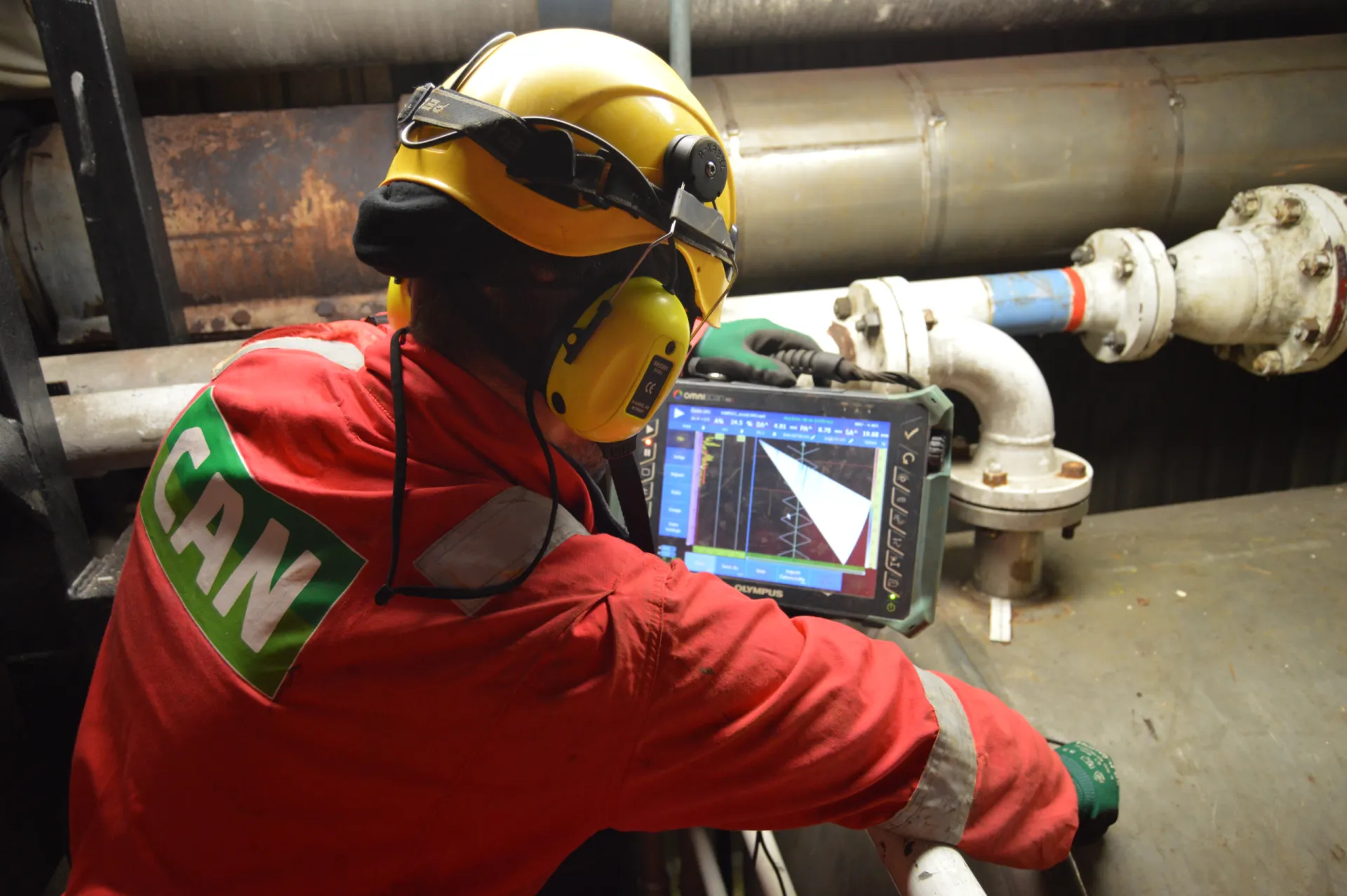
Taken together, these aren't incremental efficiencies; they compress the entire cost and timeline of a ballast tank inspection while removing the highest-risk activities from the workscope altogether. For operators running multiple FPSO inspection cycles a year, that compounding effect is where the ROI of an ROV-based program becomes difficult to ignore. The exact savings depend on day-rates, vessel size, and inspection scope, but the direction is consistent across every campaign: fewer people, less downtime, faster turnaround.
These outcomes align with CAN’s broader inspection strategy focused on reducing personnel exposure, limiting intrusive access methods where appropriate, and maintaining continuous asset availability during inspection campaigns.
“We’re always striving to look for smarter, more intuitive ways of being able to carry out inspection tasks,” said Leum Renney.
The adoption of robotic inspection workflows reflects a shift toward safer inspection methodologies, increased use of remote systems, and reduced operational disruption during inspection campaigns. CAN continues to position remote inspection technologies as a core component of its long-term asset integrity and inspection delivery model, supporting faster execution and more consistent data capture across global operations.
Our team brings extensive hands-on experience in underwater robotics, offering practical guidance to integrate ROVs smoothly into your workflow. From pipeline and infrastructure inspections to water tank servicing, salvage missions, environmental surveys, search and recovery, aquaculture monitoring, and marine research, we provide solutions designed to meet the specific demands of each project. Deep Trekker’s advanced ROV technology allows you to tackle complex underwater tasks safely and efficiently.
When you're ready to secure your very own Deep Trekker vehicle, feel free to contact us, and we'll be happy to provide you with a customized quote tailored precisely to your requirements. Deploying one of our ROVs adds reliability, precision, and safety to your underwater operations, while saving you precious time and money.
Ask us about using ROVs to inspect the risers, hull, and water tanks on your offshore platform.

March 17th, 2026
Two-day AIMS training program teaches SAR teams how to integrate sonar...
March 11th, 2026
Deep Trekker’s SPECTRA ROV integrates 3D Sonar SLAM, 4K stereo vision,...

November 3rd, 2025
At REPMUS 2025, Deep Trekker’s ROVs validated real-world mine countermeasure capabilities...