Configure Now
Items in Your Cart0
0Items in Your Cart
Start building your packageShop Now
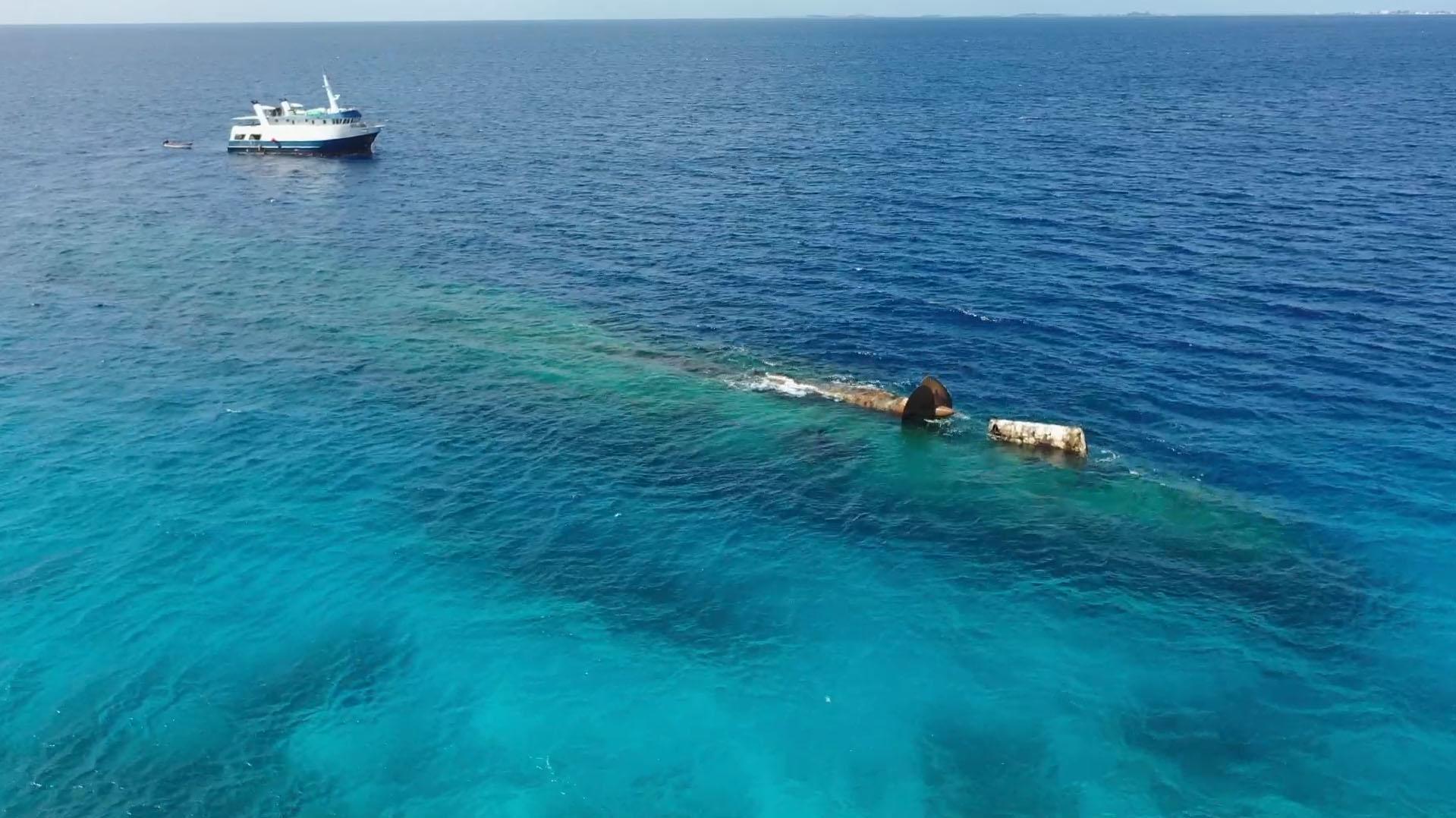
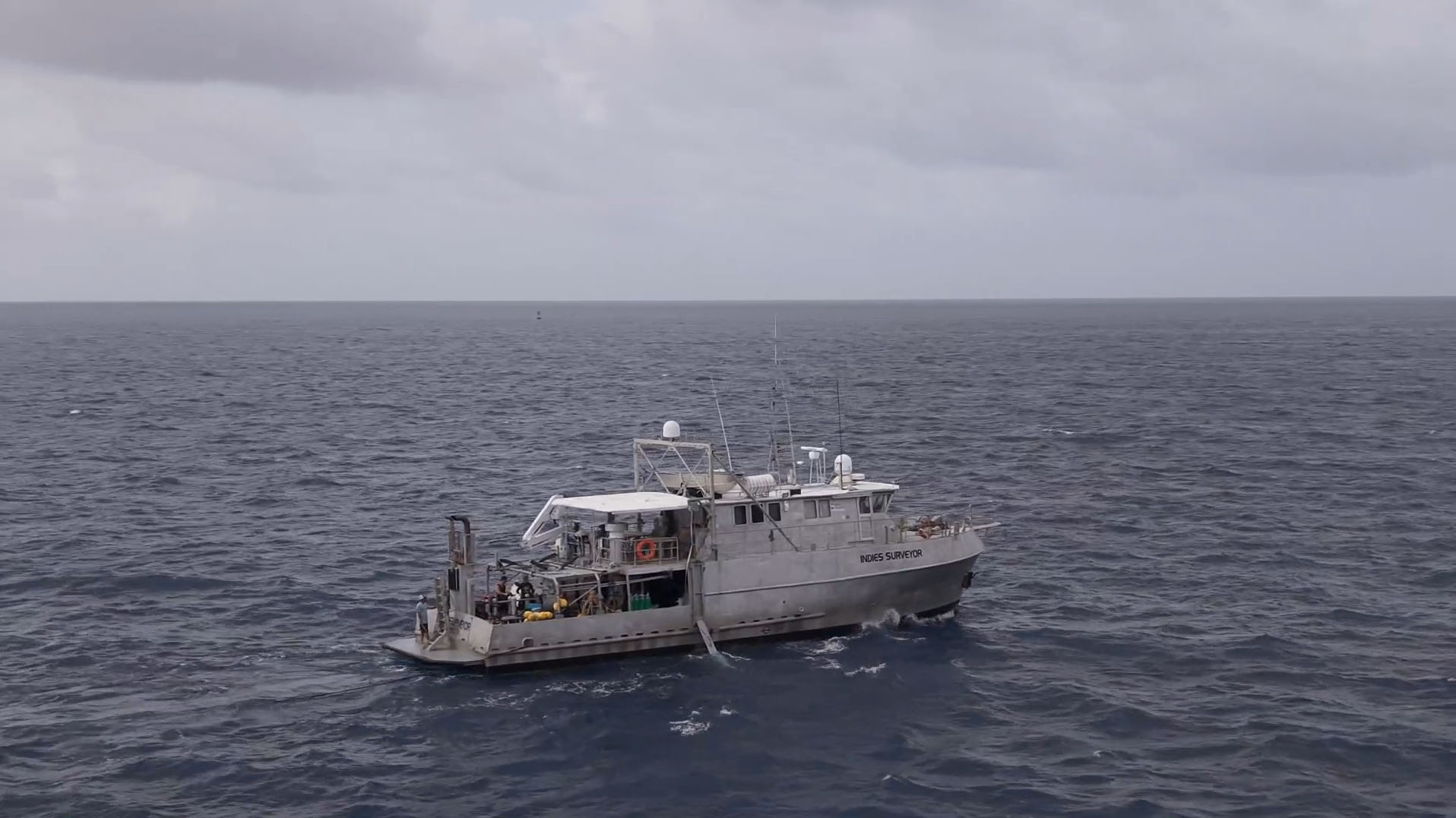
While filming an episode of Discovery's Expedition X in the Marshall Islands, a production team used a Deep Trekker PIVOT ROV to inspect a sunken wreck in a former nuclear testing area and keep watch over the dive team throughout the dive. Radiation readings came back clear, and the PIVOT gave the surface team a live view of the wreck and the divers from the first descent to the last.
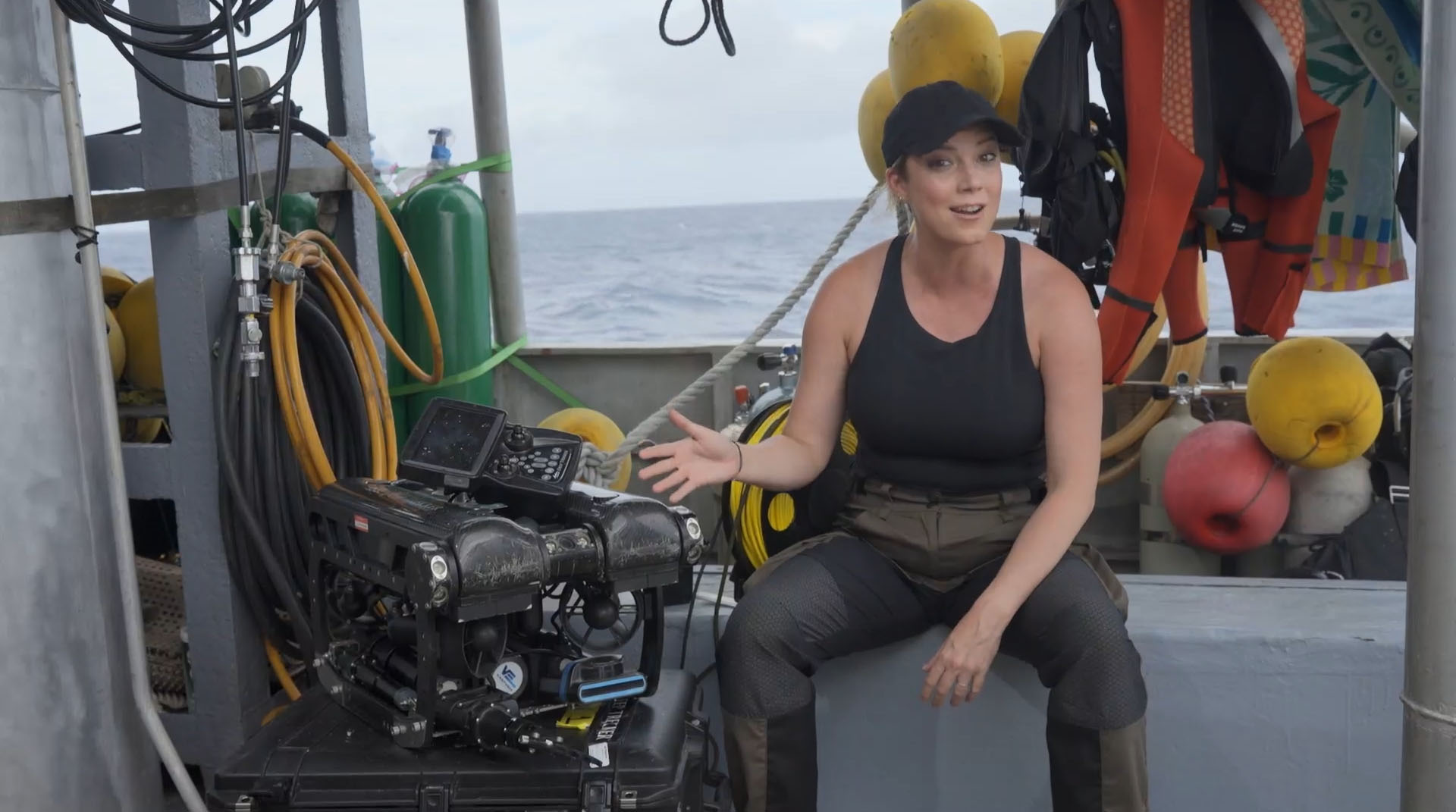
Because it combined a known diving hazard with an open radiation question. The wreck sits in water the United States used for nuclear weapons testing between 1946 and 1958, with sixty-seven detonations in all. The team wanted to know whether the wreck still carried a nuclear signature seven decades on.
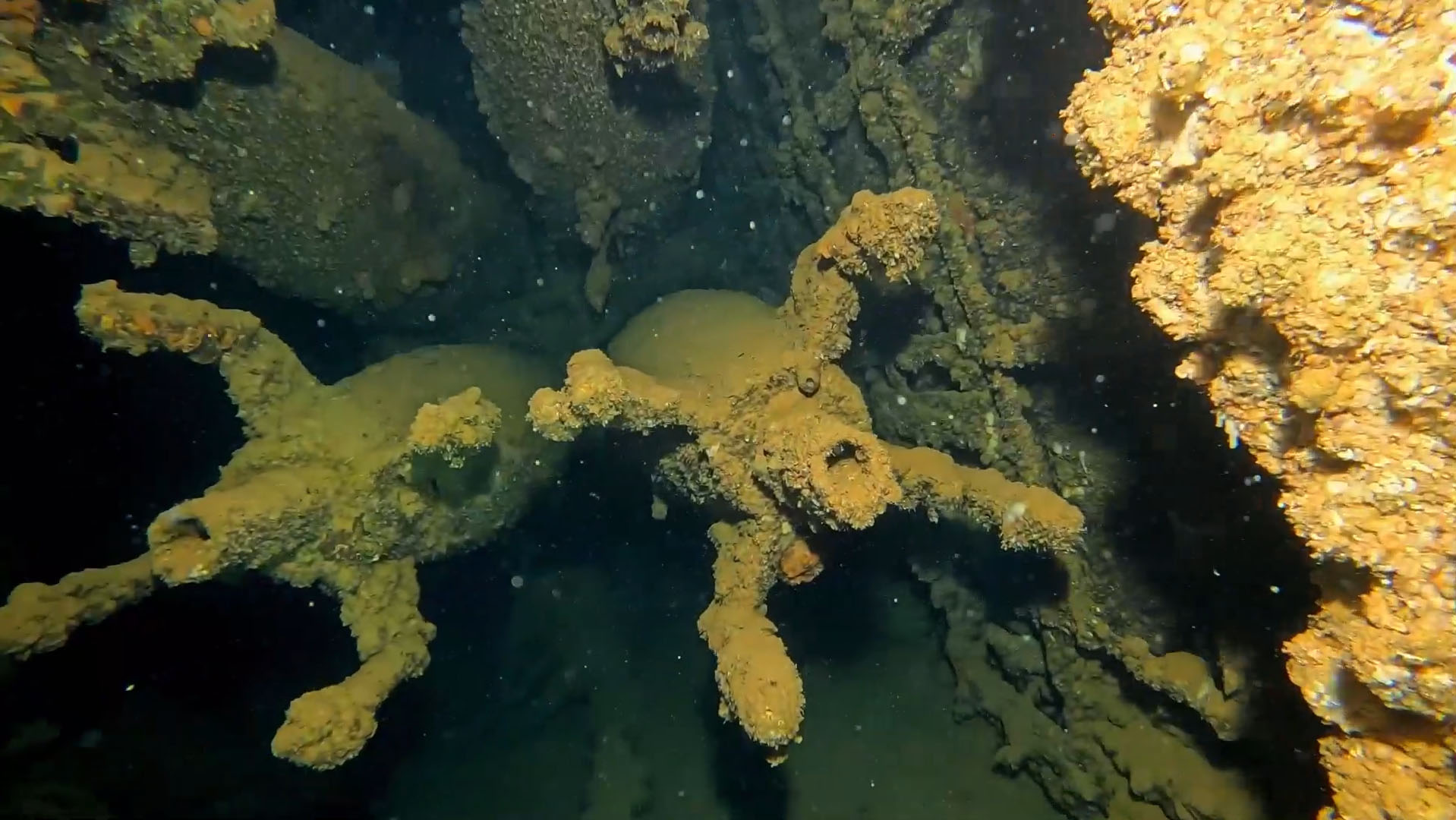
The dive was already a serious undertaking on its own. As the episode puts it, "Seven people have died diving on this wreck." The wreck is a known penetration hazard with restricted interior spaces, and its fatality record was part of the team's pre-dive briefing.
Radiation was only part of the picture. The team also needed to know what the wreck and the water around it actually looked like before anyone went down.
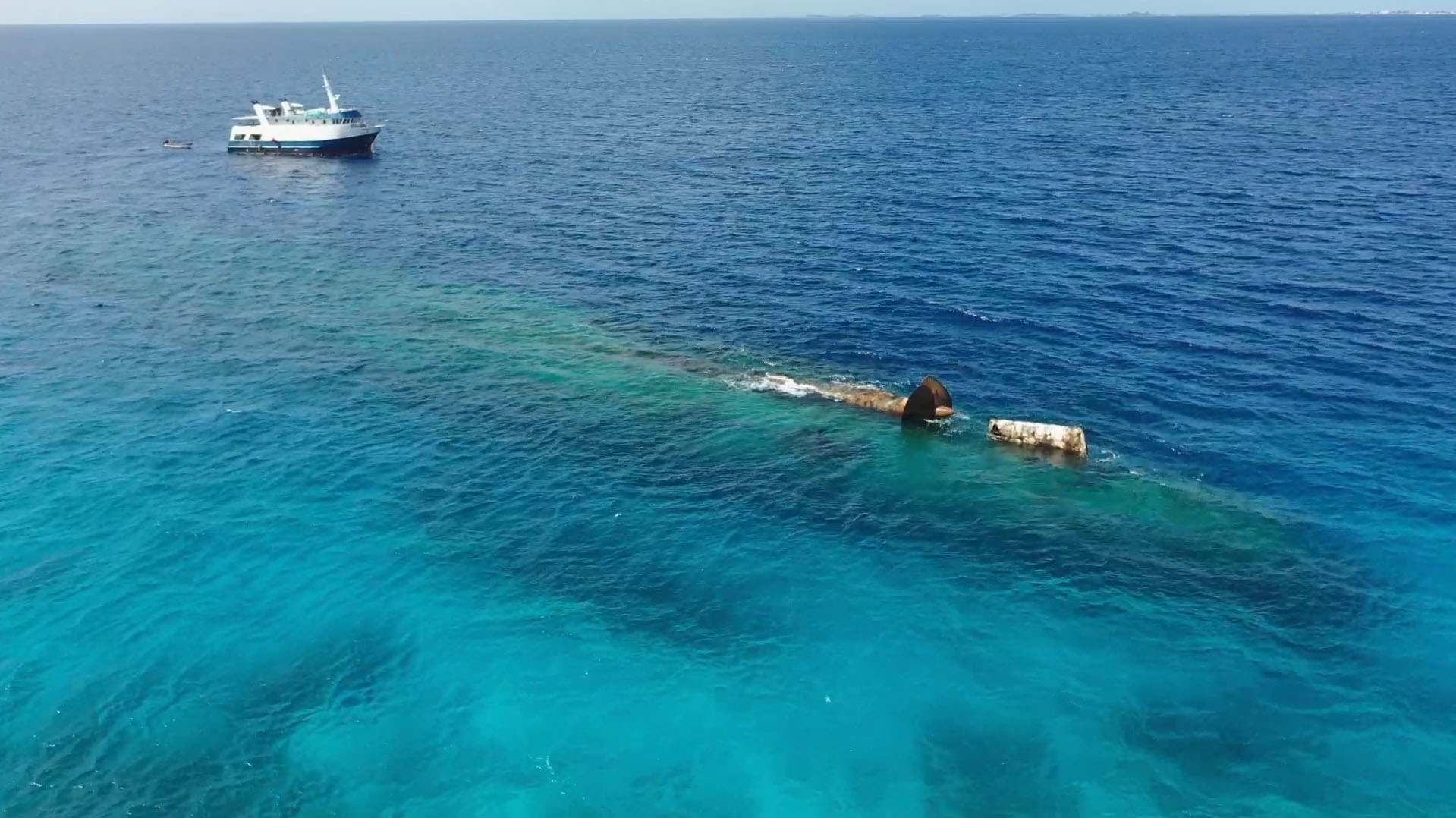
The PIVOT went down first. It gave the topside operator a live view of the water column and the wreck itself, so the team could see what they were diving into before committing people to it.
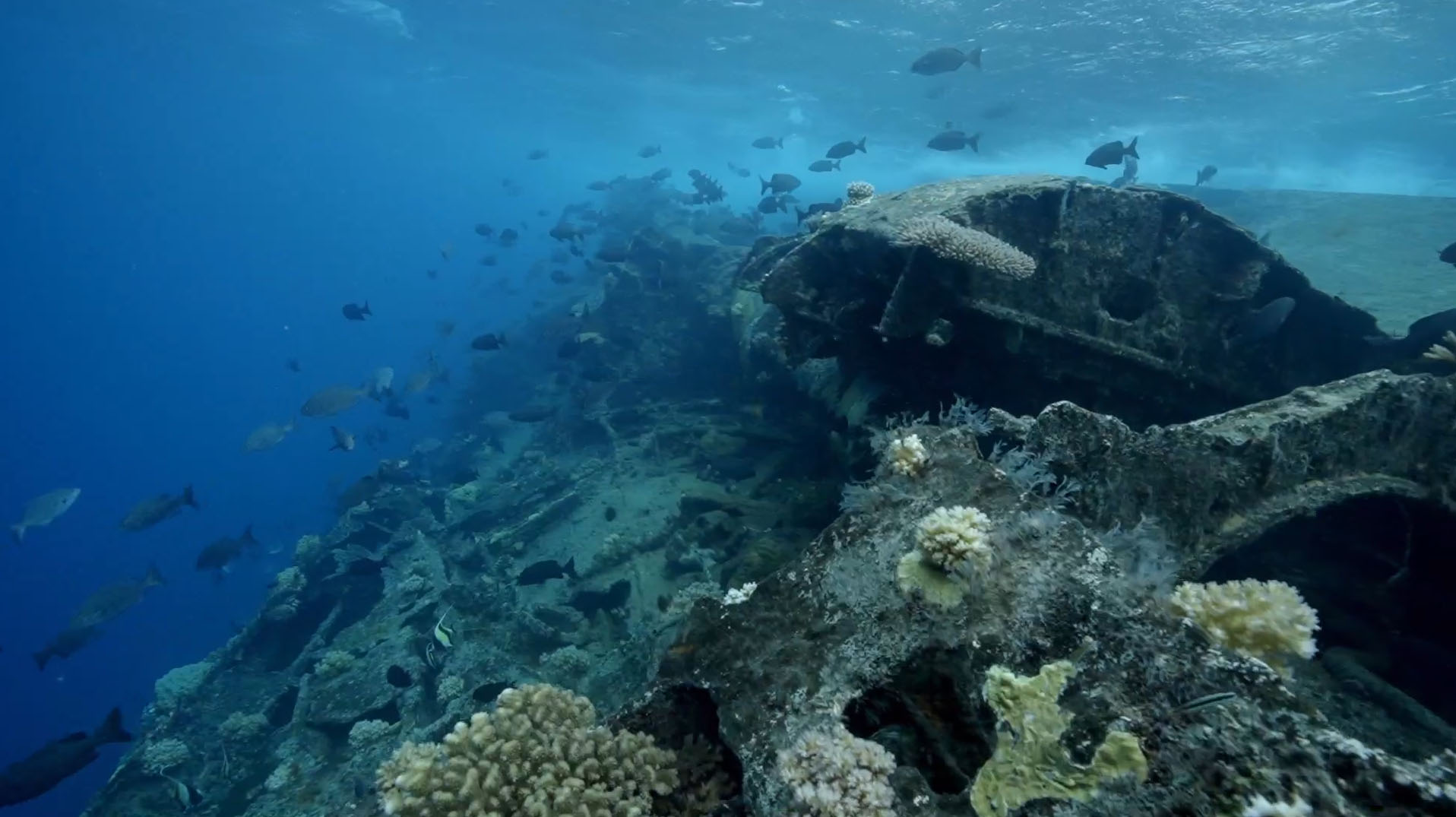
The wreck came into view as a large intact structure emerging out of low-visibility water. With the vehicle in position, the pilot moved in close and worked along the hull, giving the surface team a clear look at the structure and the conditions around it.
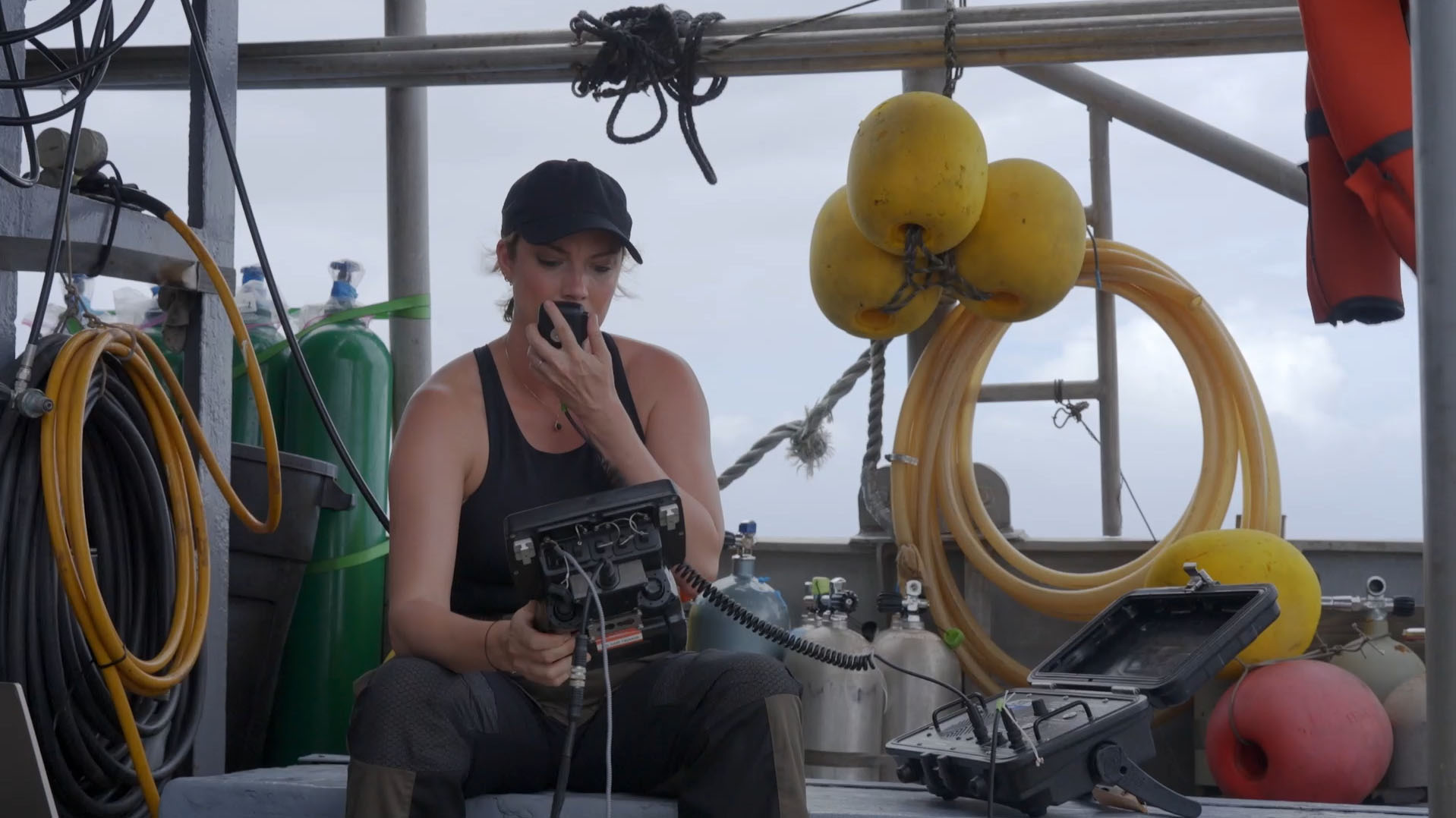
Radiation levels at the wreck came in lower than at the surface, with no elevated signature anywhere around the hull.
The readings opened with a surface baseline of about 20 counts of radioactive particles per minute, a completely normal level and a reference point for everything that followed.
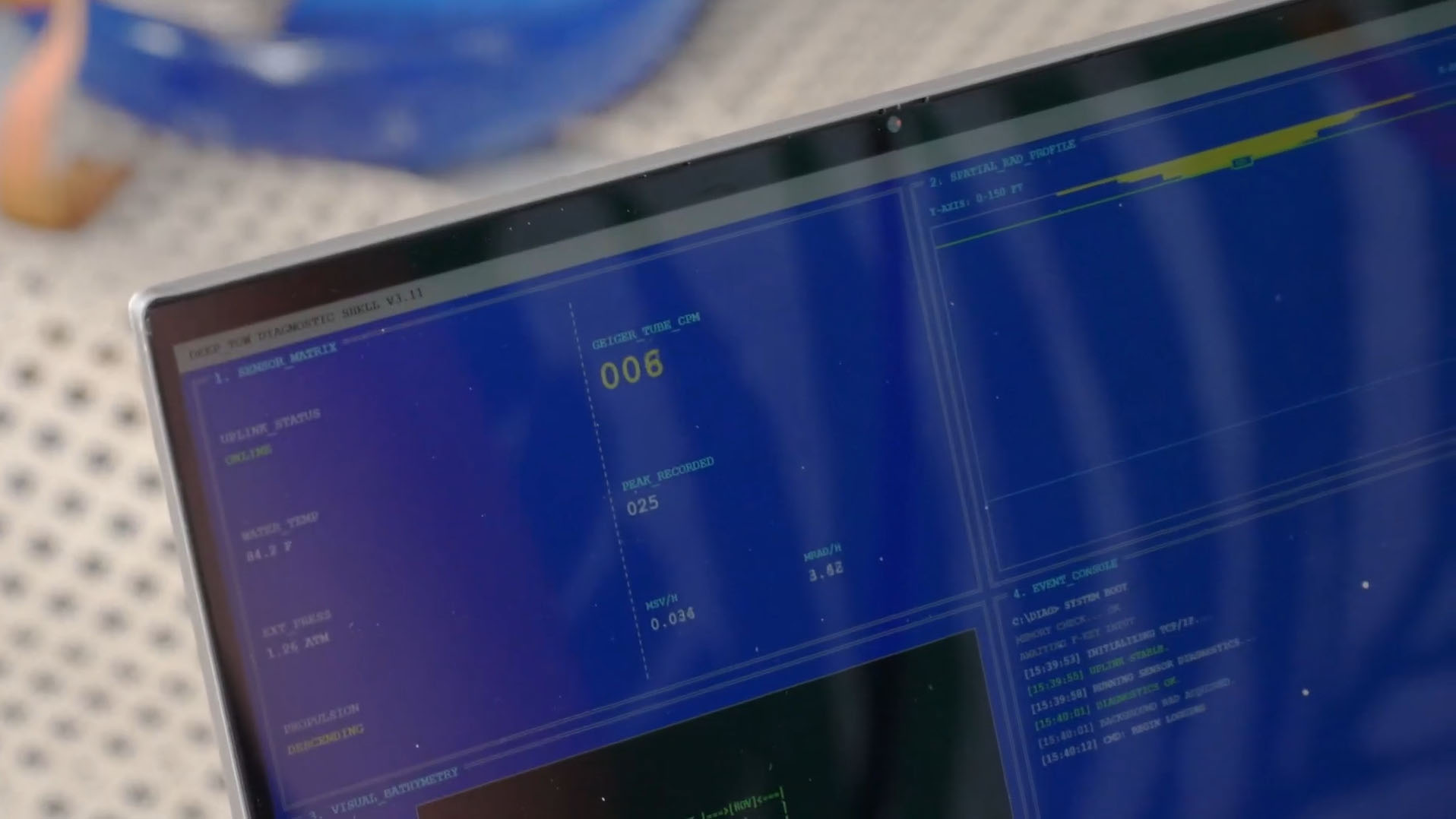
At the wreck, the count fell to six particles per minute. "Radiation dropped drastically," the pilot reported.
That was exactly what the team's expert had predicted before the dive. As the pilot relayed it on camera, "the water would act as a sort of radiation shield."
With the checks done, the call topside was short: "I'm not picking up any radiation around the wreck. You are clear to descend."
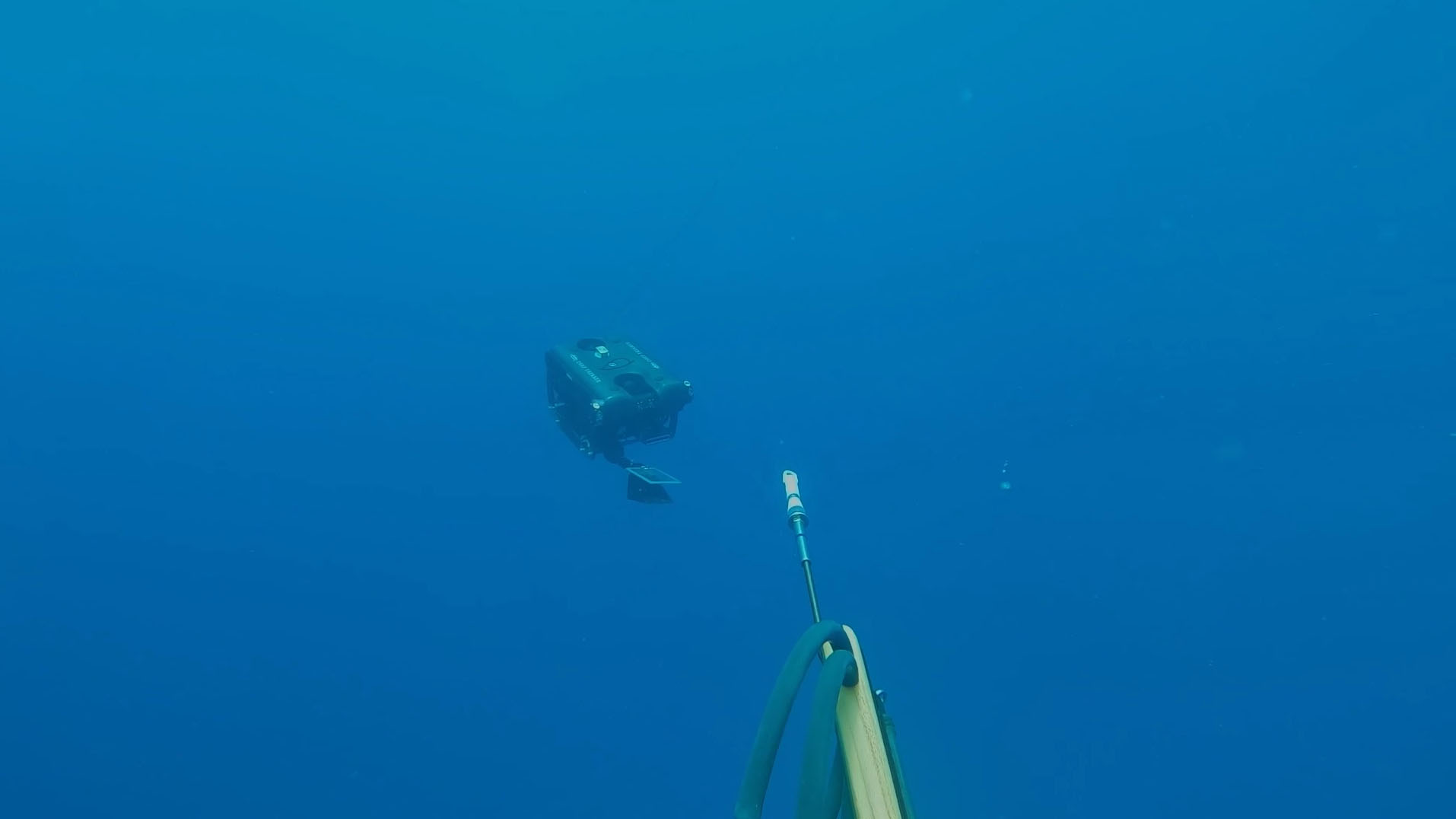
By staying with them. Once the dive team was in the water, the PIVOT followed the divers, giving the topside operator a live visual on the team as well as on the wreck.
On a site with a fatality record and restricted interior spaces, that view meant the surface team could watch the dive as it happened instead of waiting for the divers to surface and report back.
So that the dive team descends with information rather than an assumption. The PIVOT did not take the dive away from anyone. It changed the order of operations, putting the first look ahead of the people.
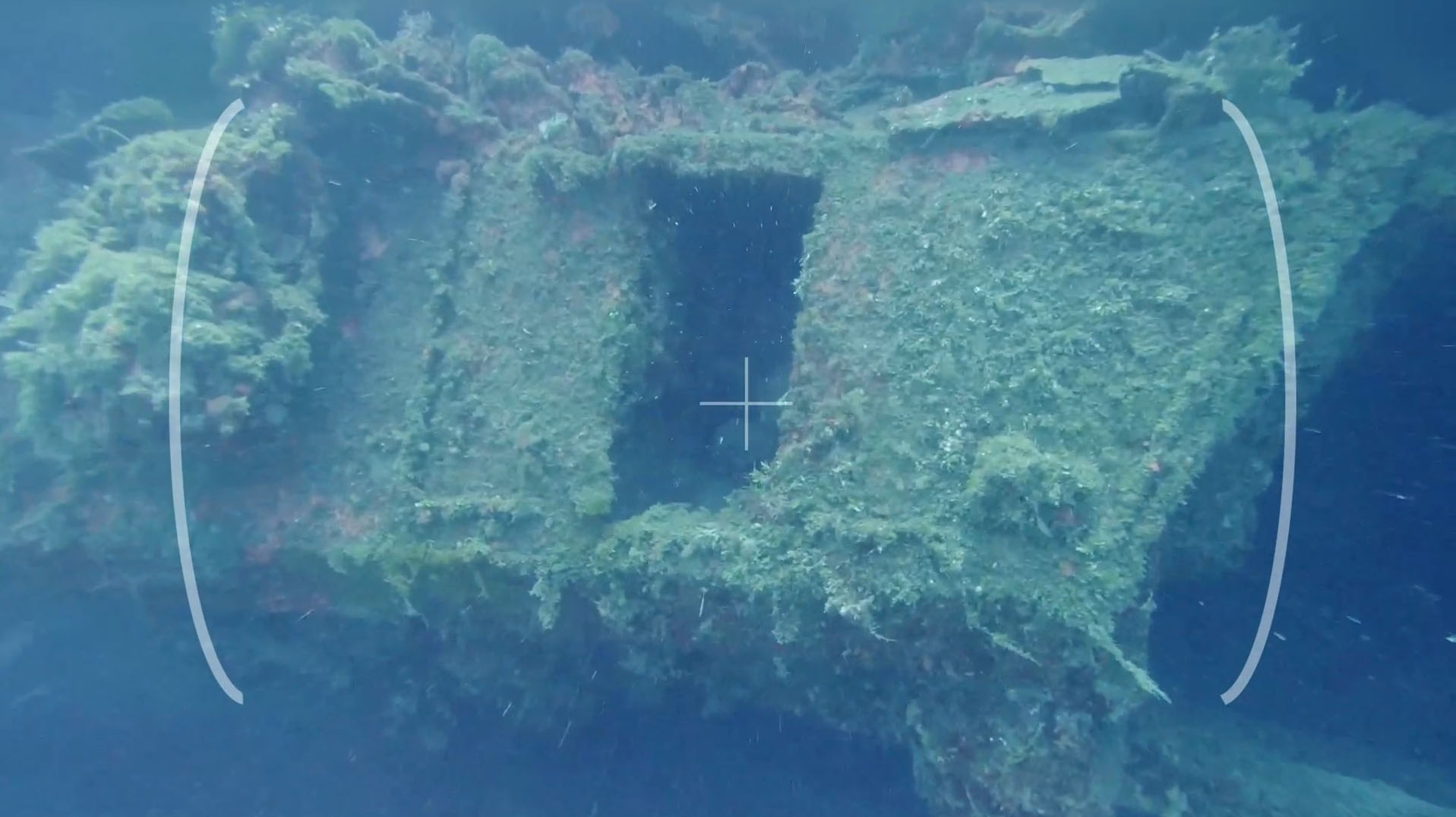
This is a pattern Deep Trekker sees across defense, energy, and public safety work. An ROV is rarely the whole job. It is the layer that runs ahead of manned intervention, establishing what conditions actually are so the dive plan can be built on evidence.
In this case the vehicle did double duty, surveying the hull and giving the surface team eyes on the divers at the same time.
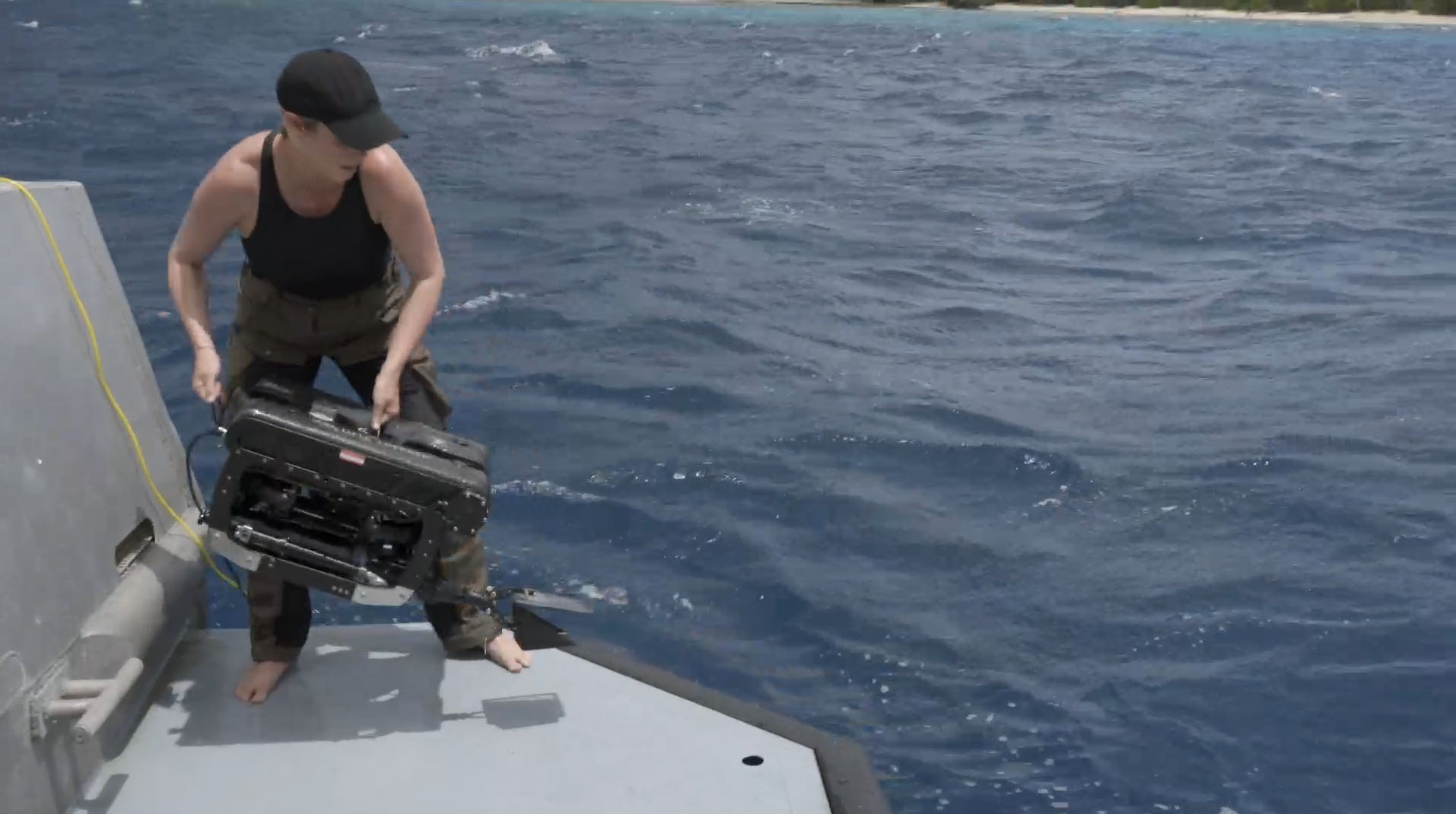
Because the site was remote and the shoot schedule was compressed. The whole system shipped to the production in two hard cases. The PIVOT travels as a portable system and deploys by hand, which is what put an ROV on a wreck in the middle of the Pacific.
Every dive has a question worth answering before anyone puts themselves in a dangerous environment. Deep Trekker builds portable ROVs and crawlers for hazardous and hard-to-reach environments, with options that adapt to the job in front of you. Talk to our team about supporting your dive operations with a Deep Trekker ROV.
July 3rd, 2026
Everything you need to become an ROV pilot: what the job...
September 1st, 2026
Compare imaging, side scan, echosounder, and 3D sonar systems for underwater...
December 23rd, 2021
ROVs and sonar can be used to inspect underwater structures such...