Frequently Asked Questions
Which Deep Trekker ROV should I choose?
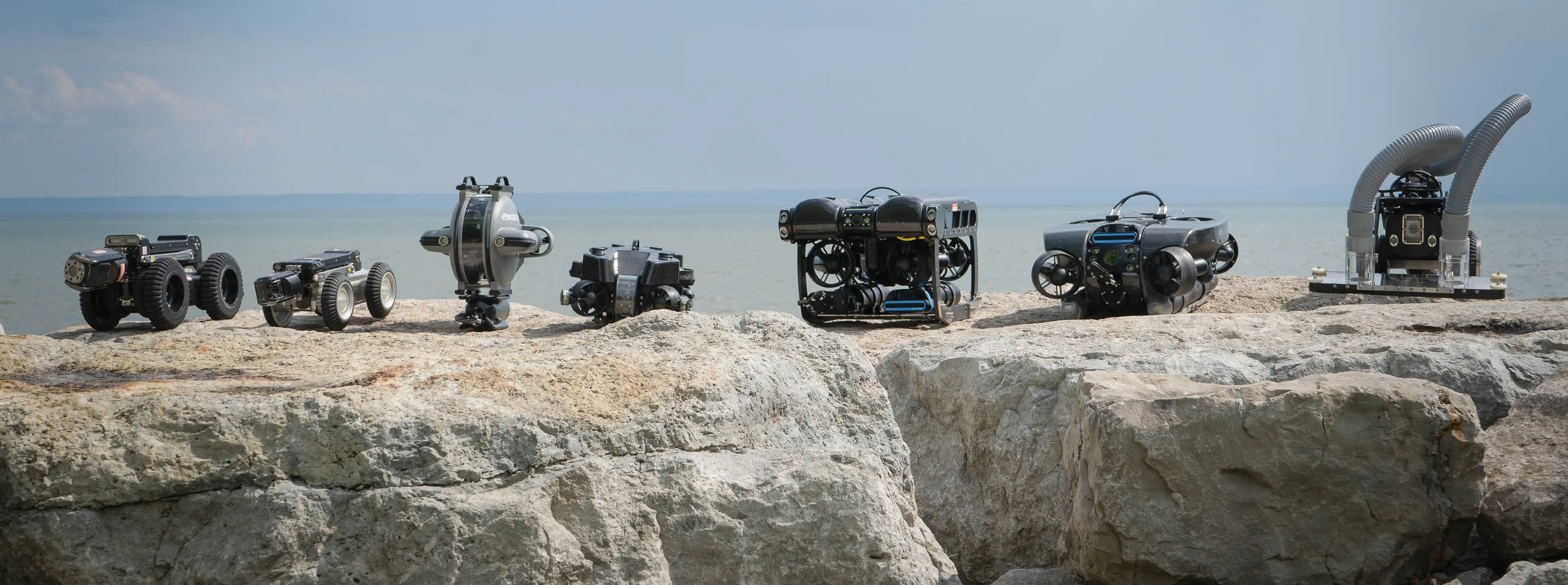
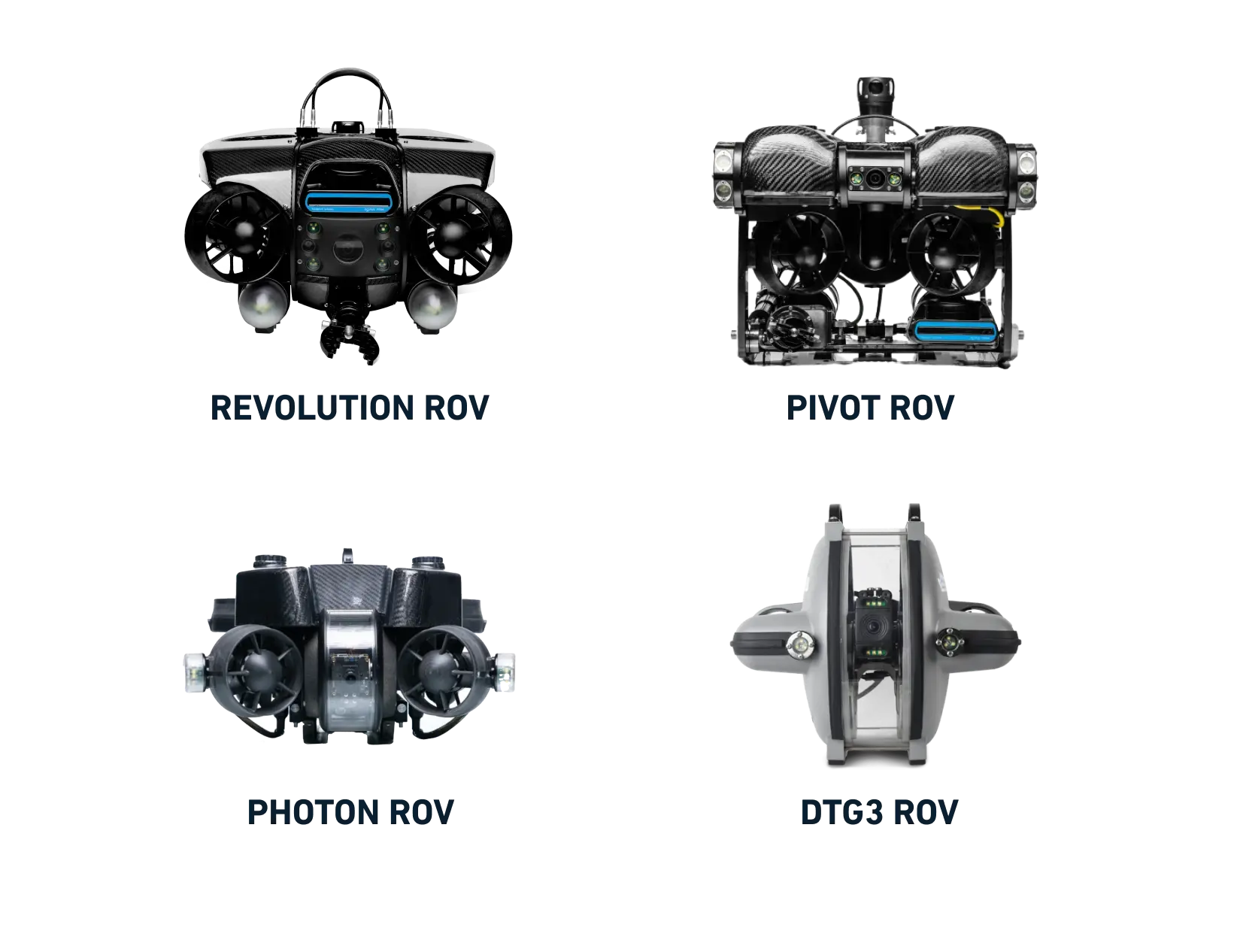
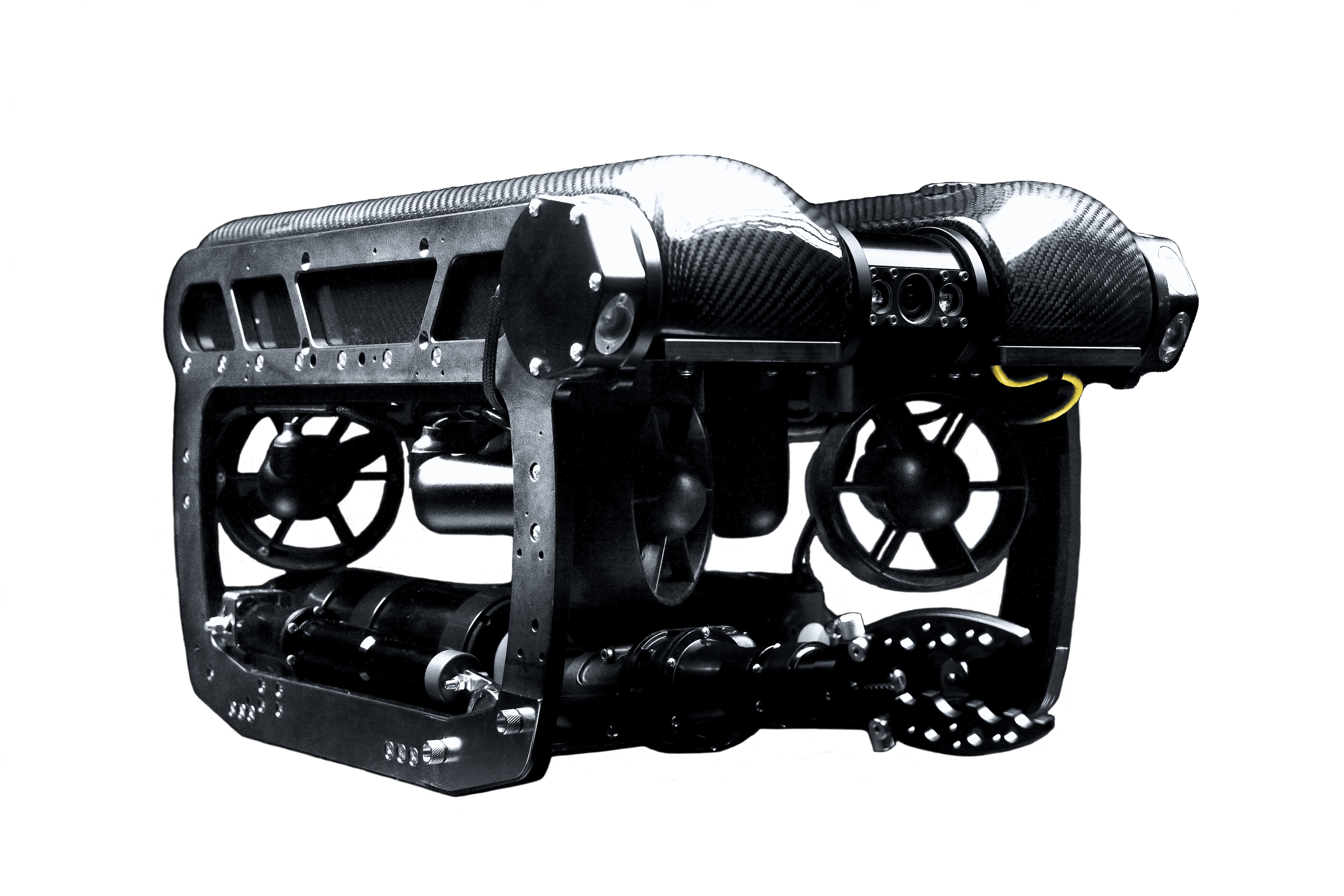
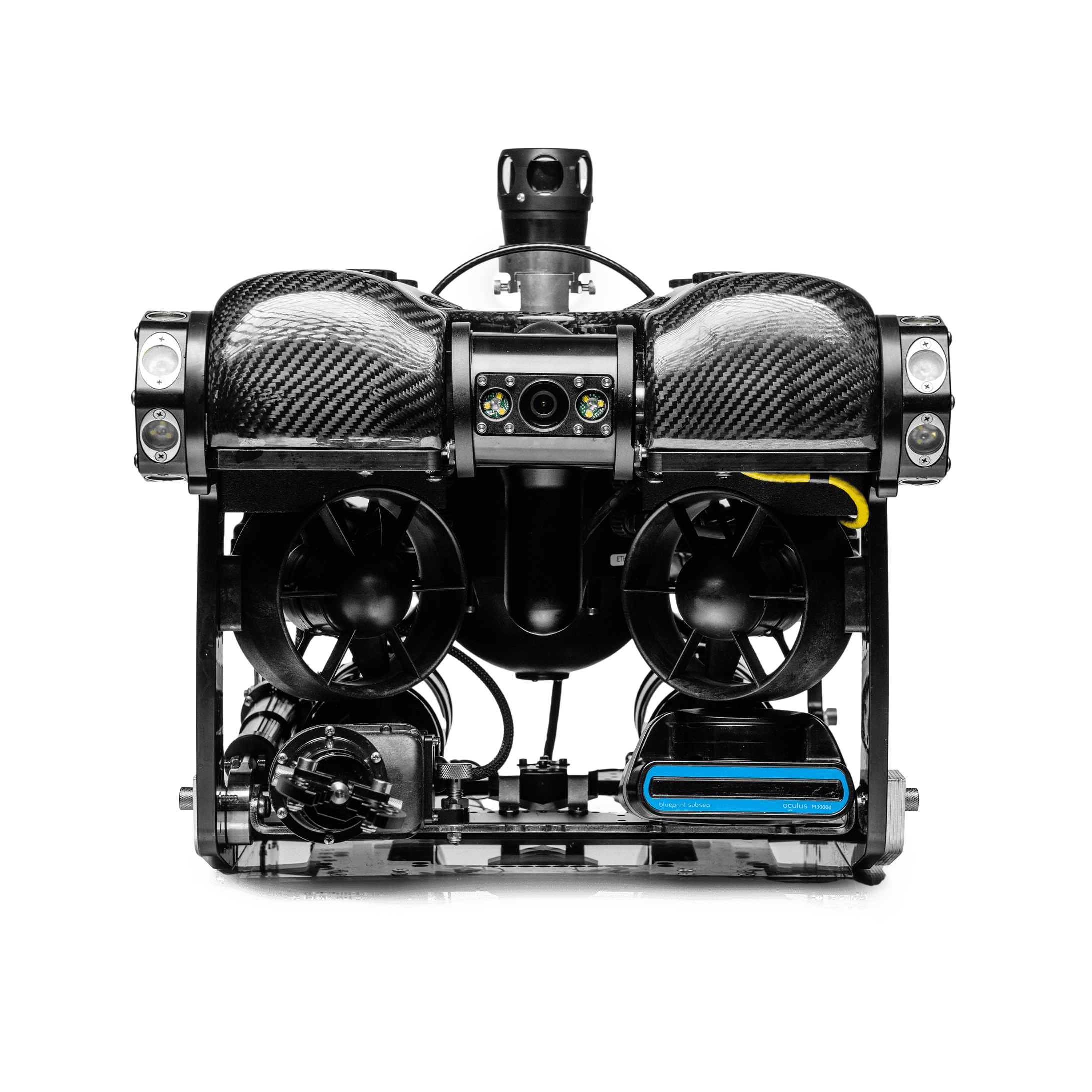
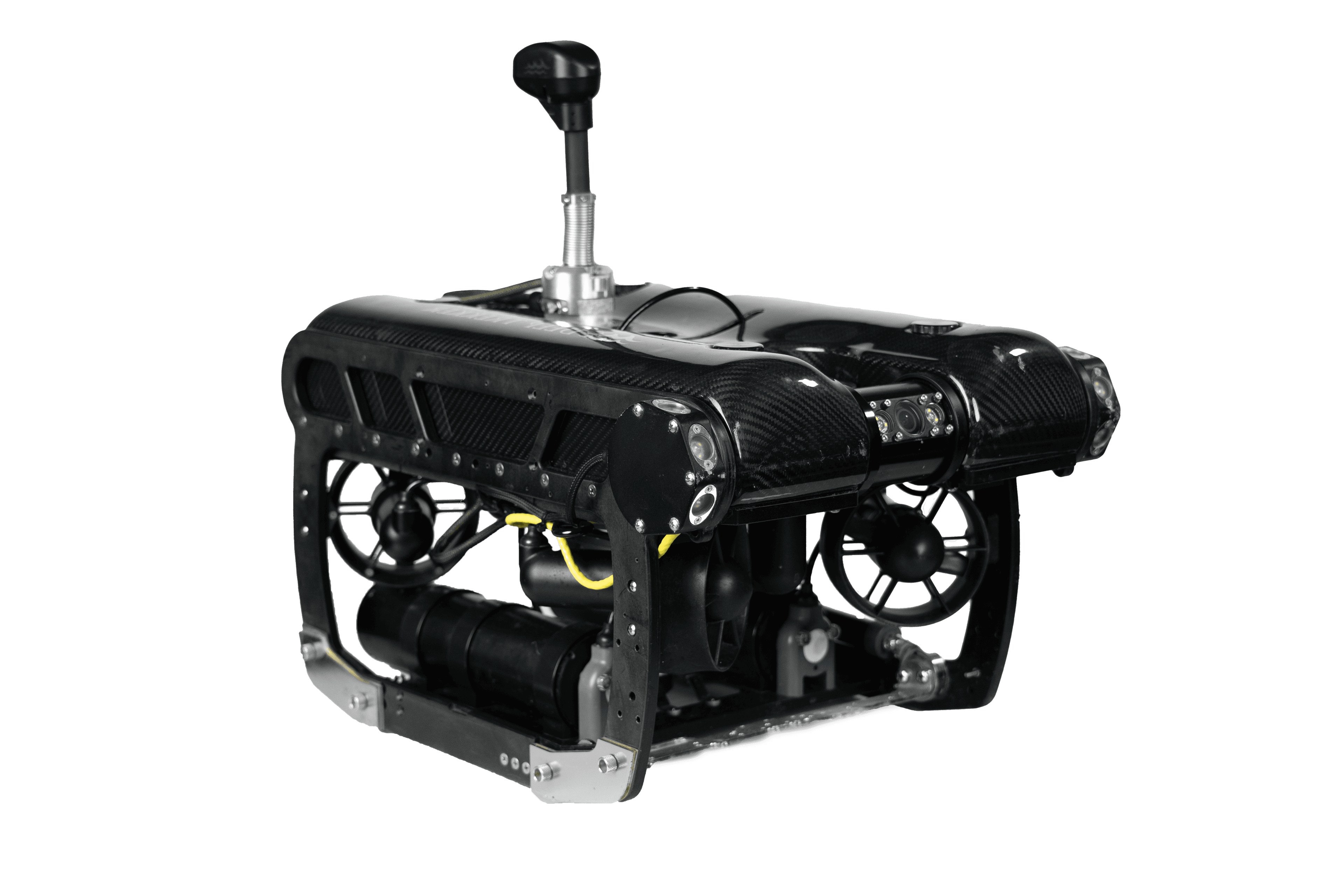
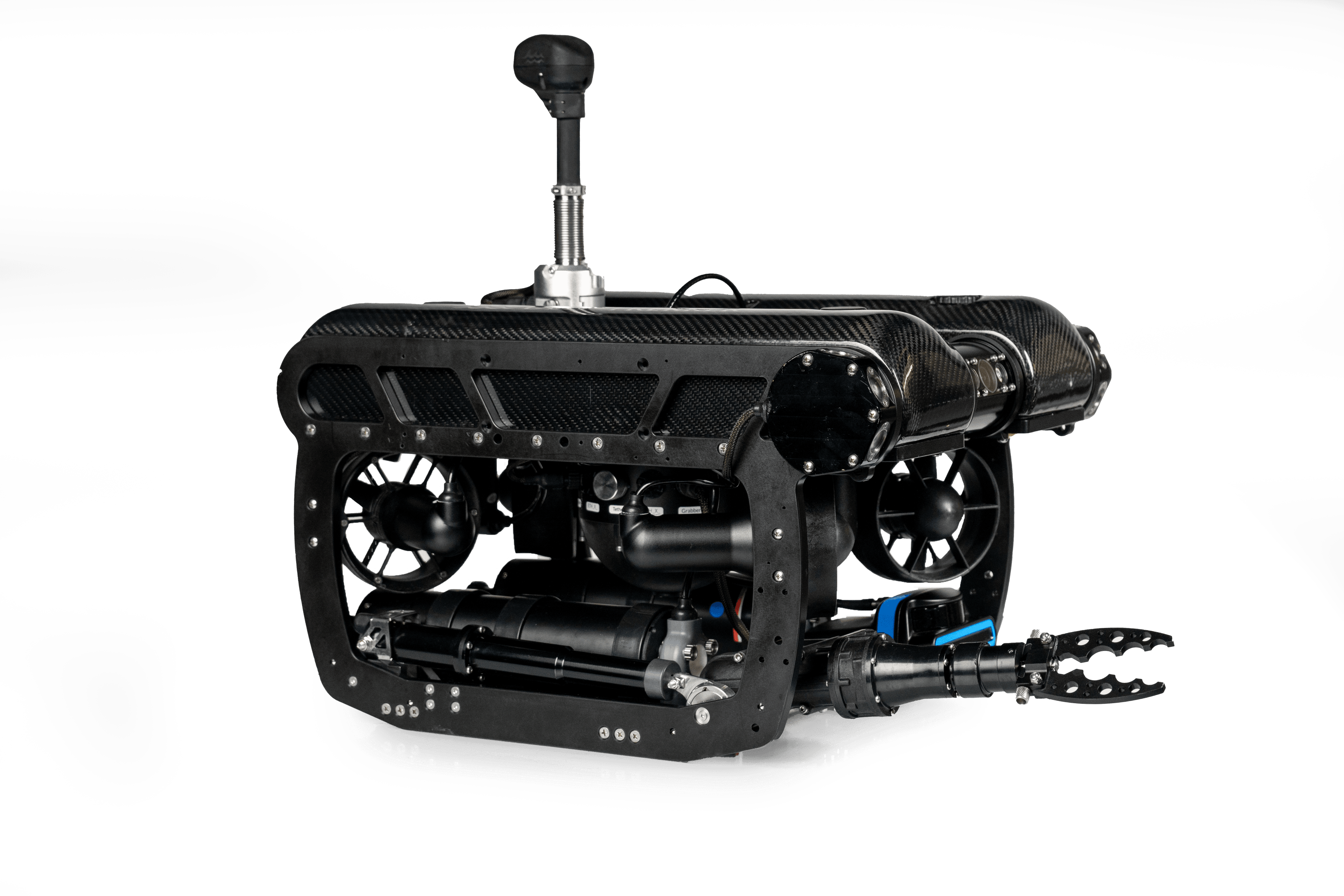
The right model depends on your depth, water conditions, and mission. SPECTRA is the flagship for deep-water and high-current offshore inspection and survey down to 1,000 m. REVOLUTION suits professional inspection, search and recovery, and offshore work to 305 m with a six-thruster vectored design. PIVOT is a versatile mid-range platform for inspections and navigation across many industries. PHOTON is a compact, portable ROV built for confined spaces and industrial tank inspections. DTG3 is an ultra-portable option for light industrial use, research, and education. Each model offers packages such as BASE, NAV, RECON, and SAR that add positioning, sonar, and tooling to match your operation.
What is the difference between the NAV and RECON packages?
Both packages add precise positioning, but they suit different environments. The NAV package uses USBL (Ultra Short Baseline) acoustic positioning together with a DVL and SensorPod+, making it ideal for deeper water or offshore operations where GPS is unavailable and the ROV must stay submerged for long periods. The RECON package uses ROV-mounted GPS with DVL and SensorPod+, which is easier to deploy and operate than USBL, and is best for shallower, nearshore environments where the vehicle can surface. Choose NAV for GPS-denied or extended submerged missions, and RECON for nearshore mapping and surveys that require repeated surfacing.
What is the difference between USBL and ROV GPS positioning?
USBL (Ultra Short Baseline) is an acoustic positioning system that tracks the ROV underwater from a surface transducer, so it works in deep water and while the vehicle remains fully submerged. ROV-mounted GPS determines position when the vehicle can access a satellite signal, typically in shallower or nearshore work where surfacing is possible. USBL supports longer, deeper, GPS-denied missions but requires more setup, while ROV GPS is simpler to deploy and operate. In Deep Trekker packages, USBL is offered in the NAV configuration and ROV GPS in the RECON and SAR configurations.
Which Deep Trekker ROV is best for search and recovery (SAR)?
Deep Trekker offers SAR packages on the PHOTON, PIVOT, and REVOLUTION. Each combines ROV GPS, DVL, SensorPod+, and Mission Planner software to track search coverage in real time, along with imaging sonar and grabbers to locate and recover targets in low-visibility or high-current water. PHOTON SAR is the most compact and cost-effective; PIVOT SAR balances portability and capability for public safety teams; and REVOLUTION SAR suits demanding recovery and EOD missions in strong currents or deeper water. SPECTRA also supports SAR work, using real-time 3D sonar and high-output lighting for target identification in zero-visibility conditions.
Which Deep Trekker ROV is best for aquaculture net inspections?
Several models serve aquaculture depending on site conditions. The DTG3 handles shallow net pen inspections and general visual checks from small boats or walkways. PHOTON BASE suits confined-space work such as smaller pens and mortality checks. PIVOT configurations, including SMART with NetFix and Direct Power, are widely used for versatile net inspection and continuous operation at larger, higher-energy sites. For complex benthic surveys, offshore farms, and detailed positional work, REVOLUTION RECON adds ROV GPS, DVL, and SensorPod+ for accurate mapping. Package choice depends on farm layout, depth, current, and inspection frequency.
Which Deep Trekker ROV is best for offshore energy and IRM inspections?
SPECTRA is purpose-built for offshore Inspection, Repair, and Maintenance (IRM) work. Rated to 1,000 m, it holds position in currents up to 2.3 knots from any direction and reaches forward speeds over 3.5 knots, giving stable control for splash-zone and cross-current tasks such as riser and flowline inspection, touchdown monitoring, FPSO inspection, and diver monitoring. Its integrated 3D Sonar SLAM and factory-calibrated 4K stereo camera deliver real-time 3D mapping and metrically scaled photogrammetry. For offshore work that does not require SPECTRA's depth, the REVOLUTION NAV package is also used for subsea infrastructure and pipeline surveys to 305 m.
How deep can Deep Trekker ROVs dive?
Depth rating varies by model. SPECTRA is rated to 1,000 m (3,280 ft), the deepest-diving platform in the lineup. REVOLUTION and PIVOT are each rated to 305 m (1,000 ft), DTG3 to 200 m (656 ft), and PHOTON to 120 m (400 ft). Tether options extend range further: standard copper tethers are available up to 400 m, with fiber-optic options reaching 2 km on select models for long-range missions, all while maintaining real-time control and video feedback. Always match the depth rating and tether length to your operating environment and mission profile.
What is the SPECTRA ROV and what makes it different?
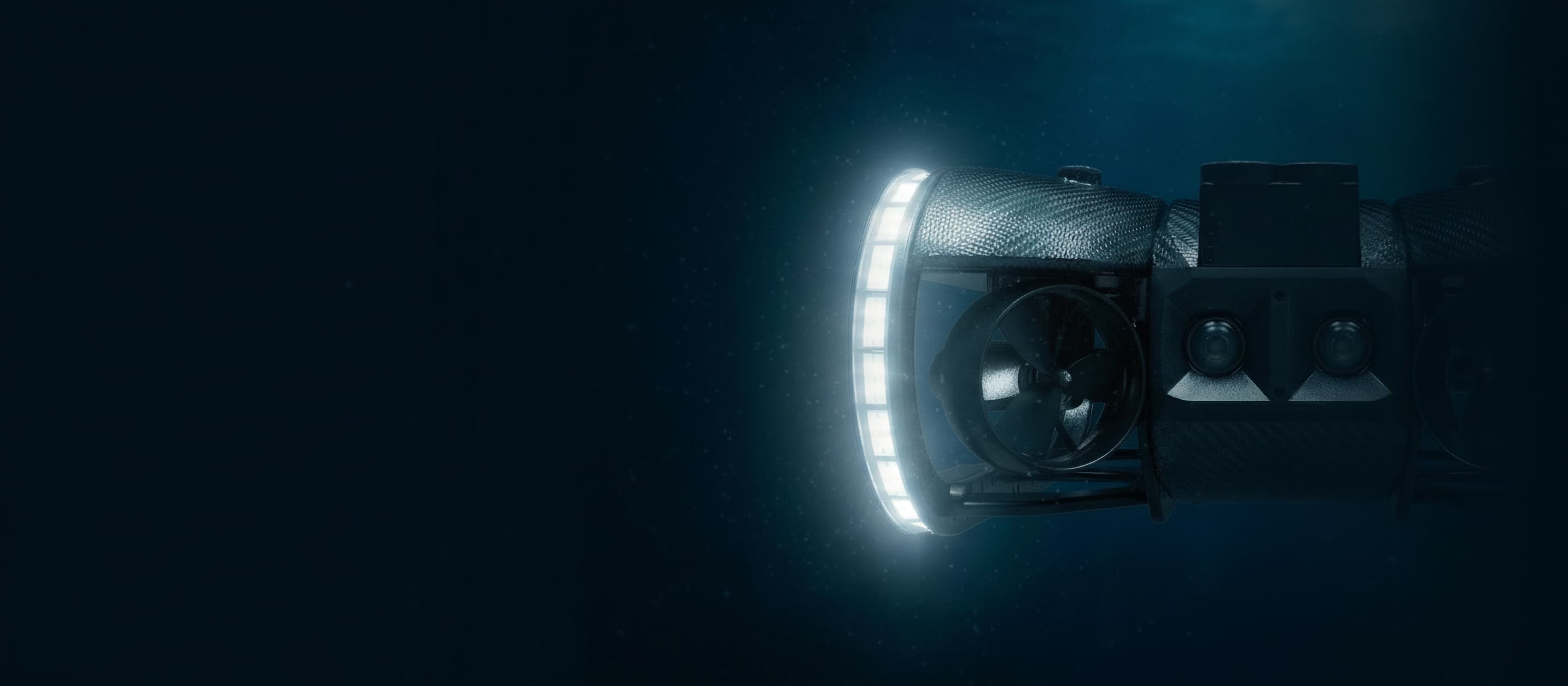
SPECTRA is Deep Trekker's next-generation inspection and survey ROV, launched in March 2026. It brings work-class capabilities into a portable, hand-deployable platform rated to 1,000 m. A seven-thruster symmetrical layout provides strong lateral movement and stable station holding in multi-directional currents, while real-time 3D Sonar SLAM builds a live point cloud for navigation in low-visibility or GNSS-denied water. Its factory-calibrated rotating 4K stereo camera and 300,000-lumen camera-tracking lights enable metrically scaled photogrammetry and digital-twin generation without scale bars. Every major subsystem is field-swappable in under 30 minutes for high uptime on offshore deployments.
Which Deep Trekker ROV is best for high-current or mooring and hull inspection?
SPECTRA is purpose-built for high-current offshore inspection, holding position in currents up to 2.3 knots from any direction while reaching forward speeds over 3.5 knots, which suits it to hull, mooring chain, and riser work in demanding metocean conditions. Where that depth is not required, the REVOLUTION NAV package handles hull and mooring inspection to 305 m with USBL positioning and strong station holding.
Can you track an ROV's position underwater?
Yes. The RECON package uses ROV-mounted GPS for georeferenced tracking in shallow or nearshore water where the vehicle can surface, while the NAV package uses USBL acoustic positioning to track the ROV while it stays fully submerged in deeper or GPS-denied environments. Both add DVL and SensorPod+ for heading, depth, and dead reckoning.
How much does a Deep Trekker ROV cost?
Pricing depends on the model, the package, and any add-ons such as sonar, positioning, or extended tether. The DTG3 is the most accessible option, the PHOTON and PIVOT sit in the mid-range, and the REVOLUTION and SPECTRA serve professional and offshore budgets. Build a configuration in the online configurator or request a quote for exact pricing.