Configure Now
Items in Your Cart0
0Items in Your Cart
Start building your packageShop Now
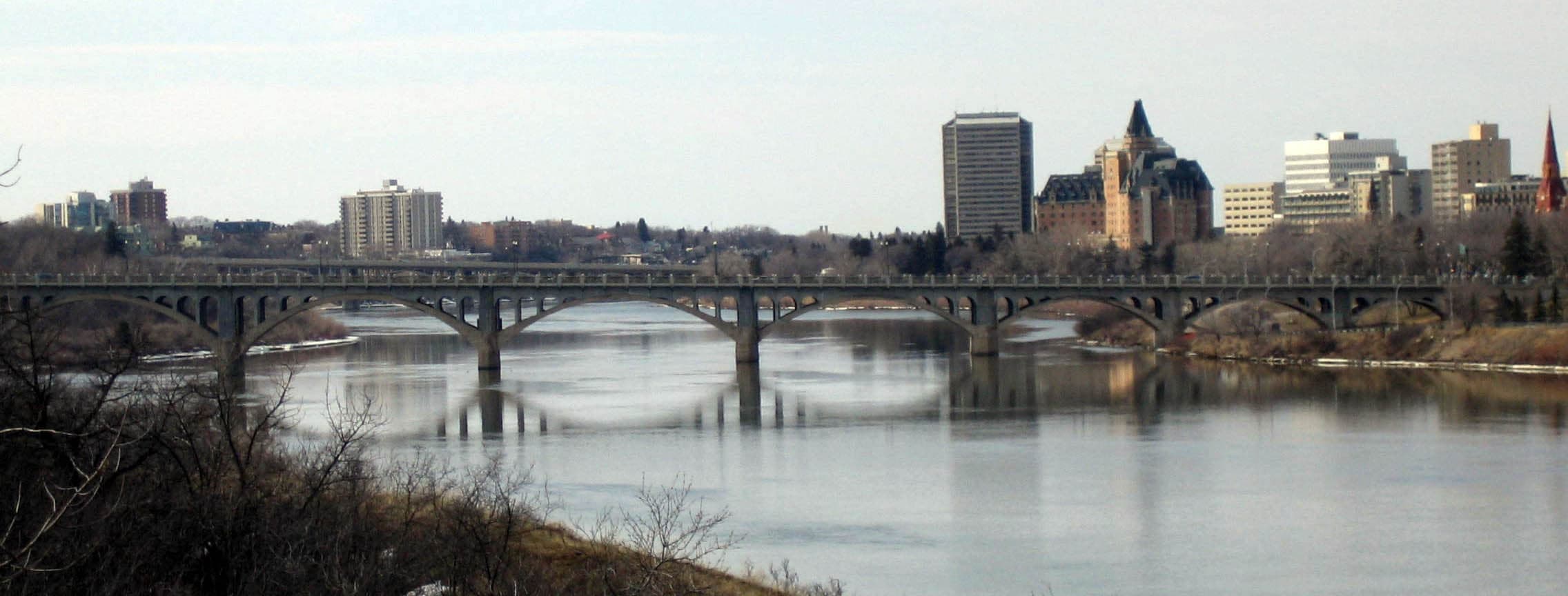
Water utilities are under increasing pressure to reduce operational costs while maintaining asset integrity and regulatory compliance. For SaskWater, Saskatchewan’s commercial Crown water utility, the use of ROVs (Remotely Operated Vehicles) has changed how inspections are performed—reducing reliance on divers, minimizing service disruptions, and enabling faster, data-driven maintenance decisions across critical potable water infrastructure.

At SaskWater, ROVs from Deep Trekker are used to inspect critical clean water infrastructure, including clear wells, pump wells, and transfer chambers.
Mitchell Markel, Senior Technologist and Lead ROV Operator, explains: “The Deep Trekker unit, we use that for all of our clean water systems. We go into clear wells, pump wells, stuff like that, transfer chambers, and we inspect the walls. We make sure everything, all of our piping that's inside of there is where it's supposed to be. We make sure the integrity is good.”
These inspections focus on:
Water Storage Tank Inspection and Maintenance 101
ROVs significantly reduce inspection time on a per-asset basis, with most clear well inspections completed in minutes rather than hours typically required for diver-based methods.
“I can do an inspection in probably 10 minutes in a clear well, which is much quicker than anything with a diver.”
Compared to diver-based methods, Markel explains, “On site per clear well, it’s about an hour or two with a diver because you have to spray them down and have them all tethered up. You have to go through all the safety orientation, then they go into the clear well, then they do their inspection.”
This reduction comes from:

Markel explains further, “If we have baffles or anything that looks out of place, a diver might not know what to look at. Whereas if I can see it, I can say, ‘Oh, this isn’t right,’ and look deeper into what’s going on in that area. A diver might just be quickly looking at it and then moving on.”
The ability to complete inspections in minutes instead of hours directly impacts labor utilization and scheduling efficiency.
Unlike diver inspections, ROVs provide live visual feedback.
“What’s useful about the Deep Trekker is you’re able to inspect it live. If you have a diver in there, you’re just relying on the footage afterwards. Then you have to ask them where things are. With the Deep Trekker, you’re able to look at it in real time. ‘Oh, this is right over here. We can see it right now in real time.’”
This eliminates:
Safety was identified as the primary driver for adoption.
“Safety is the big one. We're not having a person going into a high-risk confined space sort of situation. There’s also the potential of contaminating the water, which is another safety concern.”
Additional safety-related benefits include:

“It helps avoid having to send divers down into unsafe conditions. We're able to throw technology down there and it's been a lot better that way. We're able to get in and out fairly quickly.”
ROVs help avoid unnecessary dewatering and cleaning operations.
“With a diver, it depends on the location, but some of them have to de-water. Some of them have to actually empty all of the water out, then have people go into the confined space to clean it. That’s often based on a hunch that the clear well needs to be emptied in order to clean it.”

With ROV inspections:
“A drone will go in there and tell you, oh, you actually don't need to clean it.”
This enables:
“It costs a lot of time and money to actually dump all that water. Tons, tons of time and money. In the past, they would use divers if they have a major issue or something might be going wrong. Now with the ROV... We don't need to do that. The ROV saves that major step.”
Discover how DPSI used a Deep Trekker ROV to inspect six firewater tanks in a single day - cutting costs and avoiding confined space entry and downtime.
ROV inspections support preventative maintenance and asset lifecycle planning.
“I look at pump integrity during inspections, including the condition of the pump walls—checking for rust, corrosion, and similar issues. I also look for crustacean buildup. From there, I can provide feedback, such as recommending a planned pump pull within a defined timeframe if issues are likely to develop.”
They also inform cleaning schedules:
“Preventative maintenance also applies to cleaning the clear well, where I assess sediment buildup and other material accumulating in the tank. You look at all the sediment buildup… then you're able to actually pre-plan.”
This supports:
“It’s mainly saving time and money. Instead of draining the entire asset and water system just to determine whether infrastructure is in good condition or needs cleaning, you can inspect it directly. Without visibility, there’s uncertainty around the actual condition.
Being able to throw the PHOTON in there and just look at everything and go, ‘okay, well, we can go another year or two. We don’t need to actually clean it this year.’ Then you’re able to support longer-term planning, such as scheduling a cleaning two years out. So you’re able to get a longer life between cleanings and save some costs.”
ROVs reduce disturbance inside potable water systems compared to divers.
“From a logistics standpoint, the ROV is much better. We’ve been working with our regulatory body, the Water Security Agency, which sets the regulations for us, and they require that we increase the chlorine and report back every hour while the machine is in there. So it’s similar rules to when a diver goes in, but a diver has a greater surface area, so they could affect the potable water more than the small unit. They can stir things up more, and then they can drop the chlorine on us while they’re in there. The drone doesn’t really affect anything while it’s in there.”

The result is improved control over:
Deployment simplicity and operational control both contribute to day-to-day efficiency in the field, particularly when working in confined or infrastructure-heavy water systems where safe handling and repeatable workflows are required.
“We'll show up on site, do all of our safety procedures that we need to do, and then you spray down the instrument with chlorine right before it goes in–then we do our inspection, and rinse and repeat.”
“We’re really happy with the Deep Trekker systems because it’s been a great fit operationally,” explained Markel. “Everything fits in one case, I can throw it in the back of the truck and not have an issue.”
From a usability standpoint, the Deep Trekker handheld controller has been easy for operators to learn and use consistently in the field.
Training requirements are minimal:
“The Deep Trekker system’s controls are intuitive and easy to use. I’ve grown up playing video games, so using the controller came naturally to me. It was very easy to get up and running. Even some of our older staff who didn’t grow up playing video games adapted to the controller quickly. They were trained up in a short period and became comfortable using it.”

Maneuverability and tether management also play a key role in operational performance. “Maneuverability and tether management is pretty important. It’s not difficult—these tanks aren’t too elaborate, so it’s fairly easy to make your way back. There are a few locations where there’s aeration pumps and similar equipment operating, so you need to be aware of where your tether is and how it’s being managed. But the Deep Trekker system’s tether is really easy to track and manage.”
Current high-value features include:
Emerging value from tooling is focused on expanding capability beyond inspection.
“Right now, the system is mainly used for video inspection and capturing footage. We recently added a grabber claw, and there was a situation where it would have been useful. In one of our clear wells, roots were growing through cracks, and the claw could have been used to remove them. At the time, we didn’t have that attachment yet, so we had to bring in a diver to clear it out.
Future enhancements under consideration:
“We’re discussing adding the Deep Trekker VAC Utility crawler to be able to clean up sediment on the bottom. That will likely be part of our next ROV line up, and it will be a major capability increase.”
“In the clear wells and similar structures, there isn’t much water movement, so we don’t really need it there. But again, we’re talking about upgrading to a Deep Trekker system with DVL and station-holding capability that is used just for our raw water. The goal is that when we go out onto lakes, we’re able to accurately pinpoint where our pipelines are and related infrastructure.”
ROVs enable on-demand inspections without logistical constraints.
“We can now do inspections whenever we feel like. If anybody ever asks me, ‘Hey, can you come inspect this?’ Oh, yeah, no problem. We'll come out and do a quick inspection on whatever they need done right away.”
This flexibility supports:
At SaskWater, ROV inspections using Deep Trekker systems are used to reduce inspection time, improve safety, and support maintenance planning across clean water assets.
“Saving a huge amount of time and money, I think, is the big one.”
From an operational perspective, ROI is driven by:
Long-term impact is reflected in improved asset decision-making, with the ability to assess infrastructure conditions in real time and extend operational planning forecasts based on actual inspection results.
“It’s all about saving time and money… Being able to throw the Deep Trekker in there and just look at everything and go, okay, well, we can go another year or two. We don’t need to actually clean it this year. Then you’re able to actually pre-plan for two years: hey, we need to do the cleaning in a couple years here. So you’re able to get a longer interval between cleanings and save some costs that way.”
Our team of experienced professionals supports the integration of submersible robotic systems across a range of applications, including pipeline and infrastructure inspections, water tank maintenance, salvage operations, underwater surveys, search and recovery, aquaculture, environmental monitoring, and marine research. We work to align system configuration with specific operational requirements and project goals.
When ready, we can provide a custom quote based on your needs, with ROV solutions designed to support safer and more efficient underwater operations.
Ask us about using ROVs and Utility Crawlers to inspect and clean water tanks
October 26th, 2026
Deep Trekker adds 18,000 sq. ft. to its Kitchener HQ to...

March 17th, 2026
Two-day AIMS training program teaches SAR teams how to integrate sonar...
March 11th, 2026
Deep Trekker’s SPECTRA ROV integrates 3D Sonar SLAM, 4K stereo vision,...