ROV Loadout and Tooling Strategy

Dominion Energy uses Deep Trekker ROVs for internal tank inspections, basin work, and other submerged assets where unknown geometry and confined space create operational risk. Systems used include:

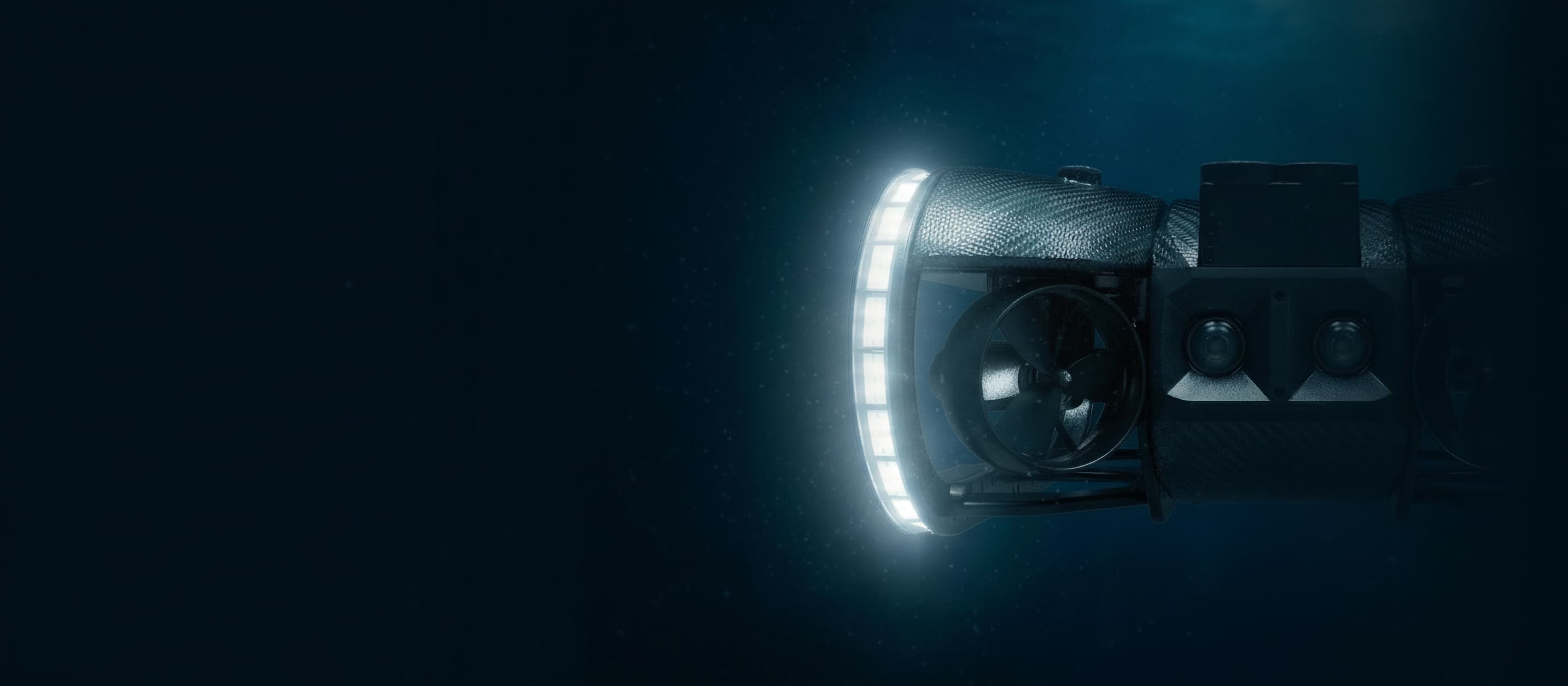
  • PHOTON Expert and REVOLUTION NAV packages
  • Doppler Velocity Log (DVL) for precise positioning and navigation
  • High-output LED lighting for low-light and turbid conditions
  • Direct Power Kits (DPK) for extended runtime and support of auxiliary tooling
  • Integrated sonar for obstacle detection and imaging in low-visibility water
  • Manipulator grabber claws for obstruction management and foreign material exclusion (FME) retrieval

This setup supports tasks such as retrieving FME, clearing blockages, and repositioning the ROV in tight internal spaces.

dominion-fme

Key Challenges Identified During Inspections

One of the most consistent challenges uncovered during ROV inspections is the mismatch between plant drawings and actual internal layout. According to Scott, the deviation can be substantial and operationally significant. These discrepancies create navigation hazards for ROVs and complicate planning for safe and efficient inspection paths.

Scott recalls a situation highlighting this challenge:

“Perfect example: we went to a massive tank. I asked, ‘What’s inside it when I get in there? What am I going to wrap myself around? What kind of support structures are inside?’ They showed me a couple drawings from plant plans, but it was nothing like what was actually inside the tank. The elevations of some of the structures were off by 15–20 feet in some places. I had to do a lot of extra maneuvering to keep the tether from getting hung up.”

dominion-reactor-look-up

Without accurate drawings, the operator must account for unexpected platforms, elevations, piping, and internal bracing. The ROVs provide the only non-invasive method to verify internal structure before maintenance planning.

Lighting and visibility are also significant challenges in fully enclosed tanks, which are typically devoid of ambient light. Dual‑light configurations can improve coverage, but require careful orientation, as poor lighting reduces usability and can obscure critical features.

Scott explains, “The real struggle in some tanks is lighting. In one instance, we only had one set of lights on the PHOTON. Upgraded to two sets of lights, it was much better after adjusting the spread of the beams.”

Radiation Exposure Management

While the ROV itself is unaffected by dose levels seen during these inspections, personnel handling the system must account for exposure during staging and retrieval. Dominion minimizes operator dose by:

  • Deploying and recovering the ROV from low-dose locations
  • Limiting time spent near tank openings or high-field positions
  • Using remote monitoring and control whenever space allows

This approach allows the team to inspect submerged nuclear components without placing divers or technicians in elevated radiation fields.

Operators maintain a safe distance from radioactive internals to protect both themselves and the equipment. Scott explained, “We do keep our distance. You know when you get too close, you start to see the quality crackle a little bit on the screen from the radiation, and you know you need to back up. I have not used the submersible in direct line of sight with an irradiated fuel assembly. Without having rad-hardened cameras on the ROVs the normal cameras wouldn’t last too long before needing to be replaced.”

While there is interest in pushing ROVs closer to spent fuel to read serial numbers, the team recognizes the practical limitations. By combining remote operation with strict distance management, Dominion ensures ROV inspections are performed efficiently while minimizing radiation exposure to personnel, eliminating the need for divers or direct human contact with high-dose areas.

Reduce Downtime & Radiation Exposure - Optimize Nuclear Inspections with ROVs

Submersible ROVs for Repeatable Asset Inspection and Verification

Dominion Energy’s unmanned systems program combines aerial drones, pipe crawlers, and submersible ROVs to improve situational awareness, support survey-grade mapping, and enable digital twin creation for submerged infrastructure. Scott manages these assets and highlighted how the program’s focus is evolving toward structured inspection workflows and data-driven asset management.

Dominion - Greensville Power Station

ROVs play a critical safety and verification role during reactor maintenance. Scott explained:

“We don’t use them for fuel transfer or refueling the reactor. The ROVs are used by the fuel handlers in a support role while removing some of the structure from the reactor barrel itself - the upper internals and sometimes the lower internals. Depending on what they have to remove, some of those big pieces have to come out, and the fuel handlers use one of the ROVs to confirm they’re entering the channels properly. It’s not really MIS-threaded, but it ensures things are going in and coming out correctly - a sort of eyes-underwater check.”

This operational use reinforces both safety and inspection reliability:

“Safety is the biggest selling point. I even have a trophy for ‘Innovation of the Year’ because of our use with the underwater ROVs to do tank inspections instead of divers.”

ROVs also provide supplemental inspections that complement the plant’s standard schedule. Scott described these as “fill-insurance” or “as-found” checks that maintain main maintenance rotations while addressing emerging concerns:

“All inspections are on a required frequency. There have been times where we performed additional inspections as a precursor or after reviewing the content, ‘Maybe we need to look at this again,’ and we just go knock it out.”

dominion-confined-space-pipe

Looking forward, Dominion is prioritizing repeatable data capture and mapping to support lifecycle planning. Scott emphasized:

“In nuclear our biggest focus is on safe inspections. What we are focusing on more is the ability to use LiDAR, more mapping, and more repeatable data - things we know we’re going to need. Inspections are inspections. I can try to duplicate an inspection manually, but it depends on the engineer and how they performed it last time. Typically, they end up one-offs. We are working on autonomous inspections so the content is exact from inspection to inspection”

The team is actively evaluating geometry capture inside cylindrical tanks, reference-point workflows, and short-range survey work in intake systems, reflecting a shift from one-time visual checks toward consistent, spatially referenced datasets that support engineering review and long-term asset management.

Inspection Benefits and Operational Results

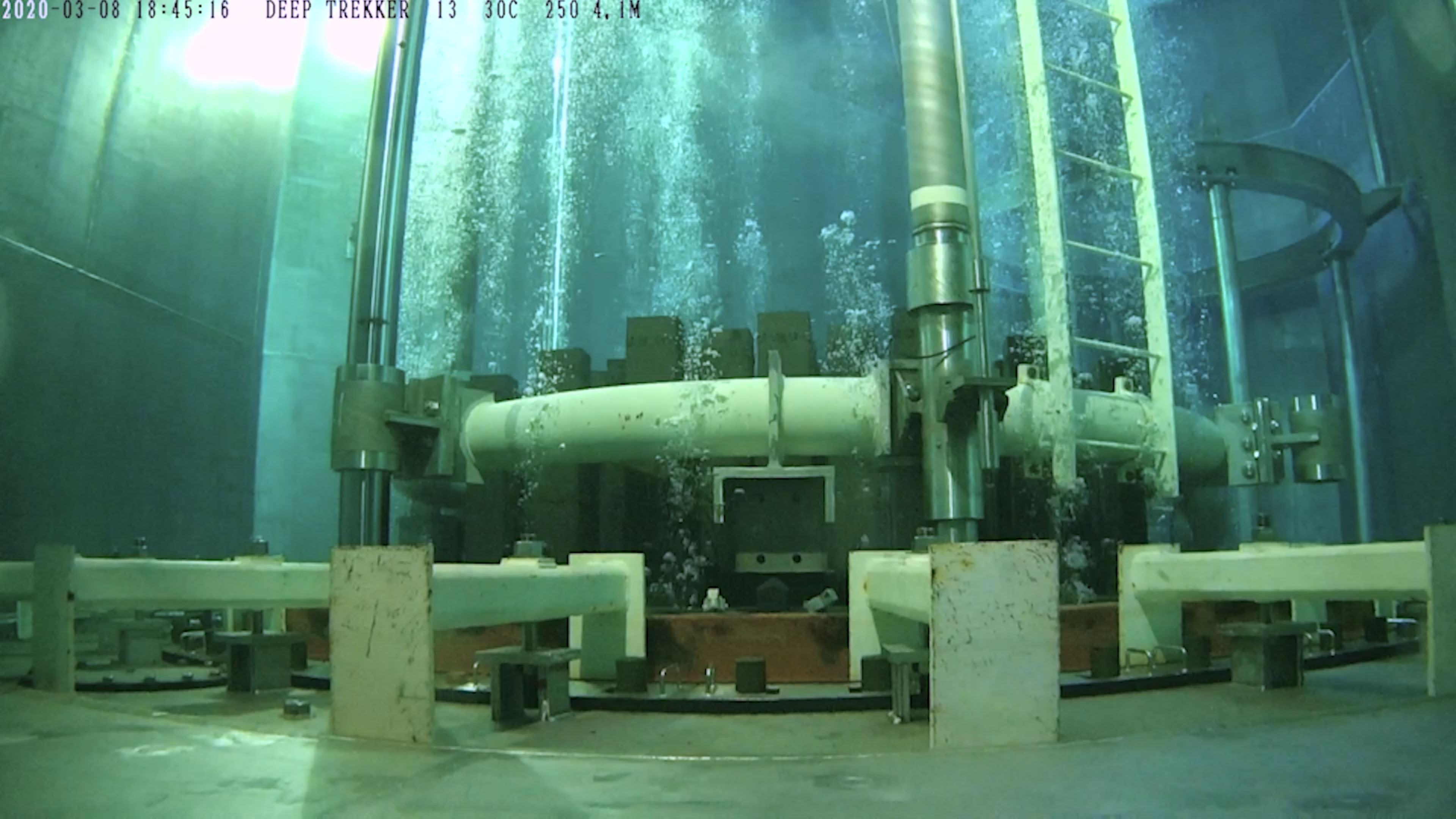
Dominion Energy’s use of Deep Trekker ROVs delivers measurable operational advantages across submerged asset inspections. ROVs enable access to internal tank structures without draining them, eliminate the need for diver entry into confined or radiologically controlled environments, and provide verification of conditions even when design drawings are outdated. Compared to legacy methods, ROV inspections reduce overall cycle time and produce high-quality visual evidence for engineering documentation, condition monitoring, and maintenance planning.
dominion-reactor-bubbles

Live feed capabilities allow engineering teams to observe inspections in real time, improving situational awareness and decision-making. Scott described the impact:

“Our first inspection was the most memorable. We had everything set up and called engineering to come out. At the time we just grabbed a big screen TV and brought it with us so we could see the inspection live. They were sitting on the floor with the screen in front of them, following the inspection in real time. One engineer was relatively new, probably in his late 20s, and the other was close to retirement with 40 years with the company. The senior engineer was typically reserved, but after watching the live feed, he came out of that building with the biggest smile I’ve ever seen. He smiled the whole time and said,

‘This is amazing. I can see it. The clarity is great. I can see what’s going on. I don’t have to wait for them (the divers) to tell me what I’m looking at.’”

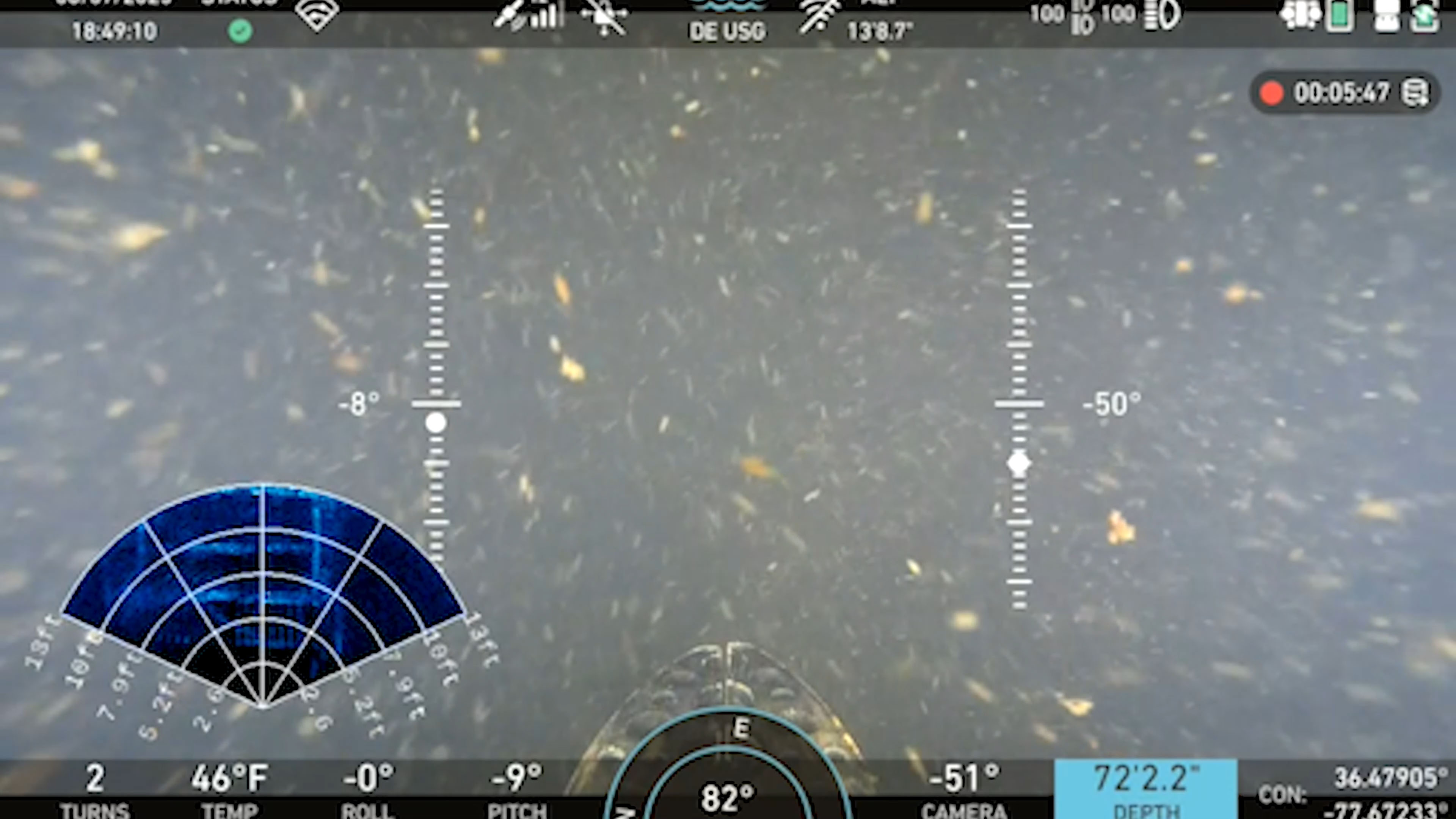
ROVs also provide versatility for challenging environments. Water conditions vary by site, ranging from brackish and highly turbid rivers to freshwater lakes with suspended debris or ocean-fed intake structures. The team often adapts deployment strategies to maximize data collection under these conditions, and have uncovered operational insights not visible through standard inspection methods, highlighting the value of direct observation:

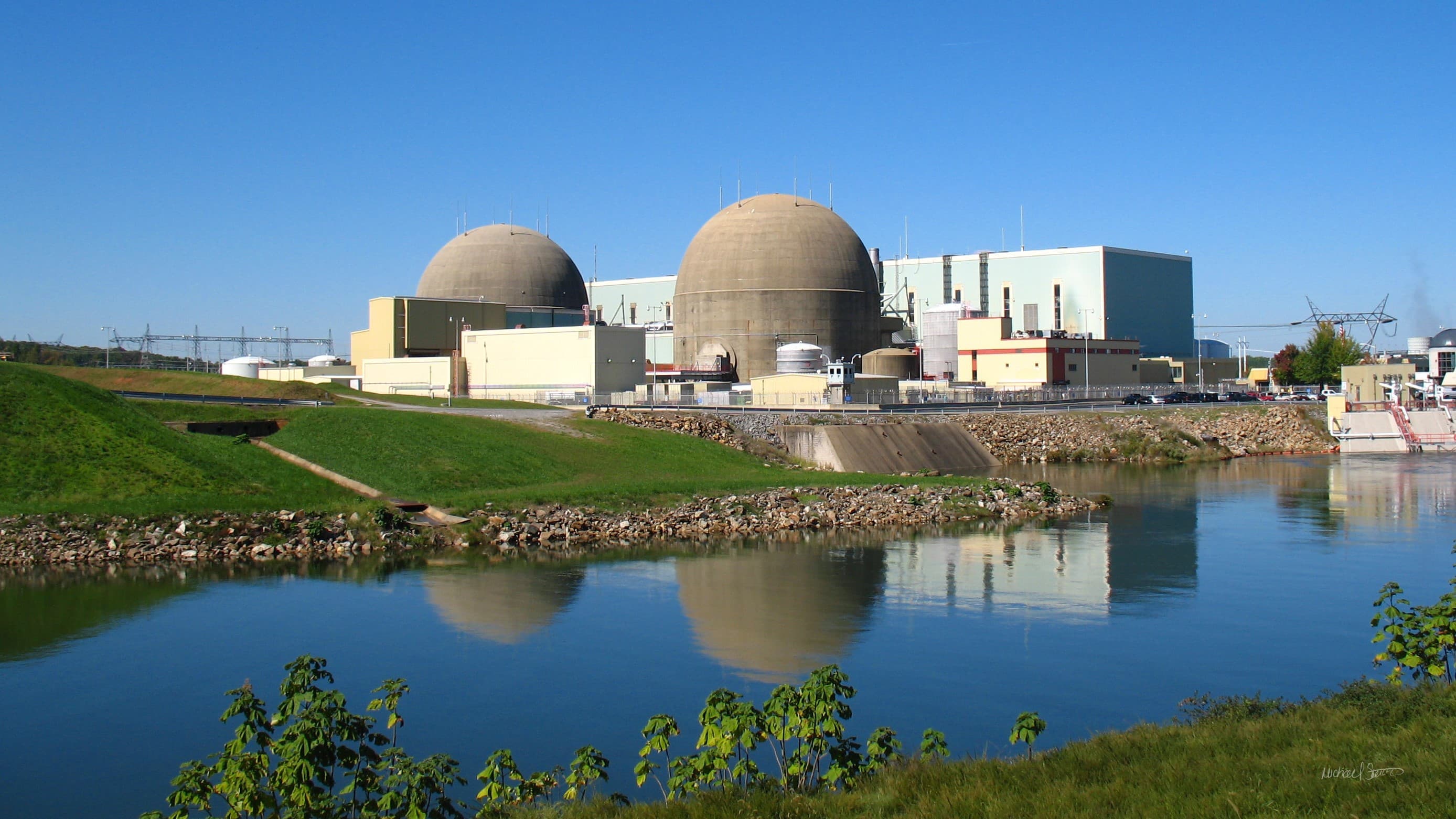
“We’ve done some work up at North Anna this past year. Looking at their intake structure from the lake coming into the station when all the pumps are off. Engineering needed concrete inspections. Once I got inside to where the actual pump suction is, we quickly realized it had been a while since divers had been brought in to clean.”
dominion-sonar-low-vis

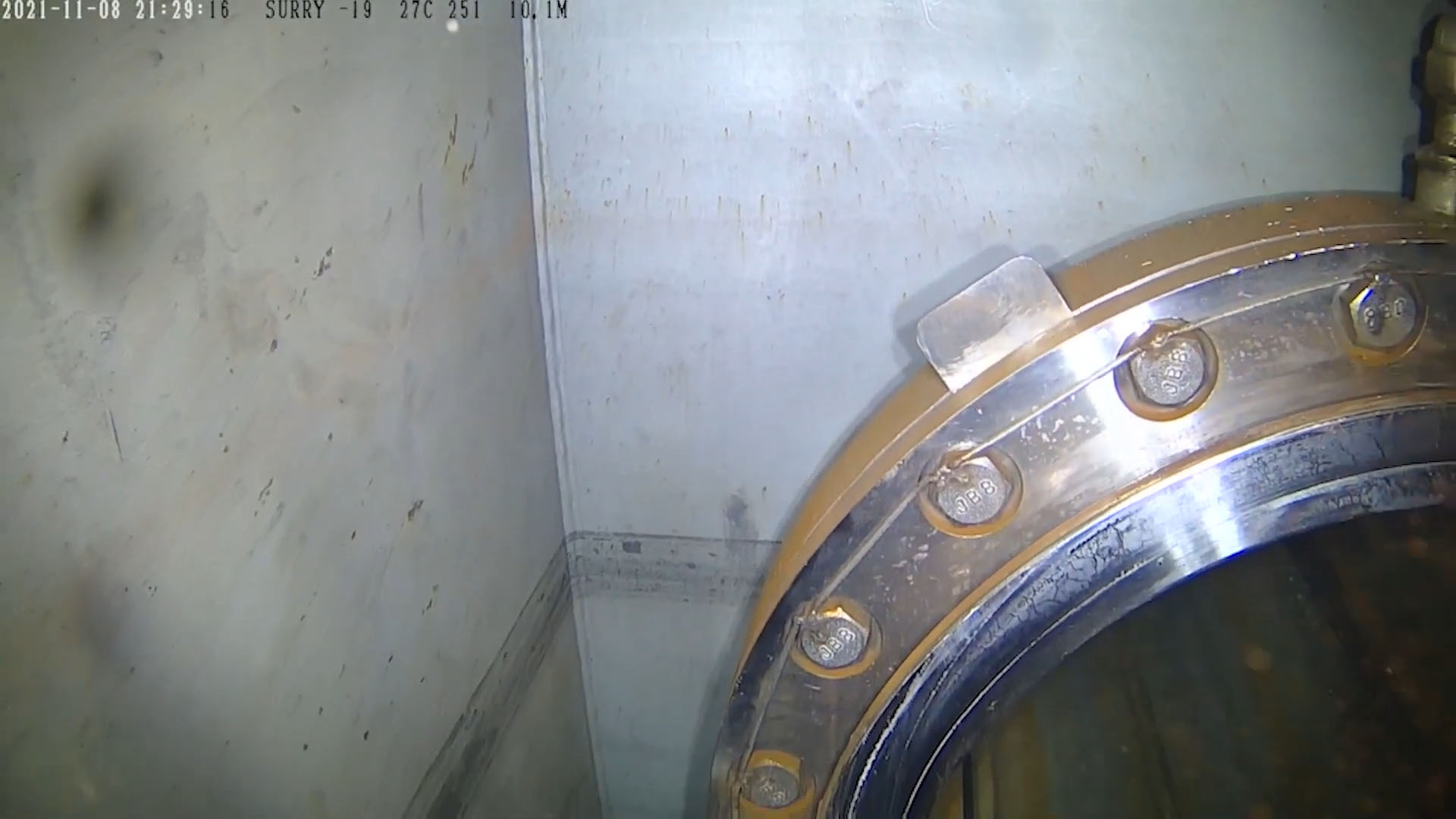
ROVs also provide cost-effective solutions for unexpected incidents. For instance, a dropped rubber gasket in a clean water tank - an event that could have required a diver intervention costing tens of thousands of dollars - was retrieved efficiently and quickly using a submersible vehicle:

The cost benefits are significant. Traditional dive inspections are approximately $15,000 per day - so, about $45,000 for a single tank - factoring in setup, suit soak time, inspection, and data transfer. With six tanks at a single facility, the ROV program not only reduces exposure to operational delays and diver risk, but also dramatically minimizes the overall financial burden.

“At Surry, we started conducting clean water tank inspections. For a single tank - roughly 250,000–300,000 gallons - the traditional diver-based process typically takes three days. Day one involves setup and a 24-hour soak of the divers’ wetsuits, which are always brand new and soaked separately in barrels. Day two is the inspection itself, with divers entering the water and recording the condition of the tank. Day three covers disassembly and the transfer of inspection data to engineering. Historically, this data consisted of GoPro hand-held footage.”
dominion-tank-inspection

Ultimately, Dominion Energy aims to eliminate unnecessary diving activities where possible as safety is always the number one priority. In-house routine ROV inspections maintain safety and operational continuity while preserving vendor services for specialized maintenance.

The cumulative effect of these inspections is measurable: reduced downtime, improved safety, enhanced situational awareness, and reliable documentation for engineering and maintenance teams.
Lessons Learned from ROV Deployment in Nuclear Environments

Key Takeaways:

  • Site-specific preparation: Cleanliness and water-chemistry requirements vary; some ROVs need only a rinse, others require multi-day soaking and controlled tether handling.
  • Manipulator and tether management: Claws retrieve obstructions and reposition the vehicle; proper tether handling prevents entanglements in confined spaces.
  • Navigation and reference planning: As-built drawings often differ by 15–20 ft from actual internal layouts. Bathymetric mapping, reference points, and careful path planning reduce operational risks.
  • Lighting configuration: Dual-light setups and adjustable angles improve visibility in fully enclosed tanks where turbidity and reflections limit image quality.
  • Comprehensive data capture: Recording full video and still images supports anomaly tracking, trend analysis, and repeatable surveys.
  • Radiation and operator safety: Deploying from low-dose zones, limiting exposure near tank openings, and using remote monitoring minimizes personnel risk.

dominion-reactor-descent-2

Dominion Energy’s experience demonstrates that careful preparation, redundancy in tooling, and structured data workflows enable safe, efficient, and repeatable inspections of submerged nuclear assets while reducing reliance on divers and mitigating operational risks.

Future Applications and Expansion Opportunities

Looking ahead, Dominion is positioning its inspection program for greater analytical depth and long-term scalability.

dominion-reactor-rods

As Dominion advances its inspection program, the focus shifts toward structured, repeatable spatial datasets that support long-term asset management and lifecycle planning, including:

  • Internal mapping of tanks and basins
  • Autonomous or semi-autonomous mapping of cylindrical tanks
  • Integration of known reference points for repeatable surveys
  • Bathymetric and spatial assessments of intake canals
  • Combining aerial, crawler, and underwater datasets for full-system analysis
  • Generation of repeatable, structured inspection datasets for lifecycle planning

“Mapping is going to be key coming up soon.”

The goal is consistent digital records of previously inaccessible structures, supporting lifecycle planning, using Deep Trekker ROVs as central tools in that workflow.

Explore 2D sonar mosaic mapping with Deep Trekker ROVs to create detailed underwater views for inspecting dams, canals, and tunnels in low-visibility waters.

Advancing Nuclear Inspection Programs with ROV-Based Data Collection

Dominion Energy’s application of Deep Trekker ROVs demonstrates a practical approach to inspecting submerged components inside nuclear and non-nuclear facilities. The systems allow the utility to work within tight access constraints, gather internal data where drawings are inaccurate, and reduce reliance on diver entry. Scott Paul’s operational feedback highlights the day-to-day realities of working in these environments - from cleanliness requirements and radiation considerations to tether management, lighting geometry, and unexpected internal conditions. The program continues to expand as Dominion prepares for more advanced mapping and survey-grade inspection work supported by unmanned systems.

dominion-reactor-zoom

Expert Guidance and Custom Solutions

Nuclear plant inspections present unique challenges, including radiation exposure, confined spaces, and the need for precise, repeatable assessments. Our team of experts specializes in integrating Deep Trekker ROVs to address these pain points, providing a safer and more efficient alternative to traditional inspection methods. Whether it's conducting visual inspections of reactor cavities, assessing pipe integrity, monitoring fuel pools, or inspecting heat exchangers, our portable and radiation-resistant ROVs eliminate the need for costly dewatering, scaffolding, and extended outages. We work closely with nuclear facilities to deliver customized solutions that improve safety, reduce downtime, and enhance inspection accuracy.

Secure Your Deep Trekker ROV Today

When you're ready to add your very own Deep Trekker vehicle to your toolkit, contact us and we'll be happy to provide you with a customized quote tailored precisely to your requirements. Deep Trekker ROVs provide a controlled, repeatable method for conducting submerged inspections while reducing personnel exposure and minimizing outage duration.

Reduce Downtime & Radiation Exposure - Optimize Nuclear Inspections with ROVs

AIMS training, underwater rov, underwater survey, underwater inspection, search and recovery

Aquatic Incident Management Systems Training in South Lake Tahoe

Two-day AIMS training program teaches SAR teams how to integrate sonar...

underwater rov, high current rov, deep water rov, underwater inspection, underwater survey, underwater inspection

Deep Trekker Launches A New Class of High-Performance Inspection ROV

Deep Trekker’s SPECTRA ROV integrates 3D Sonar SLAM, 4K stereo vision,...

underwater drone
underwater rov
eod
mcm
maritime defense

REPMUS 2025: The Future of Mine Countermeasure Operations with ROVs

At REPMUS 2025, Deep Trekker’s ROVs validated real-world mine countermeasure capabilities...

Learn More About Our Products

Looking for Resources on Our ROVs?

See What Our Customers are Saying