Configure Now
Items in Your Cart0
0Items in Your Cart
Start building your packageShop Now
November 3rd, 2025
At REPMUS 2025, Deep Trekker’s ROVs validated real-world mine countermeasure capabilities...
July 5th, 2025
Deep Trekker’s new Tampa facility brings faster ROV repairs, in-stock parts,...
June 11th, 2025
Equipped with sonar and DVL, Deep Trekker ROVs are helping SES...
Meet our DT Experts in training as they answer your questions about Deep Trekker robots, features and more!
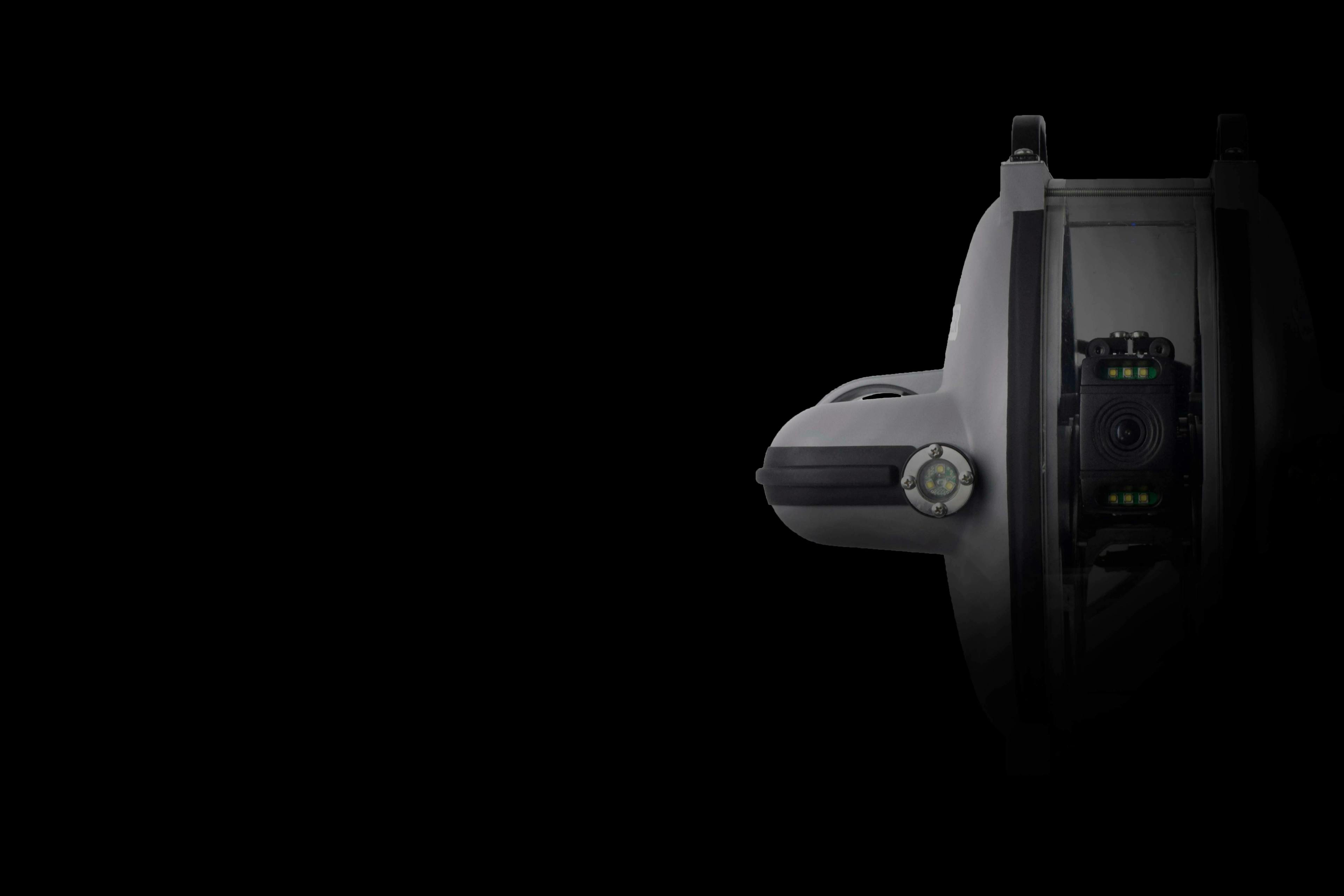
Deep Trekker was incorporated in 2010. Watch our 10 year video to .
Deep Trekker’s head office is located at 155 Washburn Drive, Kitchener, Ontario, Canada. The company also operates a U.S. office at 4914 Distribution Drive, Tampa, Florida, and Deep Trekker SPA in Puerto Montt, Chile, serving as the regional hub for South America.
In addition, Deep Trekker maintains a growing presence across Europe, including Italy, supported through dedicated regional sales and service partners, along with many reseller partners throughout the world.
Deep Trekker holds four issued patents and has additional patents pending.
Our patents include:
Deep Trekker continues to develop new technologies for underwater and confined space robotics, with several additional designs currently under patent review.
We are proud to say our products are made in Canada! Each and every Deep Trekker robot is designed and built at our headquarters in Ontario, Canada by our team of skilled engineers and technologists. Every submersible undergoes a rigorous product delivery inspection and in-water pressure testing before we ship to our customers.
Each Deep Trekker robot includes a 12-month limited warranty covering parts, labor, and return freight for any repair performed by Deep Trekker. Select professional and industrial packages include an extended 24-month warranty for added coverage and peace of mind.
Our technical support team is available Monday to Friday, 9:00 a.m. to 9:00 p.m. EST, and Saturday to Sunday, 10:00 a.m. to 6:00 p.m. EST, to assist with everything from operational questions to troubleshooting and repair guidance.
Comprehensive user manuals and video resources are available to help you operate and maintain your system confidently. If your vehicle requires service but you prefer not to ship it back, our support team can often diagnose issues remotely and ship replacement parts for field installation, guiding you through the process via phone or video call.
Absolutely! Every unit comes with our one-year warranty and some packages come with extended warranties included in the sale price. Check out our DT Advantage Program for other warranties offered.
A tether is required for an ROV that enters a pipe or operates underwater, providing live video, sensor feedback, and control. These signals cannot be transmitted through the ground or water with current technology. Our tethers can be extended up to 300 m (1,000 ') with custom lengths up to 1 km+ available for specific models and applications. For missions requiring extended reach, the 1000 m DPK & Fiber System is a strong option for the Deep Trekker REVOLUTION ROV. This system features a 4.5 mm polyurethane-jacketed tether with a 300 lb break strength, fiber-optic communication for increased bandwidth, direct power to the ROV, and a powered winch for smooth tether deployment. These features allow longer missions with fewer interruptions while maintaining reliable control and data transmission.
Many of Deep Trekker's accessories are modular for our robotics. These options often can be shipped to you to be utilized with your vehicle after you have already purchased and taken possession of the vehicle. If an option cannot be shipped to you to be added, it can be added at our facility at no extra labour costs.
We have worked with many customers who have their own sensors, cameras, tools and technology that they wish to adapt for use on a Deep Trekker robot. We are more than happy to assist you in mounting it. If your customization has special requirements, contact us today to discuss the best options for getting it installed.
Deep Trekker ROVs are designed for easy maintenance with no ongoing service schedules. Many underwater vehicles require regular oiling, greasing, or gas refills to maintain watertight integrity. Deep Trekker systems use magnetically coupled thrusters and wheel drives, eliminating these requirements and reducing wear over time.
After saltwater dives, rinse the vehicle with fresh water and keep the batteries charged if it will be stored for more than 4–6 months. For heavily used connectors or ports, occasional greasing is recommended.
For additional recommendations, see our Recommended Regular Maintenance Guide.
Deep Trekker ROVs record UHD 4K video and capture 8-megapixel still images directly to an SD card located in the handheld controller. The main camera features advanced optimization software including Automatic White Balance (AWB), a turbidity filter, and a low-light tuning mode for improved visibility in dark or murky conditions.
Video output supports 4K or 1080p resolution at 30 FPS, with H.265 encoding for high-resolution streams and H.264 encoding for low-resolution streams. The system records at up to 24 Mbps bitrate with 8-bit color depth and up to 20x digital zoom. A noise reduction filter can be adjusted to enhance light sensitivity and minimize blurring in low-light environments.
The handheld controller includes HDMI, Ethernet, and USB outputs to connect to larger monitors or computers. With BRIDGE software and hardware, operators can livestream footage through any internet-connected device using compatible broadcast software, or the BRIDGE Box for remote viewing and control.
The PHOTON ROV is depth rated to 120 m (400'). The DTG3 ROV is depth rated to 200 m (656'). The PIVOT and REVOLUTION ROVs are depth rated to 305 m (1,000'). Each system that we sell is tested to the depth that it is rated for in our pressure tanks.
It is die-cast aluminum anodized and powder coated for extreme durability in salt and fresh water. If you are diving in salt water, it’s always good to give it a fresh water rinse afterwards.
The PHOTON, PIVOT, and REVOLUTION use six vectored thrusters for full 3D maneuverability, allowing precise movement in any direction - including vertical motion. Unlike older spherical models such as the DTG3, these ROVs do not rely on a pitching system; instead, the vectored thrusters let the pilot move up, down, forward, backward, and laterally while maintaining stable positioning.
Our ROV systems offer multiple power options tailored to operational requirements, noting that runtime and performance depend on payload, environmental currents, and control gains:
1. Integrated Lithium-Ion Battery (Onboard)
Each ROV and controller is equipped with a high-capacity lithium-ion battery, providing up to 6 hours of continuous operation. This onboard power source eliminates the need for tethered power, reducing drag and enhancing maneuverability. Battery replacement is straightforward, taking approximately 30 seconds, with a recharge time of 1.5 to 3 hours.
2. BRIDGE Console
The BRIDGE Console is a rugged, weatherproof control station featuring an 18.5" HD touchscreen, programmable buttons, and a built-in 100Wh battery. It supports 120–250 VAC input and offers connectivity options including 2x HDMI, 4x USB-A, Ethernet, Wi-Fi, and Bluetooth.
3. Direct Power Kit (DPK)
For extended missions, the Direct Power Kit provides continuous operation by delivering power directly through the tether.
It features:
4. Field-Swappable Battery Sets
For operations requiring extended runtime without access to charging facilities, additional sets of field-swappable lithium-ion batteries are available. These batteries can be quickly replaced by a single operator, ensuring minimal downtime and enabling a full day's work. These flexible power solutions ensure that our ROV system can meet the demands of various operational scenarios, from short inspections to extended missions.
Deep Trekker ROVs and controllers last for up to 8 hours on a single charge. Controllers can be plugged in during operation to extend their operating time by several hours.
REVOLUTION batteries are swappable so you are able to have a spare set charged to keep you operating throughout the mission. We also offer a topside power module if you wish to use the REVOLUTION continuously and power it from a 110-240 VAC power source at the surface.
The PHOTON, PIVOT, and REVOLUTION ROVs are equipped with UHD 4K cameras with advanced underwater optimizations. The DTG3 comes standard with a 1080p camera and can be upgraded to UHD 4K for higher-resolution imaging. Features of the 4K camera include automatic white balance (AWB) for colour correction, turbidity filtering, digital zoom, low-light optimization, automatic image dewarping, and automatic image enhancement. Continuous software updates through BRIDGE ensure the ROVs’ imaging performance improves over time, and advanced image processing algorithms provide clear, accurate underwater visuals for inspections and surveys.
The ROV cameras will see as well as a human eye underwater. If the water is extremely murky, you will need to rely on other means to navigate and perform the inspection. Sensors for heading and depth can tell you what direction you are moving through the water, which is helpful to get to a single target; however these sensors do not tell you your position. Dead Reckoning and Mission Planner software allow operators to estimate position and maintain course even without visual reference. ROV GPS systems can provide surface-referenced positioning when connected to a buoy or vessel-mounted receiver. Acoustic technology such as USBL Positioning can tell you where you are underwater but users will be unable to visualize what is underwater. The best tool for murky water operations are sonars. We highly recommend equipping a sonar to a ROV when operating in murky water, giving you a viable option for performing most inspection and survey tasks.
Click here to learn more about how sonars work >.
All Deep Trekker ROVs come with shadowless, dimmable LED floodlights. These lights are designed for high efficiency, minimizing battery impact during use. Additional lighting options are available for dark, enclosed environments or nighttime operations.
Yes. The ROV’s handheld controller has a 7” high-definition LCD for single-operator use, but it also includes an HDMI out port, as well as Ethernet, SD, and USB ports. This allows you to connect to larger monitors or other devices to share live video with a group. Additionally, video and photos are recorded to the SD card, which can be removed and viewed on other devices.
Deep Trekker ROVs are designed for easy maintenance. After saltwater use, give the vehicle a freshwater rinse and keep the batteries charged. With no dynamic seals or components requiring frequent replacement, upkeep is minimal. For heavily used connectors or ports, occasional greasing is recommended.
For more details, see our Recommended Regular Maintenance Guide.
This is a common question, however the answer isn’t as simple as just a number or a specification.
This depends on the application and the ROV model being used. Generally, operations can be divided into two categories:
When transiting to a single location, all Deep Trekker ROVs are capable of handling stronger currents since their exact path is not as important as reaching the target. Tools such as imaging sonar, USBL positioning, and heading/depth sensors can help maintain situational awareness during transit.
For structured inspections, performance depends on the vehicle’s thrust configuration and stabilization features:
PHOTON - Compact and lightweight, ideal for calm conditions, confined spaces, and tanks or shallow protected areas. Best operated in 1 knot currents for controlled navigation and image stability.
PIVOT - Equipped with six vectored thrusters for full lateral and vertical control, enabling efficient maneuvering in any direction. Capable of maintaining course and performing detailed inspections in up to 2 knot currents, depending on tether length and configuration.
REVOLUTION - Deep Trekker’s most powerful ROV, featuring larger vectored thrusters and a stable, balanced frame. The system can transit through currents up to 3 knots and perform comprehensive surveys, even under moderate flow conditions.
Tether drag also affects how well the ROV can fight current. The longer the tether deployed, the greater the drag on the vehicle. Deep Trekker’s 4.5mm diameter neutrally buoyant tether minimizes drag compared to thicker, topside-powered systems. For optimal control:
In summary, the ROV’s ability to handle current is influenced by both model selection and operational setup - including tether management, mission type, and environmental conditions.
The tether has a 150 kg (300lbs) break strength, so there is no problem lifting the ROV by the tether. You can lower and raise the ROV by the tether and retrieve objects with the grabber arm by pulling up on the tether.
Grabbing and lifting objects from underwater is a common application for Deep Trekker ROVs. The two-function grabber attachment features an open/close motion and a continuous bi-directional rotate motion, controlled via the ROV’s shoulder joysticks. Its self-locking design allows the claws to remain securely closed once an object is gripped, providing a locking force of 32 kg (70 lbs) to help secure items while maneuvering.
The maximum weight that an ROV can lift and swim with directly is relatively small. For larger or heavier objects, the grabber can be used to lock onto the item, and the object can then be retrieved by gently pulling the ROV and object using the tether. This method reduces strain on the ROV and preserves battery life. The density of the object affects its effective weight underwater; very heavy items may be retrievable below the surface but can strain the tether when brought to the surface.
For lifting heavier objects, Deep Trekker offers a Lift Kit – 5000 lbs, which allows operators to connect a recovery line and heavy-duty hook to a target for safe recovery. This tool is used in place of the grabber attachment for larger retrievals.
Each ROV model integrates a sensor package that includes:
These sensors are complemented by a 9-axis IMU and pressure sensor, enabling precise control and stabilization.
Yes, as long as the accessory is within 40 grams of neutral buoyancy it will not affect the ability of the ROV to maneuver throughout the waters.
Deep Trekker offers a range of ROVs suited to different operational needs. The PHOTON and DTG3 are the most portable and lightweight options, designed for quick deployment in confined or shallow environments. The PIVOT provides more stability and versatility for general inspections, supporting a variety of add-ons. The REVOLUTION is built for higher current, deeper operations, or missions requiring multiple accessories simultaneously, offering enhanced stability, lateral movement, station holding, and greater thrust power. Each ROV is available in multiple packages to suit specific inspection or operational requirements.
Compare the packages here
Each Deep Trekker vehicle comes with a tether, with standard lengths varying by model. We can customize tether lengths to meet your specific requirements.
Longer tethers may require larger reels. Contact us for a quote and guidance on the reel size required for your desired length.
We have taken our ROVs on planes as checked bags many times before! Our customers also regularly travel with our robotics on planes.
Always check with your airline's weight restriction policies before arriving at the airport, as some of our vehicle configurations may be over the weight limit (typically 26-36 kg). If this is the case, we see many customers split the weight between bags or cases.
Our robots also utilize lithium ion batteries, which have undergone rigorous testing procedures. We have the utmost confidence in our battery reliability and have documentation including test reports, UN38.3 MSDS forms and other forms that may be requested at the airport in order for the robots to fly.