Configure Now
Items in Your Cart0
0Items in Your Cart
Start building your packageShop Now
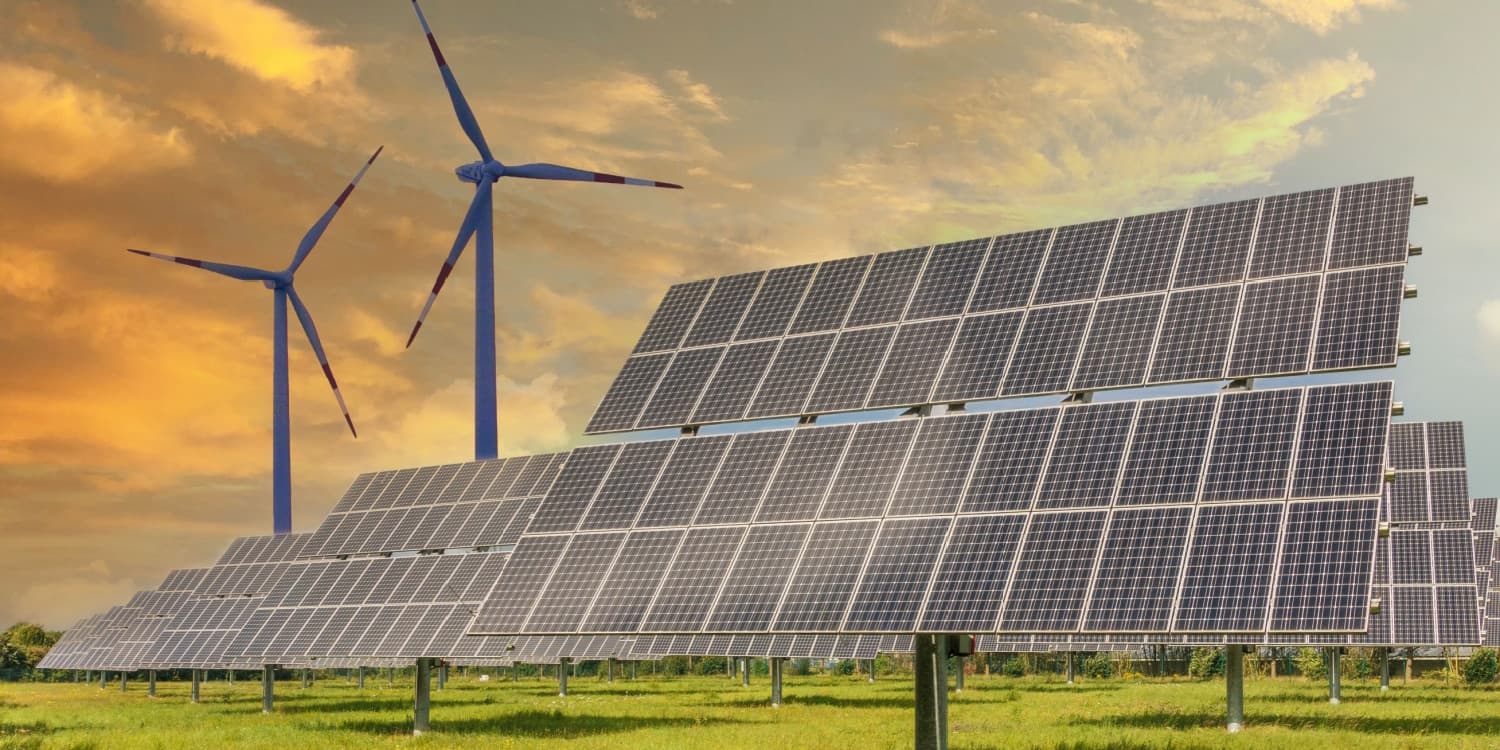
The global power mix is being rebuilt at record speed: renewables and nuclear are on track to supply roughly half the world's electricity by 2030, up from about 42% today. This guide breaks down the seven sources that will define that mix — what's driving each one, its honest limitations, and where it's headed by 2030. And because a clean grid is only as reliable as the physical assets behind it, we also cover something most overviews skip: what it actually takes to keep these dams, turbines, foundations, and cooling systems running, often underwater and in places people can't safely reach.
The 7 at a Glance
Here are the seven energy sources set to shape the grid through 2030, ranked by strategic importance:
Below, we look at each in depth — including the inspection and maintenance reality that keeps these assets online.
After two flat decades, nuclear is climbing again. Output hit a record in 2025 and is forecast to grow about 2.8% per year through 2030 — more than double the rate of the previous five years — with over 70 GW of capacity under construction, among the highest levels in 30 years (KAIZEN, citing IEA). The clearest signal of momentum is demand from data centers: the pipeline of offtake agreements between operators and SMR projects nearly doubled from 25 GW at the end of 2024 to 45 GW by early 2026 (IEA). SMRs — factory-built units typically rated up to 300 MW — promise faster, more modular deployment.
The limitation: First-of-a-kind SMRs are expected to cost more per MWh than existing large reactors, and most still face years of design certification and site licensing before they scale.
The inspection reality: Nuclear is where remote robotics earns its keep most clearly. ROVs inspect and clean spent-fuel pools, reactor cavities, cooling storage tanks, and trash racks, and examine isophase bus ductwork, keeping systems online during outages and removing human divers from radiation environments entirely. Precise positioning in GPS-denied confined spaces and 4K imaging make this practical where access and dose limits would otherwise drive cost and risk sky-high.
See how ROVs are used for nuclear plant inspection and maintenance.

Solar energy is projected to be the fastest-growing and largest renewable energy source, becoming a dominant force in electricity generation due to falling costs and widespread adoption. It accounted for roughly three-quarters of the 800 GW of renewable capacity added worldwide in 2025, and its generation is set to overtake both wind and nuclear in 2026 and hydropower by 2029 (IEA, Global Energy Review 2026; IEA, Electricity 2026). Fast permitting helps, but the cost story is mostly a manufacturing one: China controls roughly 80% of global PV manufacturing capacity, and the scale that made panels cheap has become a point of contention in its own right. See how the US–China clean-tech race is reshaping solar and battery supply chains.
The limitation: Solar is variable — it produces nothing at night and less in poor weather — so its growth has to be paired with storage and grid flexibility to be dependable.
The inspection reality: This is the lightest fit for underwater robotics, and it's worth being candid about that. The exception is the fast-growing category of floating solar on reservoirs, irrigation ponds, and hydro impoundments, where ROVs can inspect submerged mooring and anchoring systems, check cabling, and assess the condition of floats below the waterline — work that's awkward and hazardous to do by hand from a boat.

Alongside solar, wind power is a rapidly expanding renewable source, contributing significantly to global decarbonization efforts and meeting new energy demand. Wind adds roughly a fifth of new renewable capacity in 2025 and complements solar by generating at different times of day and year (IEA). Offshore wind in particular is expanding into deeper water and larger turbines.
The limitation: Like solar, wind is variable, and offshore projects face high capital costs, long timelines, and a harsh marine environment that accelerates wear.
The inspection reality: Offshore wind is a core ROV application. Below the surface, the assets that fail quietly are monopile and jacket foundations, scour protection, J-tubes, and inter-array and export subsea cables — the leading cause of offshore wind insurance claims. ROVs detect corrosion, marine growth, and structural movement on routine schedules, catching small problems before they become outages, and reach hazardous submerged structures without putting divers in the water.
More on offshore wind foundation and subsea cable inspection.

Gas remains the grid's flexible workhorse. The IEA forecasts gas-fired generation growing about 2.6% per year through 2030 — faster than the past five years — driven largely by rising US electricity demand and oil-to-gas switching in the Middle East (IEA, Electricity 2026). It ramps quickly to balance variable renewables, earning its "bridge fuel" label.
The limitation: Gas is a fossil fuel with real emissions; its long-term share is expected to shrink in many advanced economies as low-emissions sources expand.
The inspection reality: Gas infrastructure is heavily submerged and confined: offshore platforms, subsea pipelines and risers, sea chests, ballast tanks, and the cooling-water intake and outfall structures at onshore plants. ROVs with non-destructive testing tools — such as ultrasonic thickness gauges — measure metal loss on pipelines and vessels without divers, while crawlers handle the intake culverts and pipework that keep a plant cooled and compliant.
Deep Trekker ROVs support offshore oil and gas inspection, including NDT thickness measurement on pipelines and risers.

Storage is the connective tissue of a renewable grid. Utility-scale battery deployment is accelerating fastest in solar- and wind-heavy markets like California, Texas, Germany, South Australia, and the UK, and falling costs keep improving its competitiveness (IEA, Electricity 2026). Batteries store surplus generation and release it when the sun sets or the wind drops.
The limitation: Today's lithium-ion systems mostly provide short-duration flexibility (hours, not days), so they complement rather than replace firm baseload power.
The inspection reality: We'll be straight here too: standalone battery sites are largely a job for thermal and electrical inspection, not underwater robotics. The relevant overlap is pumped-hydro storage — still the largest form of grid storage by capacity — where the same dam, penstock, and intake inspections described under hydroelectric apply directly.

Hydro is the mature, dependable anchor of the low-carbon mix, providing both baseload and fast-responding flexibility, and it remains a top-three global electricity source even as solar climbs past it later this decade (IEA, Electricity 2026). Its reservoirs also double as the backbone of pumped storage.
The limitation. New large hydro faces siting, environmental, and drought-related output constraints, so much of the value now lies in maintaining and uprating existing plants.
The inspection reality. This is foundational ROV territory. Dams, penstocks, intake gates, trash racks, turbines, draft tubes, and reservoir floors can be inspected without dewatering — saving the enormous cost and downtime of draining a structure or erecting scaffolding, and keeping generation online during the survey. For aging fleets where condition data drives relicensing and capital planning, repeatable high-resolution inspection is the difference between proactive maintenance and emergency repair.
Read how ROVs handle hydroelectric dam and penstock inspection without dewatering.

These diversified sources fill specialized roles — geothermal and biomass provide localized baseload and industrial heat, while tidal and wave energy advance in high-resource coastal regions. Individually small, together they round out a resilient portfolio (IEA).
The limitation. Each is geographically constrained — geothermal to favorable geology, biomass to feedstock supply, marine energy to strong tidal and wave sites — and several remain earlier in their cost-down curves.
The inspection reality. Marine and tidal energy is a natural ROV fit: subsea turbines, foundations, and mooring systems demand regular underwater inspection in exactly the high-current conditions these devices are built for. Geothermal and biomass plants, meanwhile, rely on cooling ponds, water intakes, and pipework that crawlers and ROVs can inspect and clean without taking the facility offline.

| Source | 2030 role | Trend | Baseload or variable | ROV / crawler fit |
|---|---|---|---|---|
| Nuclear (SMRs) | Strategic firm baseload; tied to AI demand | Record output; ~2.8%/yr growth | Baseload | Very strongpools, tanks, trash racks, confined-space |
| Solar | Largest renewable source | Fastest-growing; overtakes wind & nuclear by 2026 | Variable | Lightfloating-solar moorings & cabling only |
| Wind | Second renewable pillar | ~20% of new renewable capacity | Variable | Very strongoffshore foundations, scour, subsea cable |
| Natural Gas | Flexible bridge fuel | ~2.6%/yr growth to 2030 | Flexible/firm | Strongpipelines, risers, intakes, NDT |
| Battery Storage | Short-duration grid flexibility | Accelerating; costs falling | Storage | Lightmainly via pumped hydro |
| Hydroelectric | Dependable low-carbon anchor | Steady; backbone of pumped storage | Baseload/flexible | Very strongdams, penstocks, turbines, no dewatering |
| Other (geothermal, biomass, marine) | Specialized, localized roles | Niche but growing | Varies | Strongfor marine/tidal; moderate elsewhere |
Reduce Downtime & Radiation Exposure - Optimize Nuclear Inspections with ROVs
After two flat decades, nuclear is back in serious contention — driven by demand for stable, low-carbon baseload that can firm up variable renewables and meet fast-rising electricity demand. Small modular reactors (SMRs) lead that revival: units of up to 300 MWe built from factory-assembled modules, which cuts construction time and capital risk relative to conventional gigawatt-scale plants.
Development is crowded and competitive — the IAEA tracks more than 80 SMR designs worldwide, with the US, China, Russia, Canada, and the UK setting the pace, though they're at very different stages. China and Russia are already operating SMRs:
China's HTR-PM, a pebble-bed high-temperature gas-cooled plant, has run since 2023, and its land-based Linglong One (ACP100) is expected to begin commercial operation in 2026 — the world's first.
Russia has operated the floating Akademik Lomonosov since 2020 and is exporting its RITM-200 technology abroad.
The Western programs are earlier: in the US, NuScale won NRC design certification in 2023 but has no commercial unit under construction yet, with first deployments expected around 2029–2030; Canada has gone furthest on construction, with a CNSC licence granted in 2025 for a GE Hitachi BWRX-300 at Darlington; and the UK has consolidated behind the Rolls-Royce SMR, selected in a government programme and targeting the early 2030s.

The appeal goes beyond modularity. Because output scales from roughly 1 MW to 300 MW and units can be added incrementally, utilities can match capacity to demand without committing to one large build.
SMRs deliver consistent 24/7 baseload that steadies grids when wind and solar dip, and several designs produce high-temperature process heat — making them viable for industrial decarbonization and for powering large-scale desalination, a real advantage for nations facing both climate and water-supply pressure. Many designs also rely on passive safety: gravity-fed coolant, smaller cores, and underground or submerged containment.
The open questions are cost and regulation. First-of-a-kind units are expected to cost more per MWh than existing large reactors or fossil generation, and whether SMRs reach price-and-performance parity at scale likely won't be clear for another decade. Each project must also clear two regulatory gates — design certification and site-specific licensing — which slows deployment in the West in particular.
The technology has become a strategic export race too: China is courting Belt and Road partners and Russia is already exporting its designs, so a country that commercializes and exports SMRs first gains real economic and diplomatic leverage in a critical energy sector.
The table below summarizes where each leading program stands.
| Feature | USA | China | Russia | Canada | UK |
|---|---|---|---|---|---|
| Flagship design(s) | NuScale VOYGR, TerraPower Natrium, GE Hitachi BWRX-300, X-energy Xe-100 | HTR-PM (pebble-bed HTGR); Linglong One / ACP100 (PWR) | KLT-40S (floating); RITM-200N (land-based); BREST-OD-300 (lead-cooled fast) | GE Hitachi BWRX-300 | Rolls-Royce SMR (~470 MWe PWR) |
| Program emphasis | Widest design diversity (PWR, sodium fast, HTGR); private-led, DOE-funded | State-led rapid deployment and export | Floating and remote-site reactors; fast reactors; Rosatom-led export | Grid-scale deployment led by provincial utilities | Single national-champion design; factory-built, upper end of SMR scale |
| Current status (2026) | NuScale NRC-certified (2023); Kairos Hermes test reactor under construction; first commercial units ~2029–2030 | HTR-PM operating since 2023; Linglong One commercial start expected H1 2026 — world’s first land-based commercial SMR | Floating plant operating since 2020; land-based RITM-200N ~2028; first SMR export underway (Uzbekistan) | CNSC construction licence granted (2025) for Darlington; first unit targeted ~2030, four planned | Selected in government programme (2025); in regulatory assessment; deployment early 2030s |
Globally, the IAEA tracks more than 80 SMR designs across many countries; per-country totals vary by source and are omitted here in favor of each program’s flagship designs and verified status. Sources: IAEA, Small Modular Reactors — Catalogue 2024 (updated June 2025); IAEA SMR topic pages; Nuclear Engineering International, “IAEA flags leading SMR projects” (April 2026).
Across the sources where underwater and confined-space inspection genuinely matters, Deep Trekker's remotely operated vehicles and crawlers replace slower, costlier, higher-risk methods — keeping assets online, removing divers from hazardous environments, and capturing high-resolution data operators can act on.
ROVs safely inspect and clean cooling storage tanks, trash racks, spent-fuel pools, and bus ductwork in radiation environments, eliminating diver dose and allowing inspections to proceed during outages. Precise positioning and 4K imaging make confined-space work repeatable and documentable.

Dams, penstocks, intake gates, turbines, and draft tubes can be inspected without dewatering — avoiding the cost and downtime of draining structures or building scaffolding, and keeping generation online throughout.

ROVs inspect sea chests, ballast tanks, moorings, risers, and pipelines, detecting corrosion, marine growth, and structural issues before minor problems become costly failures — and reaching hazardous areas without putting divers in the water.

ROVs inspect and clean intake structures, municipal water tanks, and treatment facilities without draining them — keeping systems online and preventing contamination. The VAC Crawler is purpose-built for safer, easier tank cleaning.

Pipe crawlers inspect aging sewer and stormwater networks — portable, battery-operated units that work in pipes as small as 6 inches — sharply reducing the need for disruptive, expensive excavation.
| Industry / application | Key challenges addressed | Deep Trekker solution | Key features / technologies | Benefits |
|---|---|---|---|---|
| Nuclear Energy | Radiation exposure, operational continuity, inaccessible areas | REVOLUTION ROV, VAC Tank Cleaning Robot, VAC MAX Reservoir Cleaning Robot | Low-light performance, constant communication, close-range inspection, manipulator add-ons | Diver safety, risk reduction, operational continuity, outage efficiency |
| Hydroelectric Power | Diver risk, dewatering, costly scaffolding, confined spaces | DTG3 Package, REVOLUTION ROV Package, PIVOT Smart Package | High-definition video, sonar imagery, inspection without dewatering | Enhanced safety, cost reduction, efficient turbine and penstock inspection |
| Offshore Energy (Wind, Oil, Gas) | Hazardous environments, strong currents, high operating costs, data quality | PIVOT Nav, REVOLUTION ROV | Sensor integrations, rapid deployment, modular add-ons, station holding, 4K inspection, NDT (Cygnus) | Safer, accurate, cost-effective inspections; reduced downtime; asset longevity |
| Clean Water Infrastructure | Draining tanks, contamination risk, safety, maintenance checks | DTG3 Package, VAC Tank Cleaning Robot, VAC MAX Reservoir Cleaning Robot | Sanitizable vehicles, 4K camera, flexible reporting, close-range inspection | Keeps systems online, removes contamination risk, cost-saving inspections |
| Wastewater & Stormwater | Aging networks, excavation needs, efficiency, worker safety | Pipe Trekker A-150, Pipe Trekker A-200, DTG3 Package | Portable, battery-operated, fully submersible, PTZ HD camera, steerable | Efficient inspections, cost-effective alternative to excavation, improved worker safety |
| General Inspection / Maintenance | Data quality, navigation in GPS-denied environments, complex missions | All ROVs and crawlers | BRIDGE technology, Mission Planner, dead reckoning, camera optimization (4K, turbidity filtering), NDT | Assisted navigation, precise positioning, enhanced data capture, 3D modeling |
The common thread across all seven is that low-emissions generation is more weather-dependent and more distributed than the system it's replacing, which is why the IEA is calling for greater grid flexibility and faster infrastructure expansion through 2030 (IEA, Electricity 2026). Meanwhile, demand is surging — data-center electricity use alone is projected to roughly double from about 485 TWh in 2025 to 950 TWh by 2030 (IEA, Key Questions on Energy and AI). A grid under that much strain can't afford unplanned outages from assets that failed quietly underwater.
That's the role remote inspection plays. Catching corrosion on an offshore foundation, silt in a cooling tank, or a developing crack in a penstock — before it forces a shutdown — is no longer just a maintenance task. On a tighter, cleaner, more demand-heavy grid, it's part of keeping the lights on.
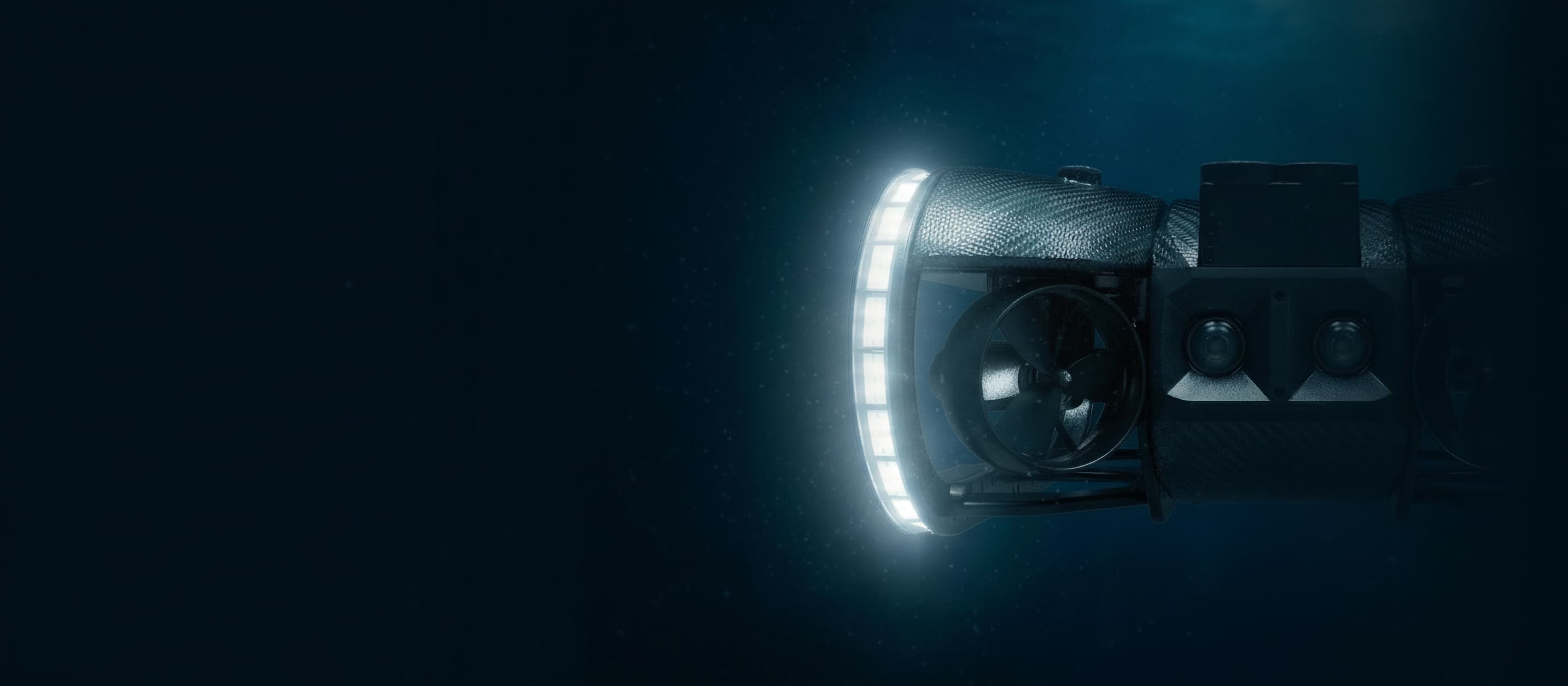
Deep Trekker's ROVs and crawlers inspect and maintain the physical assets behind energy and water systems — nuclear plants, hydroelectric dams, offshore platforms, water tanks, and pipe networks — without the cost, downtime, and safety risk of traditional methods. They keep systems running during inspection, remove divers from hazardous environments, and capture high-resolution data operators can act on.
Deep Trekker's technology is designed to collect precise, actionable data where conditions are hardest — and to feed the AI-driven smart-grid and smart-water systems that increasingly depend on it:
Together these reduce cost, improve safety, and extend asset life — delivering high-resolution data with no diver risk and no need to take systems offline. For water utilities, finding leaks and failures early also conserves resources and limits losses, tying inspection directly to both economic efficiency and sustainability goals.
Need Help Choosing What ROV is Best for Your Application? Here is Our Comprehensive ROV Buyer’s Guide to Help You Identify the Right Model.
Below, we answer common questions about future energy sources and technologies:
There isn't a single one, and the honest answer is a diversified mix: stable baseload from nuclear and hydroelectric, rapidly growing solar and wind backed by battery storage, natural gas as a transitional bridge fuel, and geothermal and biomass for localized and industrial needs.
No. Renewables and nuclear are on track to supply roughly half the world's electricity by 2030, up from about 42% today, which leaves the other half to fossil fuels. Natural gas in particular is forecast to keep growing through 2030 because it ramps quickly enough to balance variable solar and wind. Its share is expected to shrink in many advanced economies over the longer term, but the bridge-fuel role is measured in decades rather than years.
Solar leads by a wide margin. It accounted for roughly three-quarters of the 800 GW of renewable capacity added worldwide in 2025, and its generation is set to overtake both wind and nuclear in 2026 and hydropower by 2029. Nuclear is forecast to grow about 2.8% a year through 2030, more than double the rate of the previous five years, and gas-fired generation about 2.6% a year. (IEA, Electricity 2026)
Most of what arrives before 2030 is a new form of something familiar rather than new physics. Small modular reactors package nuclear generation into factory-built units of up to 300 MWe. Floating solar puts panels on reservoirs, irrigation ponds, and hydro impoundments. Offshore wind is moving into deeper water on larger turbines and floating foundations. Grid-scale storage is diversifying beyond lithium-ion. Further out, marine and tidal energy and fusion are still earlier in development, with fusion unlikely to reach commercial scale this decade.
A nuclear reactor built from factory-assembled modules, typically rated up to 300 MWe, rather than constructed on site at gigawatt scale. Modularity cuts construction time and capital risk and lets utilities add capacity incrementally instead of committing to one large build. China and Russia already operate SMRs. The US, Canada, and the UK are earlier, with first Western deployments expected around 2029 to 2030. The open questions are cost and regulation, since first-of-a-kind units are expected to cost more per MWh than existing large reactors.
Grid-scale battery storage holds surplus electricity and releases it when generation drops, which is what makes variable solar and wind dependable enough to build a grid around. Deployment is accelerating fastest in solar- and wind-heavy markets including California, Texas, Germany, South Australia, and the UK, and falling costs keep improving its competitiveness. Today's lithium-ion systems mostly provide hours of flexibility rather than days, so they complement firm baseload rather than replacing it.
Because a large share of the assets most likely to fail sit below the waterline or in confined spaces. Offshore wind foundations, scour protection, and subsea cables. Dam penstocks, intake gates, and draft tubes. Nuclear spent-fuel pools and cooling storage tanks. Gas platform risers and sea chests. Remotely operated vehicles inspect these without dewatering the structure or taking generation offline, and they extend what dive teams can cover by handling the radiation environments, confined spaces, and long-duration surveys that are difficult or unsafe to staff with divers.
Deep Trekker Nuclear Energy Solutions: Discover how Deep Trekker ROVs enhance safety and efficiency in nuclear power plant inspections.
Deep Trekker Hydroelectric Solutions: Learn how ROVs are transforming inspections and maintenance for hydroelectric dams.
Deep Trekker Offshore Wind, Oil, & Gas Solutions: Explore how ROVs provide efficient and safe inspection tools for offshore energy infrastructure.
Deep Trekker Underwater Vehicles (ROVs): Explore our range of robust, portable ROVs designed for diverse underwater missions.
Request a Quote: Ready to explore Deep Trekker solutions for your operations? Contact us for a customized quote.

March 17th, 2026
Two-day AIMS training program teaches SAR teams how to integrate sonar...
March 11th, 2026
Deep Trekker’s SPECTRA ROV integrates 3D Sonar SLAM, 4K stereo vision,...

November 3rd, 2025
At REPMUS 2025, Deep Trekker’s ROVs validated real-world mine countermeasure capabilities...