Configure Now
Items in Your Cart0
0Items in Your Cart
Start building your packageShop Now
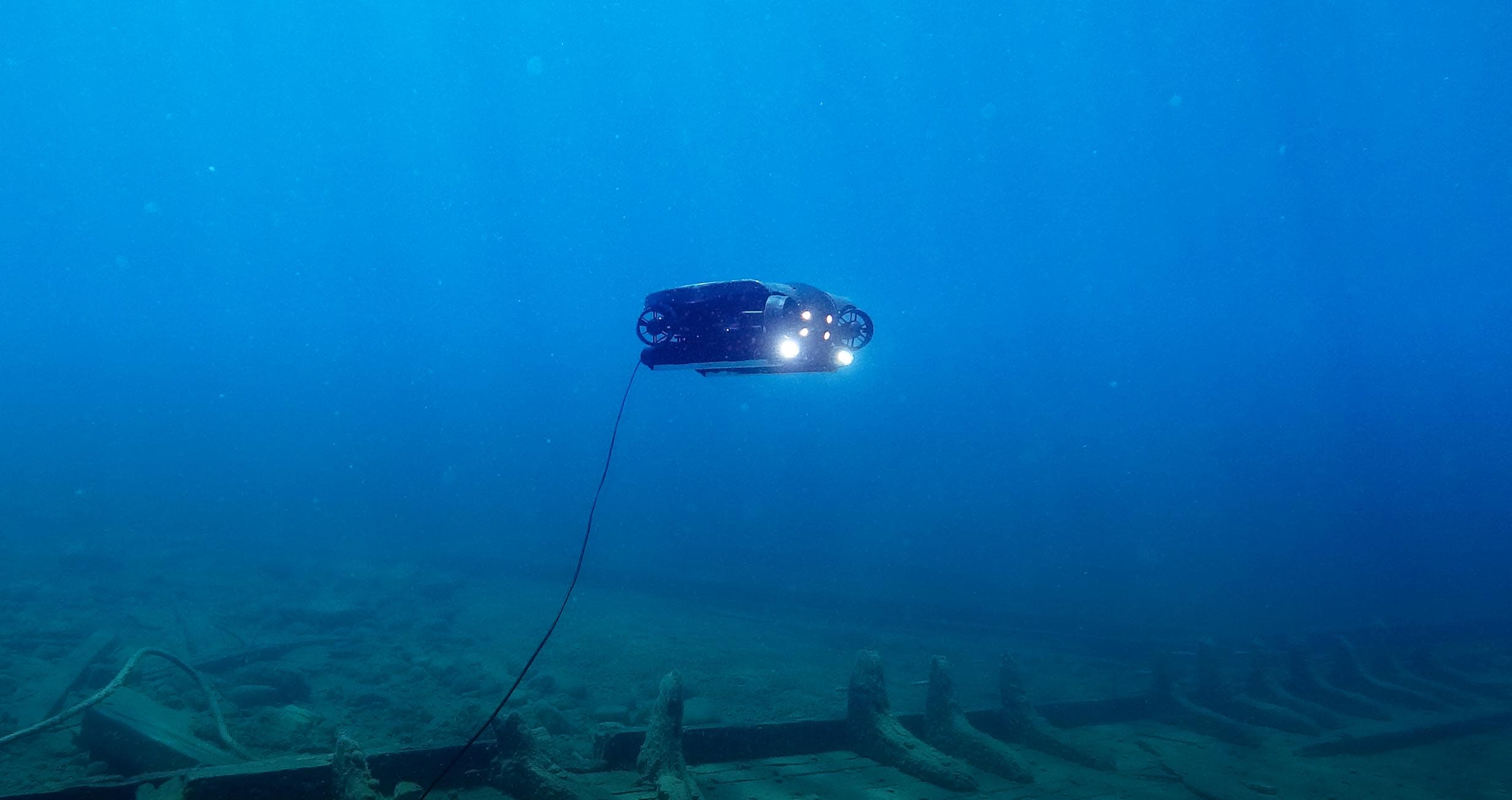
An underwater ROV is a submersible robot controlled from the surface through a tether. Cameras, lights, and sensors feed live data topside while thrusters hold the vehicle in position.
Operators use them to inspect, survey, and document submerged assets and environments without putting a diver in the water first. The vehicle reaches the site, confirms conditions, and records what it finds.
The category runs from handheld observation vehicles through to work class systems that need a crane and a support vessel. Deep Trekker builds portable inspection systems at the observation and payload end of that range.
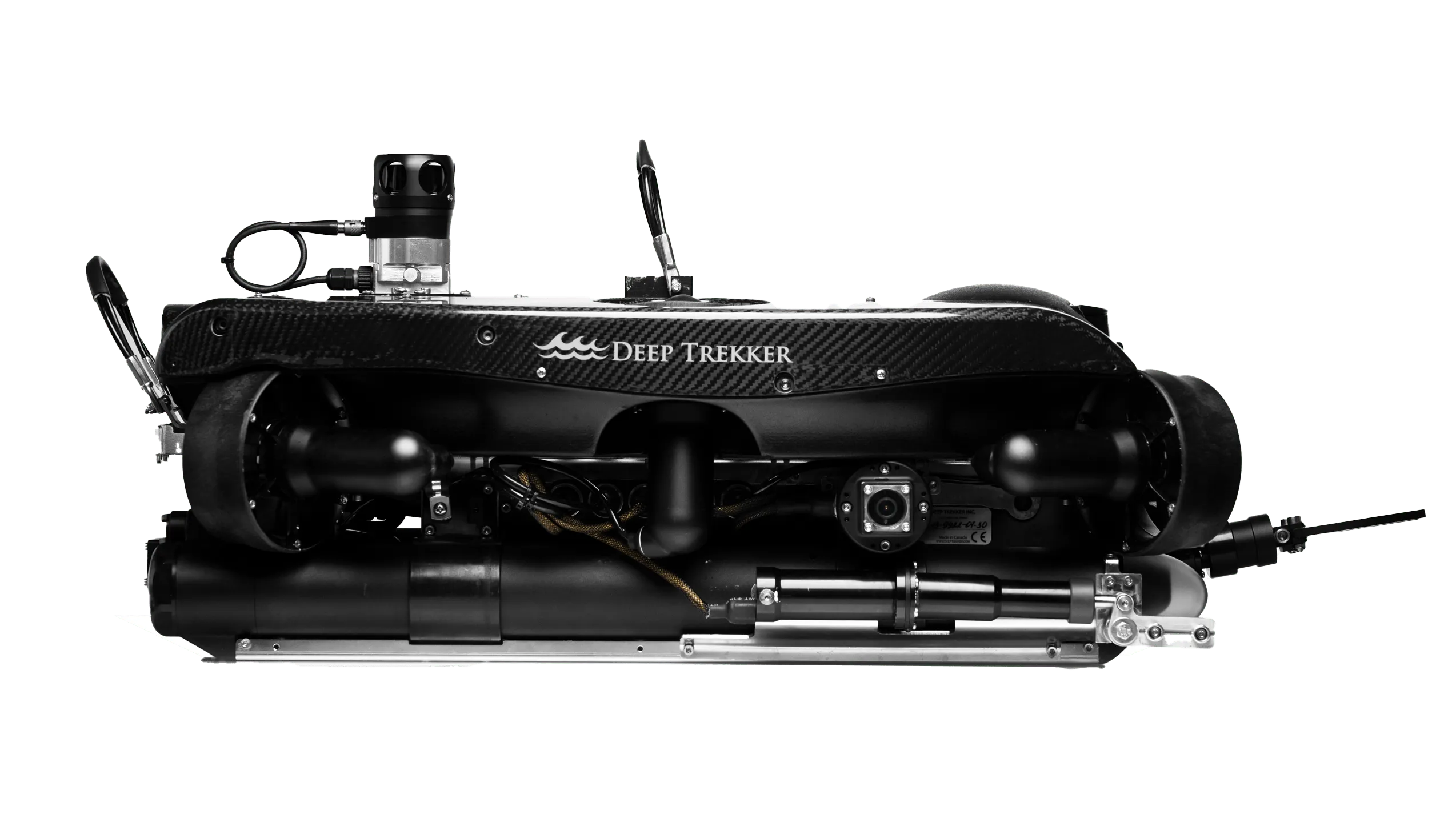
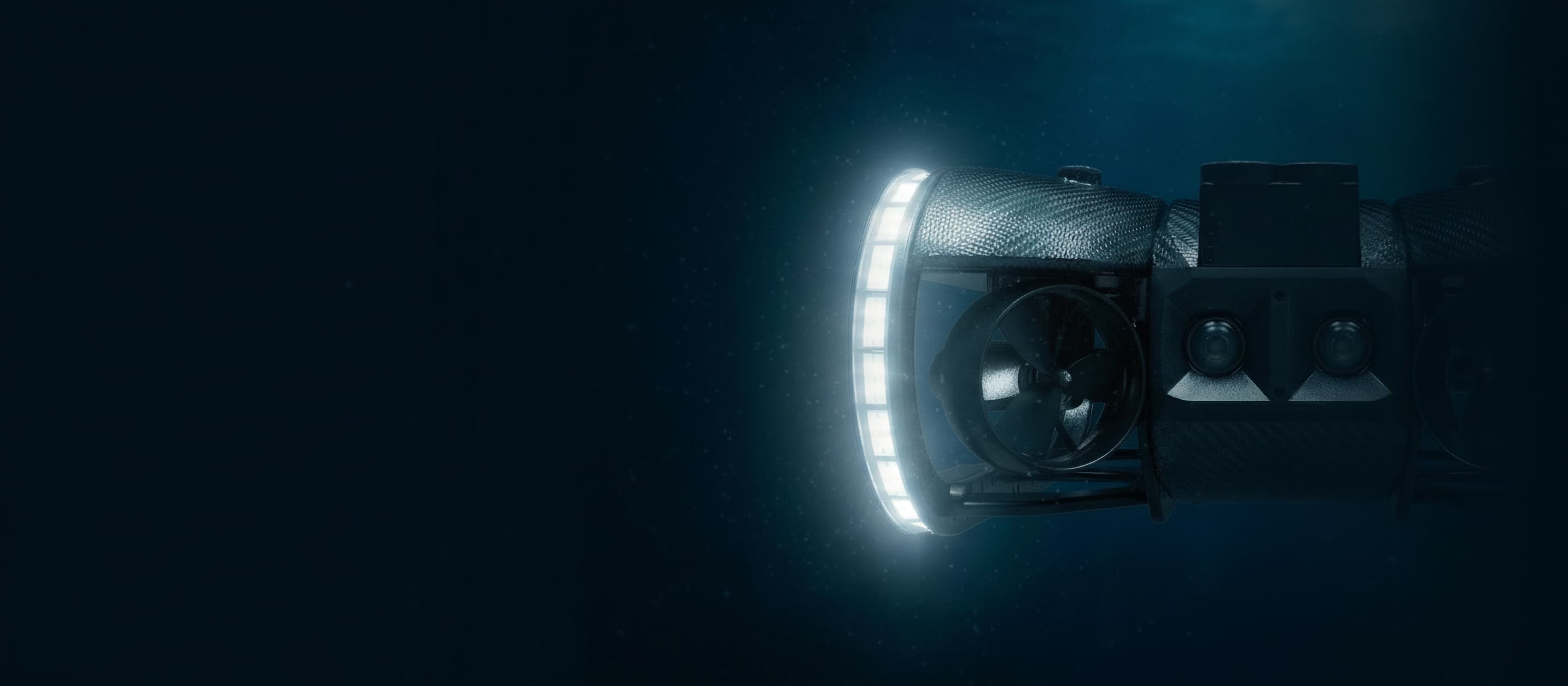
For example, Deep Trekker’s portable designs, built with robust materials, simplify underwater operations in challenging environments, whether for routine maintenance, offshore inspection, or scientific research. Newer systems such as SPECTRA extend these capabilities into deeper and higher-current environments, supporting inspection and survey work traditionally reserved for larger work-class systems.
Underwater ROVs have become indispensable tools for projects in offshore, nuclear, defense, maritime, search and recovery, marine science, industrial inspections, and beyond. These compact, versatile machines empower professionals to perform complex tasks with efficiency, accuracy, and safety. Selecting the ideal underwater ROV for your operations requires a thorough understanding of their capabilities, applications, and considerations.
ROV stands for remotely operated vehicle. It is the term the industry uses, and it is what appears on specification sheets, in tender documents, and in class society guidance.
Underwater drone is the everyday term for the same machine. The two are interchangeable in most conversations, though ROV specifically implies a tethered vehicle with a surface operator, while drone is sometimes stretched to cover untethered vehicles as well.
This guide uses both terms. Where the distinction matters, it says so.
Underwater ROVs trace their origins back to the mid-20th century when they were primarily developed for military and industrial purposes. The U.S. Navy pioneered early designs in the 1950s, creating vehicles capable of retrieving lost equipment and performing inspections in deep-sea environments.
The discovery of the Titanic by Robert Ballard prompted the development of a new type of ROV. They developed this machine with help from the Navy. The latest version enabled the discovery of the famous wrecks of the Titanic and Bismarck.
By the 1980s, advancements in materials, electronics, and imaging technology expanded their use to commercial applications. The oil and gas industry adopted ROVs for deepwater drilling support, revolutionizing subsea infrastructure management.
In recent decades, compact and portable underwater ROVs, such as Deep Trekker's models, have brought these capabilities to a wider range of users. From scientific research to aquaculture, modern ROVs are accessible, cost-effective, and highly versatile.
Early ROVs required tethered connections to large power systems, limiting mobility. Today, innovations in battery technology and portability have enabled tools like the DTG3 to operate seamlessly in remote locations, empowering smaller teams to accomplish complex underwater tasks.
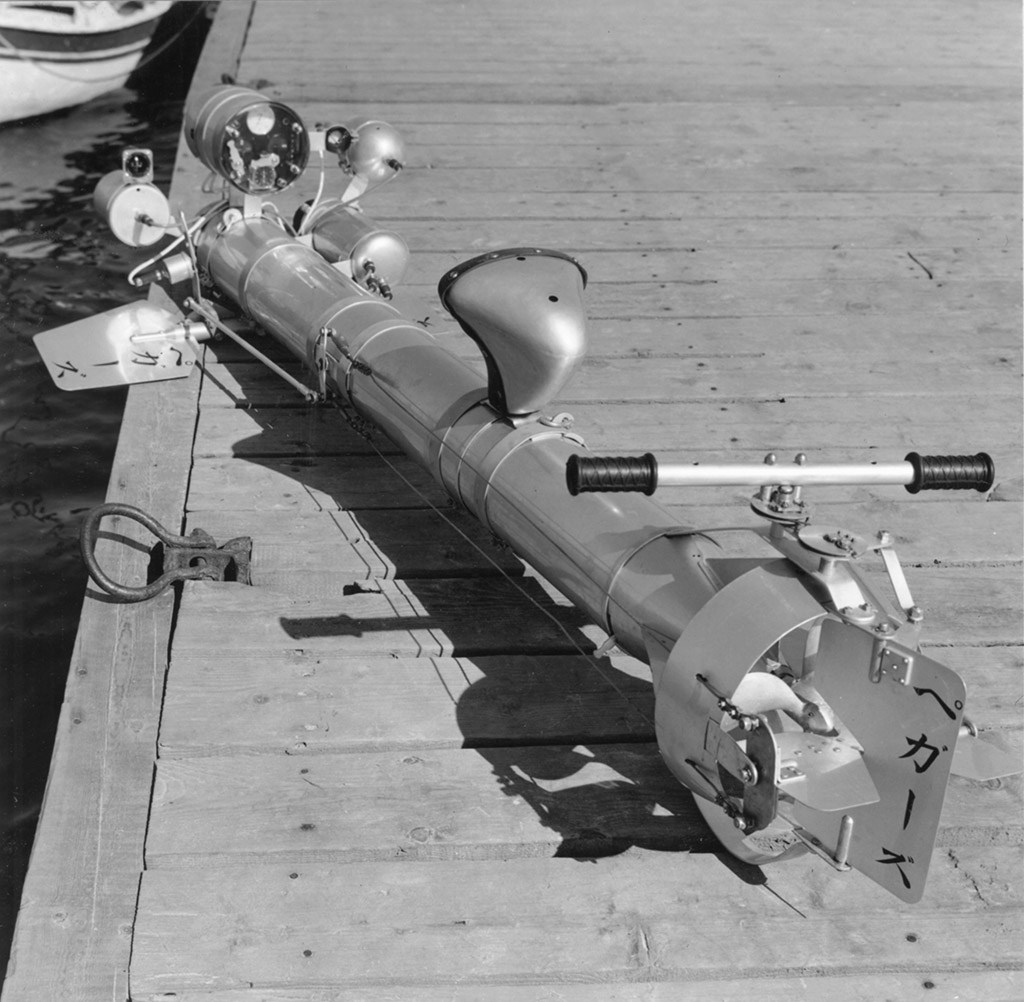
ROVs combine advanced technology with user-friendly controls. Cameras provide real-time video feeds, while sensors relay critical data like depth and water temperature. Pilots use joysticks or intuitive interfaces to maneuver the vehicle, enabling precise control in demanding conditions.
Modern systems are increasingly incorporating onboard processing and perception technologies. For example, newer platforms like SPECTRA integrate real-time 3D sonar SLAM, allowing the vehicle to continuously build a spatial model of its surroundings while estimating position and orientation. This provides operators with live environmental context, improving navigation and inspection coverage in low-visibility or GNSS-denied environments.
Thruster count and layout set speed, station holding, and how the vehicle behaves in current. PHOTON, PIVOT, and REVOLUTION use six vectored thrusters, giving movement on all axes without reorienting the vehicle.
SPECTRA uses a seven thruster symmetrical layout rated to 3.5 knots forward, with station holding in currents up to 2.3 knots from any direction. Symmetrical layouts matter in cross current, where forward biased designs lose lateral control first.

Control options run from handheld controllers to tablet interfaces and rack mounted control centers. BRIDGE technology keeps latency low enough for responsive piloting, and the BRIDGE Box supports custom configurations, multiple screens, and remote operation.
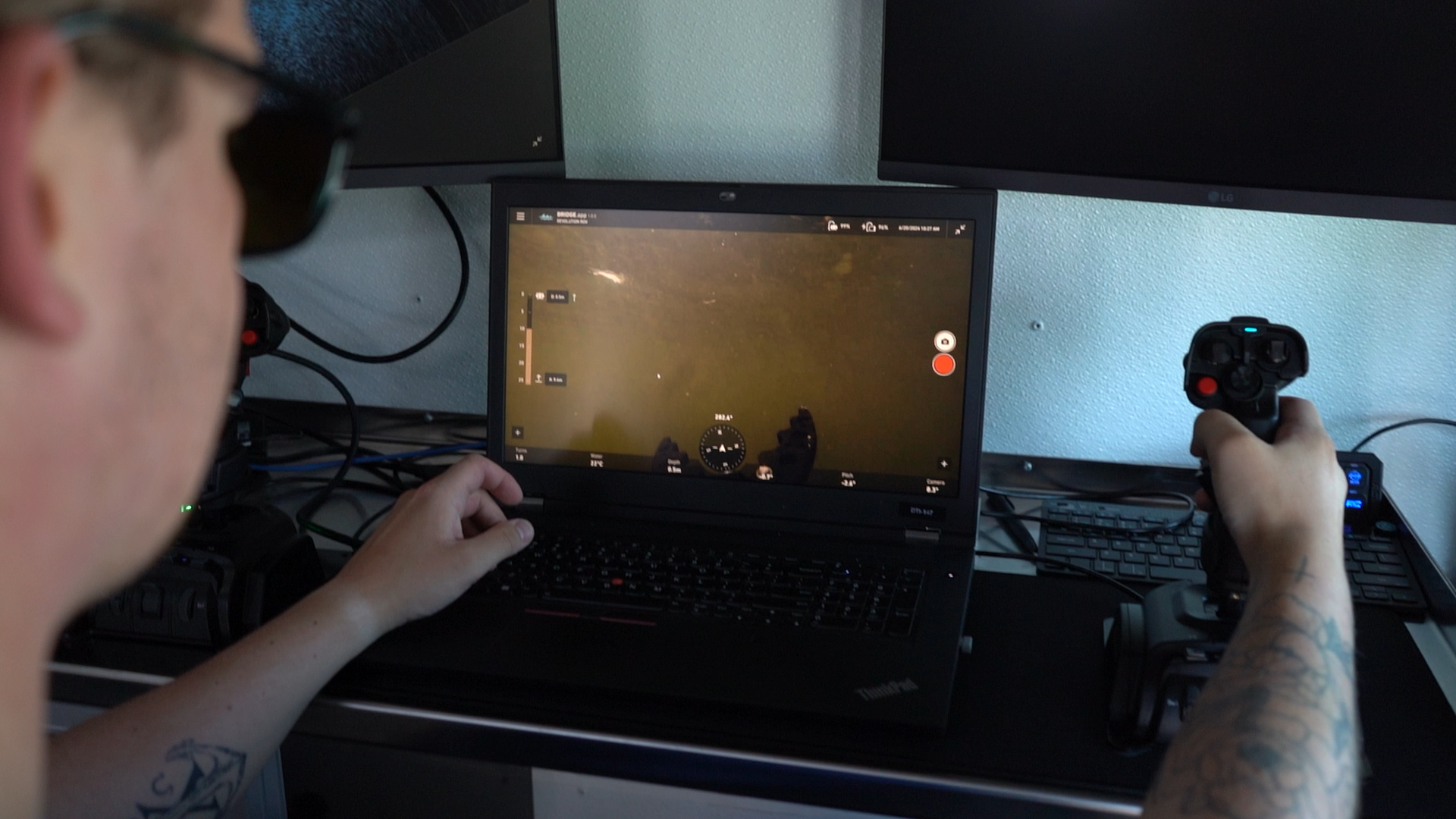
Positioning tools include:
Mission Planner lets operators pre-program survey routes with assisted navigation, so repeat inspections follow the same track.

Station holding is the feature that separates a usable inspection platform from a frustrating one. A vehicle that holds position against current frees the pilot to concentrate on the camera rather than on staying put.
The tether carries power, video, and telemetry, and its length sets the working radius. Neutrally buoyant tether reduces drag in current and is worth specifying for any scope involving standoff distance from the deployment point.
Topside, a portable system needs little more than the controller and a reel. That is the practical difference between a vehicle a two person crew can run and one that needs a deck, a crane, and a launch and recovery system.

Imaging is the reason the vehicle goes in the water. Everything else exists to put the camera where it needs to be and hold it steady enough to record something usable.
A 4K camera handles most visual inspection work, but resolution alone does not determine what you can deliver in a report. Lighting output, white balance behaviour, and colour accuracy matter as much below the first few meters, where water strips out red wavelengths.
High output LED lighting restores that colour and lifts detail out of shadow inside pipes, tanks, and hulls. Auto white balance keeps footage consistent as the vehicle moves between lit and ambient conditions.

Stereo camera pairs add measurement. Factory calibrated stereo on SPECTRA supports metrically accurate photogrammetry 3D models without placing reference markers on the asset first.
Sonar images through the suspended particulate that defeats optics. In turbid rivers, harbors, and flood water, it is often the only sensor returning usable data.
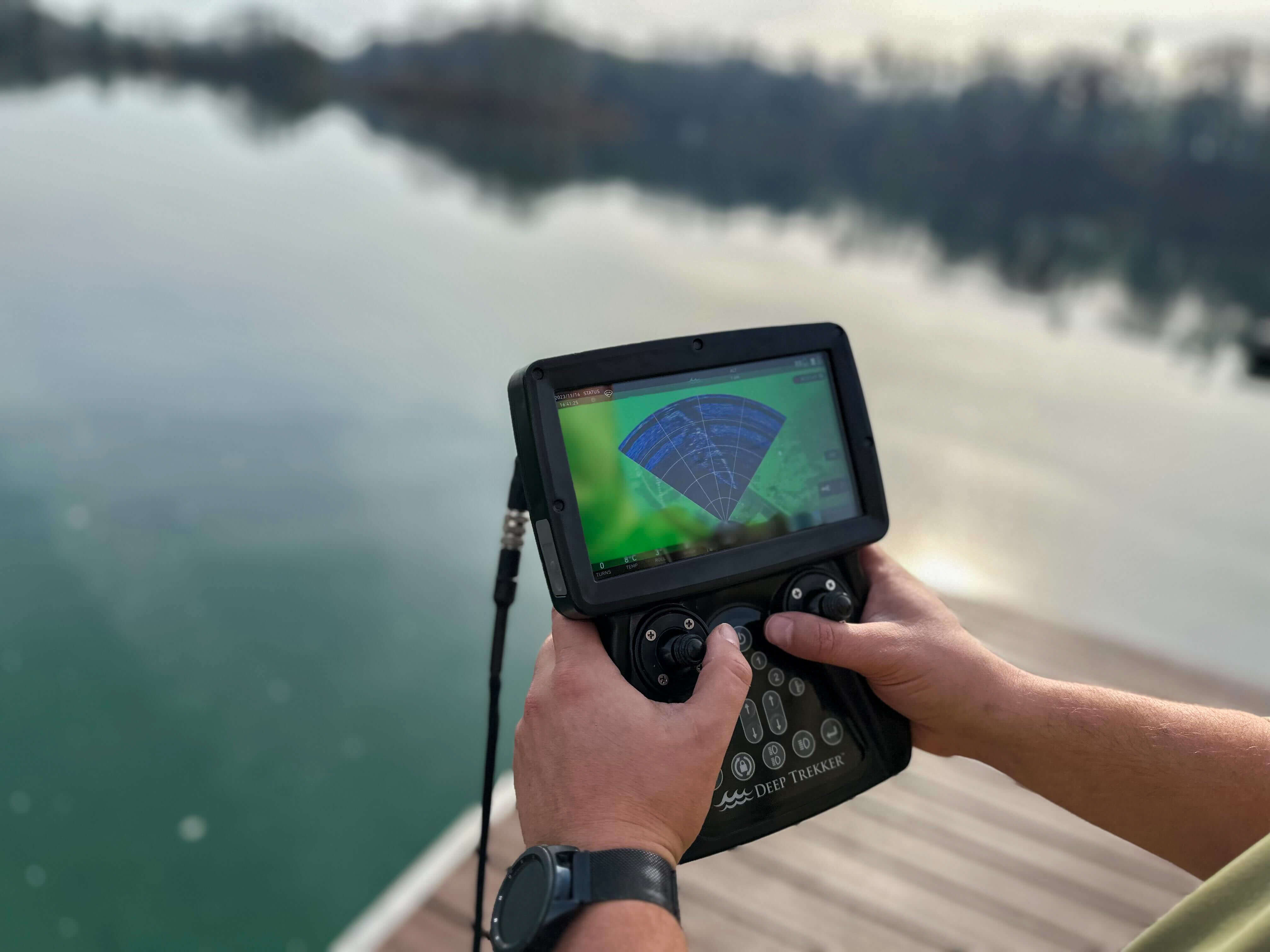
Imaging sonar gives a live acoustic picture for navigation and object detection. Profiling and multibeam sonar support mapping and measurement, and 2D mosaics built from sonar passes are standard deliverables on dam and intake inspections.
Newer systems fold sonar into navigation. SPECTRA runs 3D sonar SLAM onboard, building a live spatial model of the site while the pilot inspects, so the team can verify coverage before demobilizing. Read more about how sonar works underwater.

USBL fixes vehicle position against a surface reference. DVLs track velocity over the seabed, IMUs measure orientation, and depth sensors log working depth throughout the dive. Together these turn footage into a record you can return to. Knowing where a defect sits, not just that it exists, is what makes an inspection repeatable across visits. Browse the full range of sensors and add-ons.
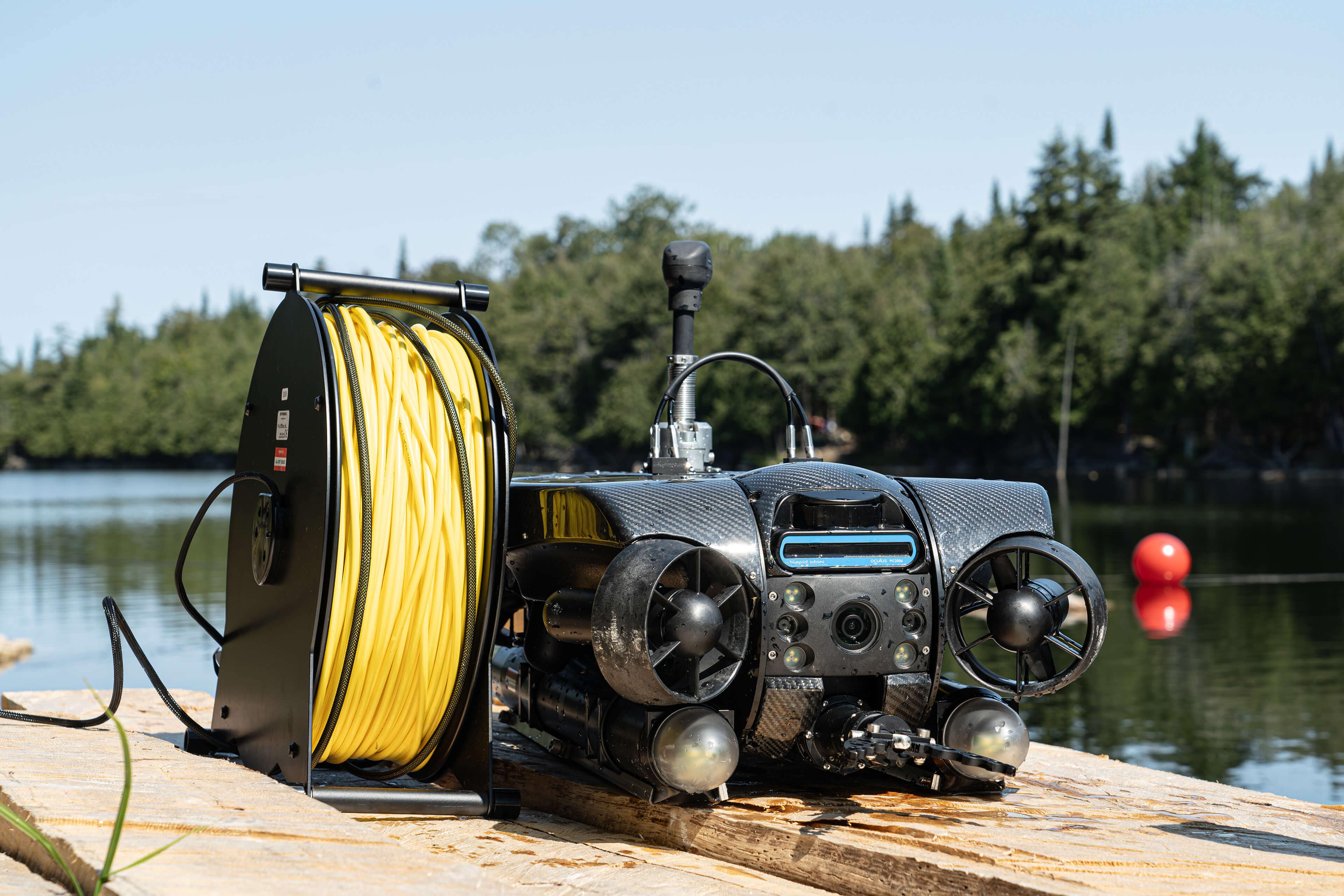
ROVs are grouped into classes by capability rather than size alone. Knowing where a system sits tells you which scopes it can realistically complete, and it narrows a shortlist faster than comparing individual specifications.
The Marine Technology Society ROV Committee defines five classes, and IMCA uses a comparable structure in its guidance. Most buyers and contractors use a shorter commercial vocabulary in day to day work, but the two map onto each other cleanly.
| Class | Common name | Defining capability | Typical scopes |
|---|---|---|---|
| Class I | Pure observation | Video only. Cannot carry additional sensors without loss of function. | Visual inspection, dive support, condition verification |
| Class II | Observation with payload | Carries additional sensors such as sonar, positioning, or measurement alongside video. | Detailed inspection, survey, search and recovery, net pen and tank inspection |
| Class III | Work class | Manipulators, multiplexed telemetry, high installed power. Subdivided by horsepower. | Subsea intervention, construction support, drilling support |
| Class IV | Seabed working | Tracked or towed vehicles operating on the seabed rather than in the water column. | Cable and pipeline burial, trenching, seabed excavation |
| Class V | Prototype or development | Vehicles under development or purpose built for a specific research programme. | Research, trials, single mission builds |
In commercial conversation you will more often hear micro, mini, inspection, light work, work class, and heavy work. Micro and mini sit inside Class I and II. Inspection class is Class II. Light work and work class are subdivisions of Class III, usually separated by hydraulic power and manipulator count.
The boundary that matters most in practice is between Class II and Class III. Class II systems inspect, survey, and record. Class III systems intervene. A large share of subsea scopes that historically defaulted to Class III vehicles are inspection tasks that were assigned upward because no portable system could hold position in the conditions or capture data at the required fidelity. That gap has narrowed considerably.
| System | Class | Depth rating | Primary scopes |
|---|---|---|---|
| DTG3 | Class I to II (micro) | 200 m / 656 ft | Rapid visual inspection, confined space access, dive support |
| PHOTON | Class I to II (mini) | 120 m / 400 ft | Hull and net pen inspection, shallow survey, documentation |
| PIVOT | Class II | 305 m / 1,000 ft | Aquaculture, infrastructure inspection, sonar assisted survey |
| REVOLUTION | Class II | 305 m / 1,000 ft | Multi sensor inspection, search and recovery, defense and nuclear |
| SPECTRA | Class II (high performance) | 1,000 m / 3,280 ft | Offshore IRM, high current inspection, 3D survey and photogrammetry |
Deep Trekker builds within Class I and Class II. The design priority across the range is inspection and survey capability delivered in a package a two person team can carry, deploy, and recover without a crane or a dedicated support vessel.
SPECTRA sits at the upper boundary of Class II. Its depth rating, thrust, and onboard perception stack support inspection and survey scopes that have traditionally required a larger vehicle and a heavier deployment footprint, while remaining hand deployable. It is not a Class III vehicle and does not carry a work class manipulator package. The distinction is worth holding, because the value is in completing inspection scopes without escalating to Class III logistics, not in replicating intervention capability.
Four questions resolve most of the decision:
If the answer to all four sits inside Class II, moving up a class adds cost and logistical overhead without adding capability you will use. Class III becomes necessary when the scope includes intervention: cutting, torquing, lifting, or manipulating subsea hardware.
Across all classes, ROVs extend what a dive team can accomplish. They take on the depths, durations, and conditions that fall outside safe diver limits, and they let dive supervisors verify conditions before anyone enters the water.
See how the two compare in our breakdown of commercial divers vs ROVs.
Underwater drones, or ROVs, provide several key benefits that make them invaluable for a wide range of applications. Their versatility, efficiency, and safety features allow users to accomplish complex tasks with precision and reliability.
Underwater ROVs eliminate the need for human divers in hazardous environments, such as strong currents, deep waters, or confined spaces. This reduces the risk of injury while ensuring thorough inspections and data collection. For example, a nuclear plant can utilize a Deep Trekker underwater ROV to inspect reactor cooling structures, avoiding the risks associated with human entry into radioactive areas.

By reducing the need for costly equipment, personnel, and downtime, ROVs lower operational expenses. They enable detailed inspections and maintenance without extensive setups, such as scaffolding or dewatering systems. For example, a hydropower facility can save thousands of dollars by using a Deep Trekker ROV for underwater dam inspections instead of draining the reservoir.
Modern underwater drones are portable and easy to deploy, allowing users to access hard-to-reach locations quickly. Their lightweight designs and advanced battery technology enable operations in remote areas without heavy logistical support.
This portability now extends into higher-performance categories. SPECTRA, for example, remains hand-deployable despite offering thrust, depth ratings (up to 1,000 m), and sensing capabilities typically associated with larger systems, reducing the need for cranes, large crews, or dedicated vessels.
Equipped with ultra high-resolution cameras, sonar, and sensors, ROVs provide comprehensive data for analysis. This ensures accurate reporting, aiding decision-making processes across various industries. For example, an environmental organization can use an underwater ROV with 4K imaging to monitor coral reef health, collecting data critical for conservation efforts.
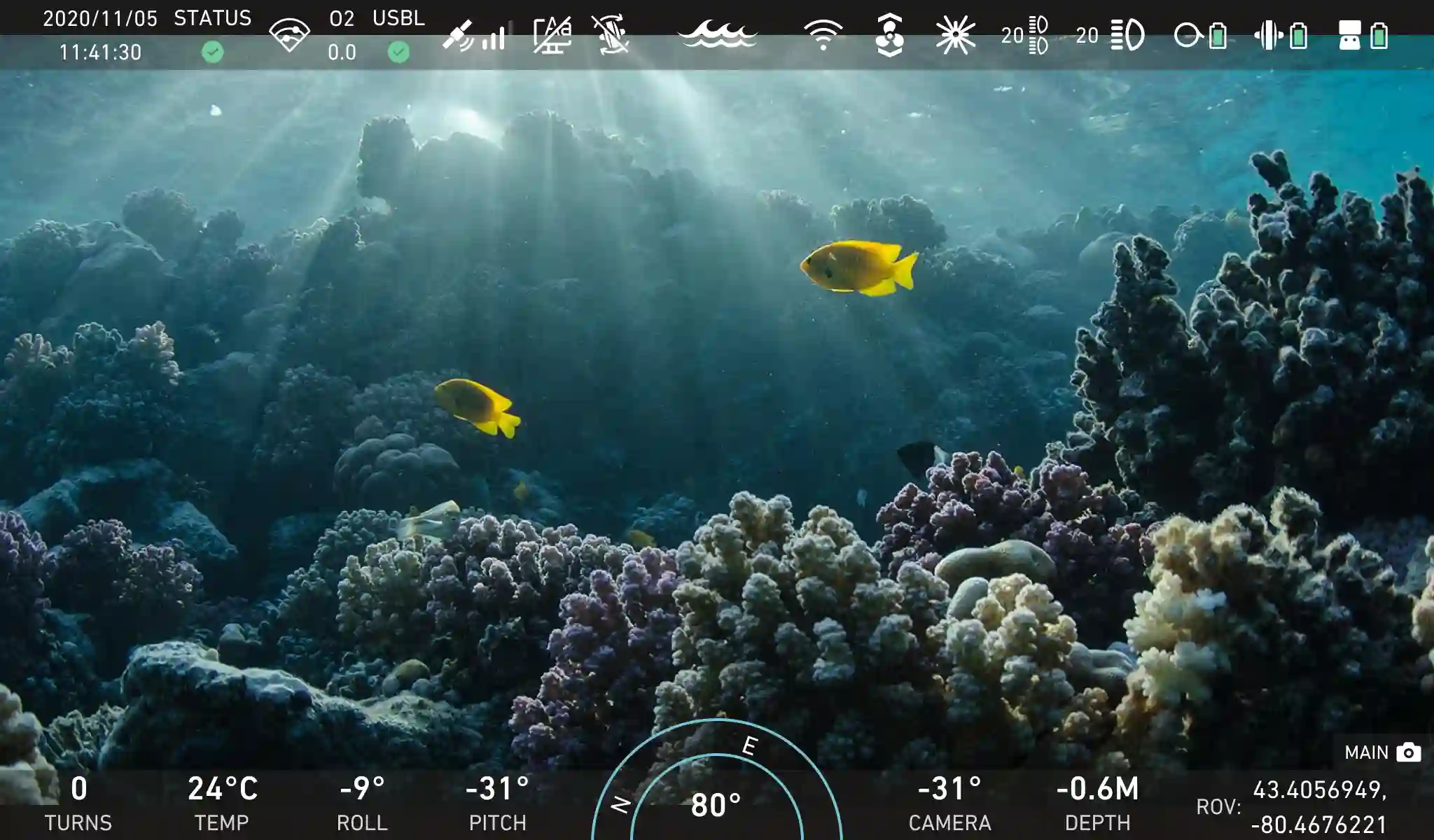
Recent advancements significantly expand data fidelity. Systems like SPECTRA combine factory-calibrated stereo 4K cameras with high-output lighting to enable metrically accurate 3D model generation without external reference markers. In parallel, integrated 3D sonar SLAM produces real-time point clouds, allowing operators to verify inspection coverage before leaving site.
From aquaculture and marine research to infrastructure inspections, ROVs excel in diverse environments. Their modular designs allow for customization, ensuring that each vehicle can be tailored to specific needs. For example, an oil and gas company can equip a Deep Trekker REVOLUTION ROV with sonar to locate and assess subsea pipelines effectively.
Ultimately, underwater ROVs offer significant advantages by improving safety, lowering costs, and delivering accurate results, making them essential tools for professionals and enthusiasts alike.
Learn more about which underwater ROV is best for your application.
Building a reliable and robust underwater ROV requires innovative engineering and durable materials. Deep Trekker’s designs prioritize longevity, performance, and ease of use, ensuring reliable operation in demanding underwater environments.
Magnetically coupled drives eliminate the need for regular maintenance, offering a durable, low-maintenance system without wear-prone components. This ensures reliable performance mission after mission.
Deep Trekker ROVs utilize lightweight yet strong materials like aluminum and carbon fiber. These materials provide neutral buoyancy for better navigation while withstanding tough underwater conditions.
Features like Hall effect sensors provide accurate feedback, while BRIDGE technology minimizes latency for responsive, real-time piloting. A key factor in control performance is the propulsion system. Deep Trekker ROVs utilize six vectored thrusters, enabling full 360-degree movement across all axes—forward, reverse, lateral, vertical, and rotational.
This vectored configuration allows operators to maintain precise positioning without needing to constantly reorient the vehicle. In practical terms, this means holding station within centimeters of a target, even while performing detailed inspections on complex structures such as pipelines, intake screens, or vessel hulls.
Power distribution across the six thrusters is optimized for both thrust output and fine control. Operators can apply small, incremental inputs for low-speed maneuvering, which is critical when working in confined spaces or near sensitive assets. At the same time, the system provides sufficient power to counter moderate currents and maintain stability during inspection tasks.
This combination of multi-directional thrust, responsive control, and balanced power delivery enables consistent, repeatable movements—reducing operator workload while improving inspection accuracy and data quality.

In higher-performance platforms, propulsion architecture becomes a defining factor. SPECTRA uses a seven-thruster symmetrical layout, enabling stable station holding in currents up to 2.3 knots from any direction. Lateral movement is significantly improved compared to traditional forward-biased designs, supporting controlled inspection in cross-current environments such as offshore structures and splash zones.
Using standardized communication protocols, Deep Trekker ROVs integrate advanced tools like sonar and DVLs, ensuring compatibility with evolving underwater technologies.
Every component, from lens covers to thruster designs, is optimized to balance durability, functionality, and performance for efficient underwater operations.
Newer architectures extend this integration further by embedding sensing and processing directly onboard. SPECTRA processes SLAM data internally, eliminating the need for external high-performance computers while maintaining real-time spatial feedback on a standard control interface.
Reliability is closely tied to maintainability. SPECTRA introduces a modular architecture where critical subsystems—including thrusters, camera assemblies, and power modules—can be replaced in 30 minutes or less, minimizing downtime during field operations.
Underwater drone work concentrates where assets sit submerged and need regular inspection, or where conditions put a diver at risk.
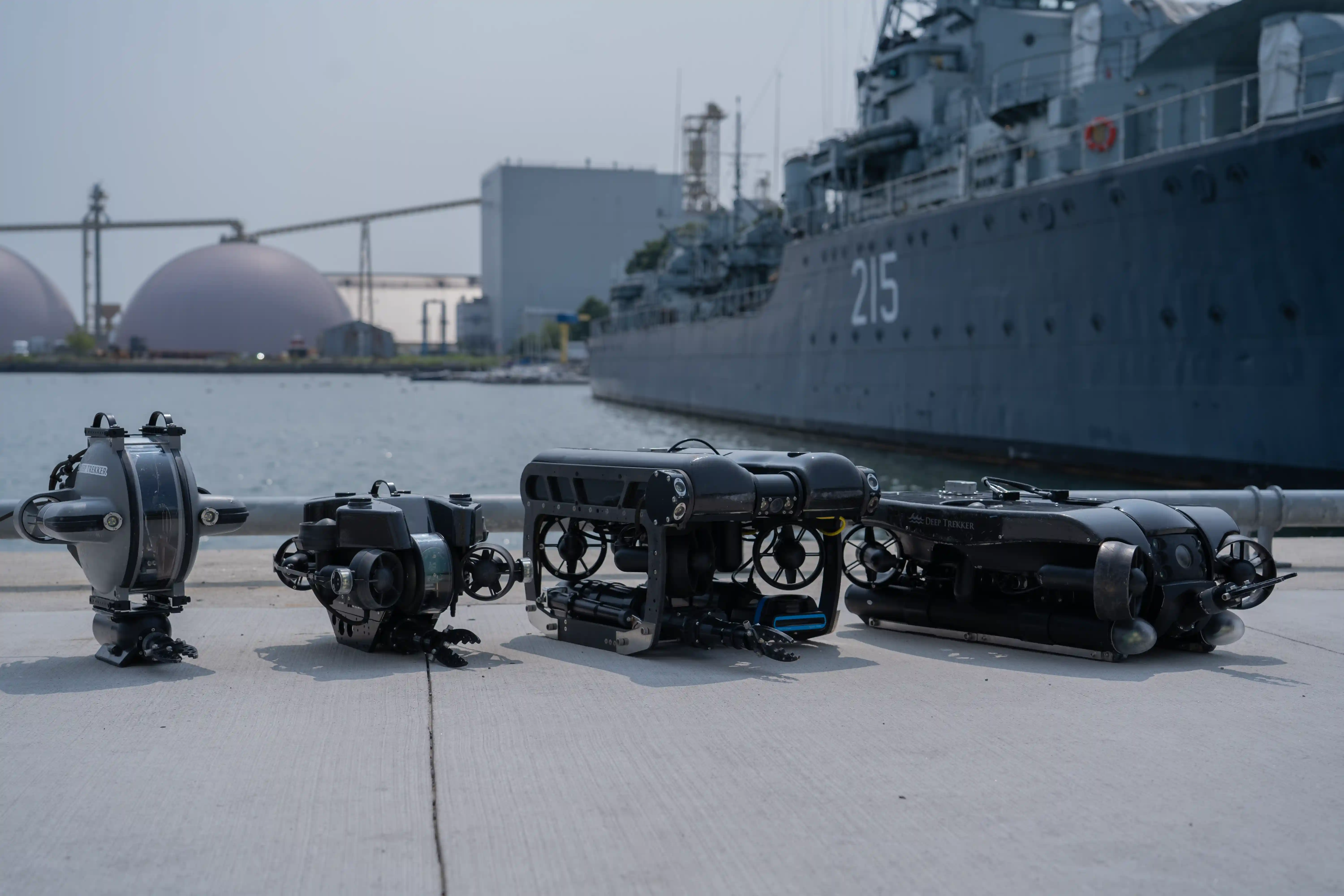
This is the largest category by a wide margin. Offshore operators run inspection, repair, and maintenance programmes on pipelines, risers, jackets, moorings, and FPSOs, where current, limited visibility, and complex geometry define the working conditions.
Onshore, the same equipment inspects dams, intakes, penstocks, water tanks, bridge piers, tunnels, and outfalls. Draining an asset to inspect it is expensive and often not an option, so condition monitoring has shifted from periodic to routine.
Nuclear facilities use drones to inspect intake structures, cooling systems, and spent fuel pools where contamination risk limits personnel entry. Vessel operators and port authorities inspect hulls, propellers, rudders, and ballast tanks without taking the ship out of service.
In the defense sector, naval teams survey hulls and running gear pierside, check pier and quay wall condition, and inspect harbour approaches and moorings. Fleet availability depends on finding damage, fouling, and foreign objects before they force an unscheduled docking, and most of that work happens alongside rather than in a yard.

Across all of these, the deliverable is the same: close visual coverage, sonar assessment where visibility fails, and a repeatable survey the team can compare against last time.
Deep Trekker ROVs are designed with a range of innovative features to meet the demands of diverse underwater tasks. These capabilities set our systems apart, ensuring reliability, precision, and efficiency in challenging aquatic environments.
Our ROVs are compact and battery-powered, allowing for quick deployment and operation in remote or confined locations without requiring bulky surface support equipment.
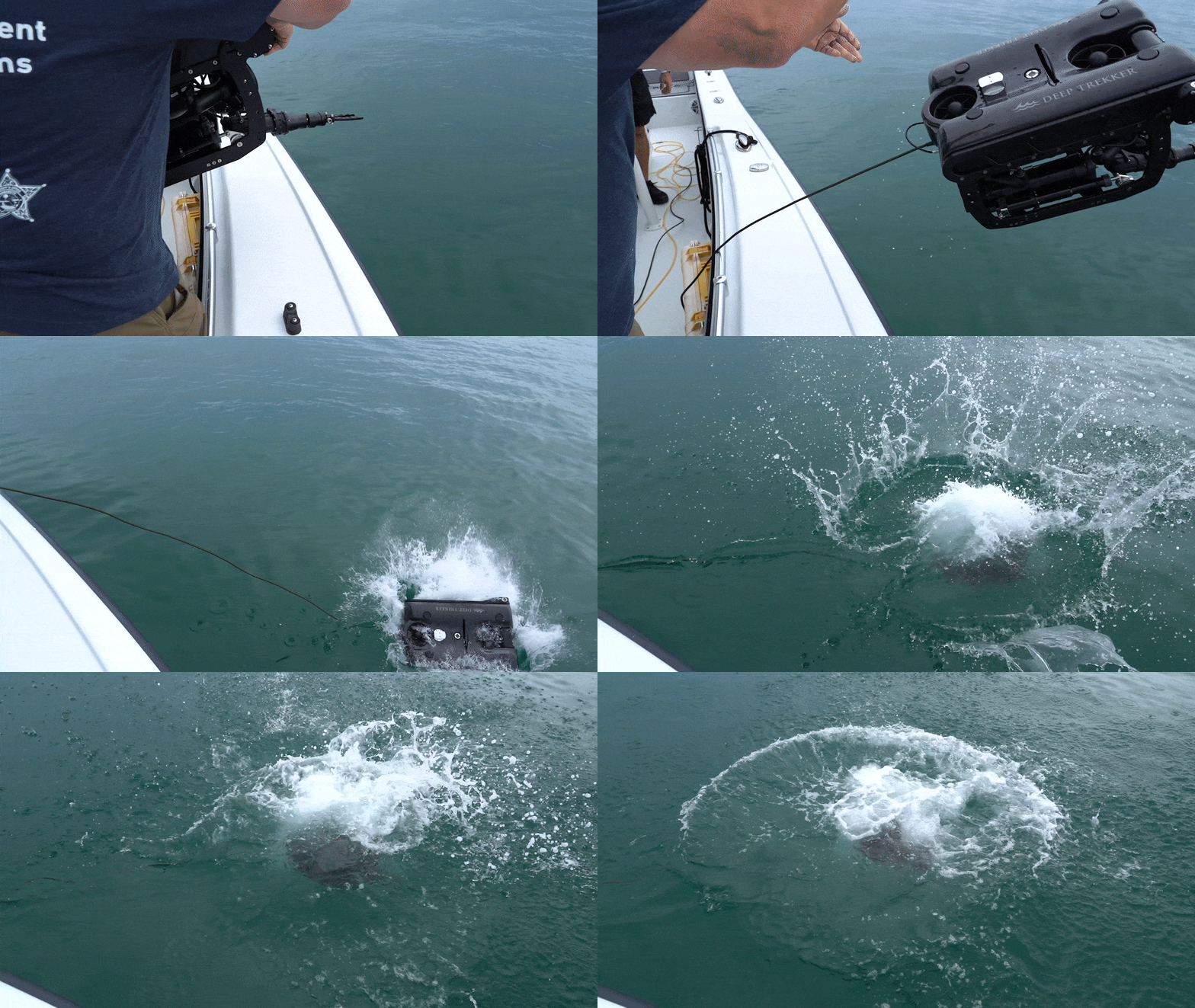
Deep Trekker ROVs feature modular designs, enabling users to equip their systems with specialized tools for specific applications. One notable add-on is the sonar system, which offers clear imaging in low-visibility conditions, such as murky waters or dark environments.
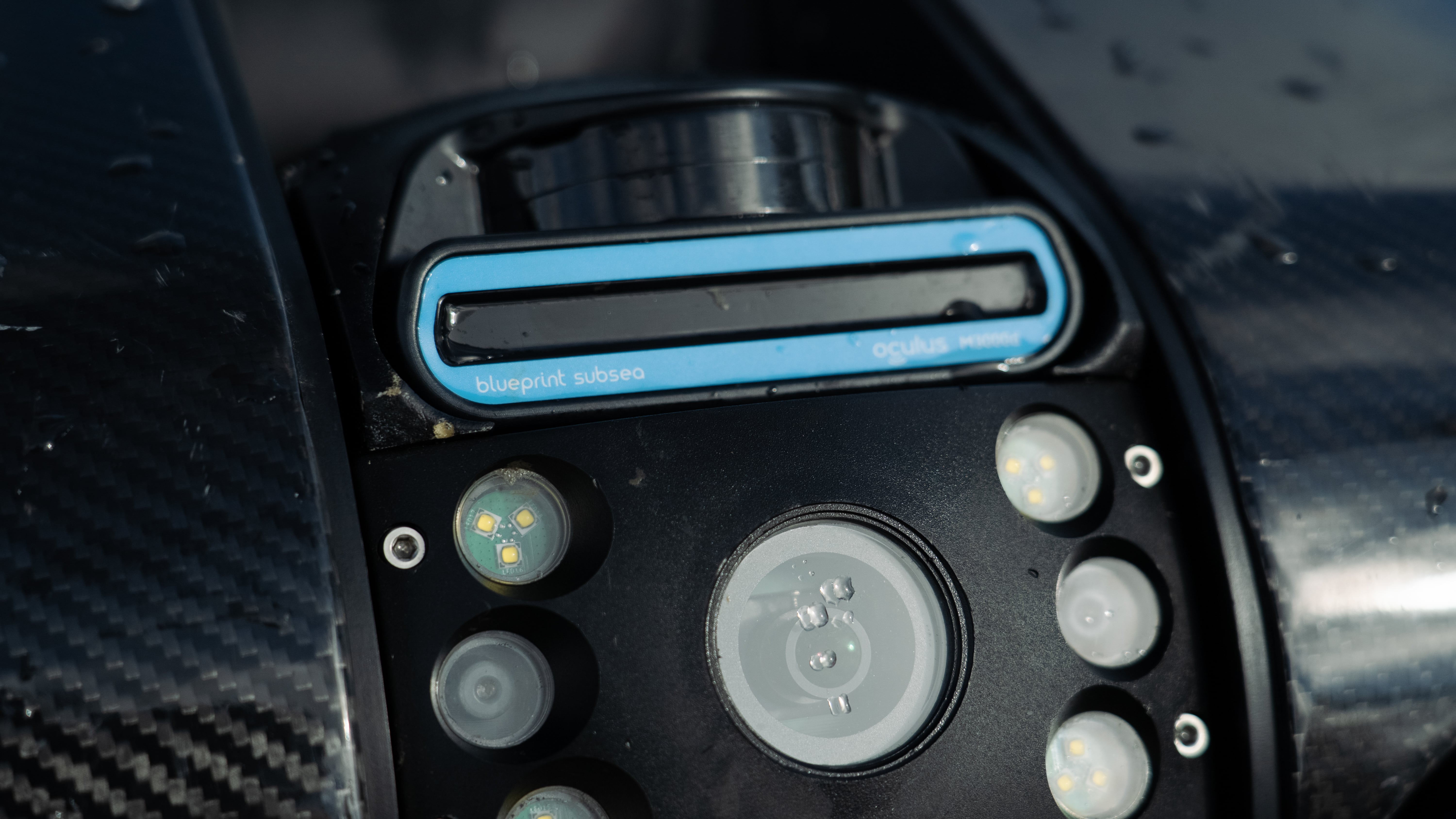
In newer systems, modularity extends beyond add-ons to core architecture. SPECTRA’s design allows rapid replacement of mission-critical components, supporting high uptime in offshore and remote deployments where servicing delays directly impact project timelines.
Benefits of Sonar Add-On:
Learn more about what sonar is and its many uses. Read about its applications, technologies, principles, and more.
Deep Trekker ROVs incorporate features such as intuitive control systems and advanced navigation options like distance lock, Dead Reckoning, ROV GPS, DVL, and USBL. These capabilities ensure precise maneuvers, station-keeping, and consistent, reliable data during intricate tasks.
Equipped with UHD 4K cameras and optional lighting, Deep Trekker ROVs deliver sharp visuals in diverse conditions, supporting applications like inspections, marine research, and aquaculture monitoring.

Deep Trekker ROVs are engineered with premium, robust materials to endure the most challenging environments, including cold-water operations, corrosive saltwater conditions, and confined or hazardous spaces. These fully integrated systems are pressure-tested to ensure reliability at depth, with precision-sealed components to protect against leaks and mechanical wear.
Backing this durability is our industry leading support team, renowned for our dependability and rapid response. Whether addressing technical issues in the field or providing guidance, our expert team ensures minimal downtime and seamless operation for mission-critical tasks.
Analyzing the operational differences between underwater drones and conventional research approaches highlights the advantages and constraints of each method.
Safety Considerations
Depth and Operational Duration

Data Collection and Quality
Cost and Efficiency
Environmental Impact
Accessibility and Versatility
Modern ROV systems now generate multi-layered datasets, including video, sonar imagery, and 3D spatial models. SPECTRA, for example, produces synchronized stereo datasets and SLAM-generated point clouds, enabling both immediate inspection review and post-processed 3D reconstruction for measurement and reporting.
Consider the depth, duration, and specific tasks required for your operations. For shallow water tasks, compact models like the PHOTON offer unmatched portability.
Strong currents or murky waters may demand advanced features such as increased thrust or sonar imaging. For high-current or deepwater environments, consider systems designed for station holding in 2.3-knot currents, integrated 3D mapping, and onboard processing. These features reduce operator workload and improve inspection efficiency in dynamic subsea conditions.
Evaluate the total cost of ownership, including training, maintenance, and warranty services. Deep Trekker offers comprehensive after-sales support to ensure smooth operations.
The operational depth of an underwater drone varies depending on its design and purpose. Entry-level recreational ROVs typically operate at depths of 100–200 meters, while professional-grade models can reach much greater depths.

Deep Trekker ROVs, for example, offer solutions for various needs:
Learning to pilot a Deep Trekker ROV is straightforward and accessible, even for beginners, thanks to its intuitive design and advanced features. These ROVs are equipped with six vectored thrusters, providing precise maneuverability and enabling operators to move seamlessly in all directions - forward, backward, laterally, and vertically. This level of control is critical for navigating complex environments, such as pipelines, reactor heads, or aquaculture nets.
The compact size of Deep Trekker ROVs further simplifies piloting, especially in confined or cluttered spaces. Operators can guide the vehicle through narrow passages or inspect hard-to-reach areas without worrying about bulk or entanglement.
Custom control options, such as handheld controllers or integrated touchscreen tablets, cater to individual preferences and mission requirements. Features like station holding - where the ROV maintains its position even in currents - make piloting more manageable, enabling operators to concentrate on inspection or data collection tasks.
Training typically takes only a few hours to grasp the basics, with most operators becoming proficient within a day. Deep Trekker’s user-friendly interface and responsive controls ensure a quick learning curve. Additionally, onboard stabilization technology mitigates drift and improves accuracy, enabling operators to achieve professional-grade results with minimal practice.
Whether you are a seasoned professional or a first-time user, Deep Trekker ROVs are designed to make underwater piloting as straightforward and effective as possible.
Yes, underwater drones are designed to operate in low-visibility or murky environments. Features such as powerful LED lighting and sonar imaging enable operators to navigate and capture data effectively when visibility is limited.
Advanced systems further improve performance in low visibility. SPECTRA’s sonar SLAM enables navigation and mapping independent of optical clarity, allowing operators to maintain situational awareness even in zero-visibility conditions.

Advanced navigation tools, such as distance lock and dead reckoning, further enhance the ability to operate confidently in challenging conditions.
Yes, underwater ROVs have long been vital tools for military operations. These devices are used for:
The U.S. Navy, among others, incorporates advanced underwater ROVs into its fleet to enhance mission efficiency and safety in underwater operations.
Regular maintenance is essential to ensure the longevity and reliability of your underwater ROV. Most modern submersible drones, including Deep Trekker models, are designed for easy maintenance with modular components and robust construction. Key maintenance tasks include:
ROVs are increasingly used for environmental monitoring and conservation efforts. This is due to their ability to access hard-to-reach or sensitive habitats, which makes them invaluable for:
Submersible drones like those from Deep Trekker are trusted by researchers, government agencies, and NGOs worldwide to gather accurate, real-time data that informs conservation strategies and regulatory compliance.
Need Help Choosing What ROV is Best for Your Application? Here is Our Comprehensive ROV Buyer’s Guide to Help You Identify the Right Model.
Selecting the right underwater ROV requires balancing functionality, durability, and depth capability to meet the demands of complex operations. Whether you’re conducting offshore inspections, supporting defense or nuclear operations, performing maritime surveys, or executing search and recovery missions, the right ROV can improve safety, precision, and efficiency. Deep Trekker’s range provides purpose-built solutions for these industries, offering robust performance, reliable support, and advanced technology tailored to challenging underwater environments.
The latest generation of systems expands what is achievable with portable platforms. By combining high thrust, onboard processing, and integrated perception technologies such as stereo vision and 3D sonar SLAM, platforms like SPECTRA enable more complete inspections, improved repeatability, and higher-quality data output—without the logistical complexity of traditional work-class ROV deployments.


March 17th, 2026
Two-day AIMS training program teaches SAR teams how to integrate sonar...
March 11th, 2026
Deep Trekker’s SPECTRA ROV integrates 3D Sonar SLAM, 4K stereo vision,...
November 3rd, 2025
At REPMUS 2025, Deep Trekker’s ROVs validated real-world mine countermeasure capabilities...